


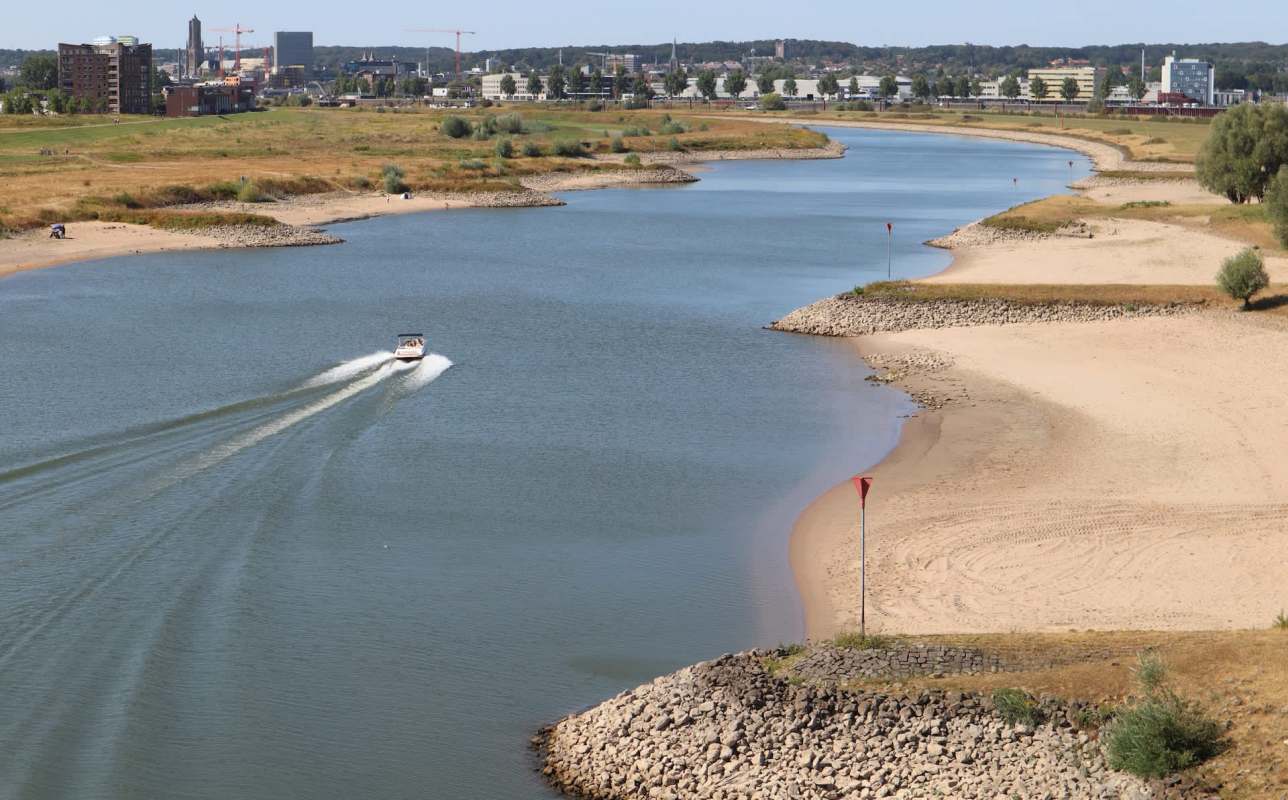
In the Netherlands, river levels have dropped so far that officials can no longer verify safe passage on parts of the shipping network.
The uncertainty is leaving captains to decide for themselves whether to sail and risk getting stranded.
Here's what to know
Dutch News relayed that Rijkswaterstaat, the transport ministry department responsible for the waterways, informed Dutch outlet NOS it can no longer get most of its survey boats into the shallowest stretches of the IJssel, the Nederrijn, the Pannerdensch Kanaal, and much of the Waal.
The shallowest areas are the main problem. In some stretches, the channel is less than 125 centimeters (49 inches) deep, which means the agency cannot publish the daily depth readings many barge operators rely on to avoid getting stranded.
The Rhine's flow offers another sign of the drought, Dutch News noted. At Lobith, where the river crosses into the Netherlands, it was running at around 545 cubic meters per second. That figure is well below the record low of 614 cubic meters per second set in August.
"This is very worrying," Fiona Oomen of inland shipping association Koninklijke Binnenvaart Nederland told NOS. "All transport is under pressure, on the roads and on the waterways. What if the water drops even further? Where is everything supposed to go?"
TCD Picks » Quince Spotlight
💡These best-sellers from Quince deliver affordable, sustainable luxury for all




More background
Low water is causing disruption outside the country as well. Dutch News reported a Dutch cruise ship carrying 140 passengers was stranded at Cologne as the Rhine hit fresh lows in Germany, while the one-way system on the IJssel has forced some vessels onto detours of up to 300 kilometers (186 miles).
The slowdown is visible in freight figures. As the outlet reported, freight moved on Dutch inland waterways fell 19% in August, with cross-border traffic with Germany worst hit.
When drought pushes rivers below safe measuring depths, extreme weather can threaten lives and livelihoods. Crews and passengers face a greater risk of stranding, while transport-dependent businesses can lose work or absorb costly delays.
Officials have updated the drought response, but the warning on river levels remains, Dutch News said. The Dutch infrastructure ministry lifted the national water shortage but warned that river levels could stay low.
What's being done?
Rijkswaterstaat's shallow-water capacity is limited. As Dutch News reported, the agency still has only three boats capable of operating in the shallowest channels, and they are needed elsewhere as well.
Authorities are using one-way traffic on the IJssel to lower risk in the shallowest sections. That approach keeps some traffic moving, but it comes at a cost.
When official readings are unavailable, the outlet said some skippers can buy comparable depth data from private companies to help plan routes. But that option is uneven because not every skipper has a subscription.
The government is not offering financial compensation. The Dutch cabinet has also declined to compensate businesses for drought-related losses, according to Dutch News.
"We need rain in the catchment area," a spokesman told NOS. That being said, the same spokesman was pessimistic about it providing long-term relief.
"When it's over, we get the next problem," he added. "Then we'll have high water again."
Where can I learn more?
Drought and changing river conditions are affecting waterways beyond the Netherlands.
• Worldwide, 35 years of river changes are reshaping flood and drought risks.
• In England, drought and flooding threats are colliding as weather swings intensify.

Get TCD's free newsletters for easy tips, smart advice, and a chance to earn $5,000 toward home upgrades. To see more stories like this one, change your Google preferences here.






