


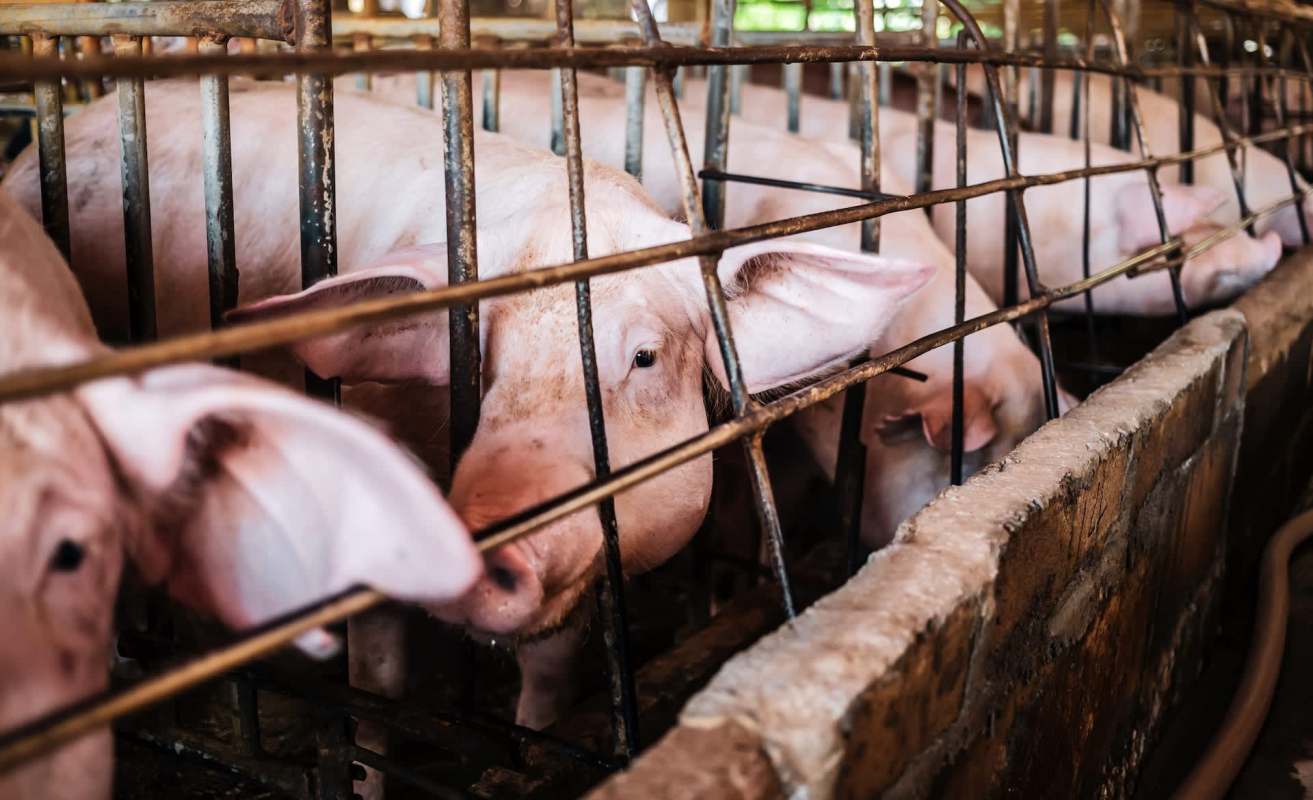
A Missouri farmer said a fee attached to every pig he sells is helping bankroll one of the pork industry's most controversial practices: keeping pregnant pigs in crates so small they cannot turn around.
Here's what to know
Russ Kremer — a longtime hog farmer in Missouri's Ozarks — said the pork promotion system has worked against producers like him. He argues that a program created to market pork has instead steered money toward lobbying that favors massive industrial operations over smaller farms with higher animal-welfare standards, according to Vox.
Farmers must pay mandatory "checkoff" fees to the National Pork Board, typically about 70 cents to $1 per hog, or 35 cents per $100 in sales. Those dollars are supposed to go only to research and promotion, but an Accountability Board review of financial records cited by Vox said roughly $66 million has moved from the Pork Board to the National Pork Producers Council since 2004 through trademark and real estate deals.
Independent producers have said that system has ended up backing policy fights they oppose, including lobbying against antibiotic restrictions, pollution rules, and protections for smaller farms. Kremer — a former president of the Missouri Farmers Union who raises about 2,000 pigs on 150 acres without using cages or antibiotics — told Vox, "I'm not opposed to paying a tax if the tax does us some good."
The dispute is especially intense over gestation crates. The National Pork Producers Council has challenged California and Massachusetts restrictions on pork from farms that use those enclosures, where pregnant pigs are confined in spaces too small to turn around, and it has also supported legislation intended to undo those state laws.
More background
Questions about the connection between the two pork organizations have lingered for decades. In 2000, farmers voted to eliminate the Pork Board amid concerns that it chiefly served factory-farm interests, but a 2001 legal settlement kept the program in place and required the two groups to operate independently and strike deals at fair market value, Vox reported.
TCD Picks » Quince Spotlight
💡These best-sellers from Quince deliver affordable, sustainable luxury for all




Money continued flowing between them anyway. The Pork Board paid the council $59.5 million tied to the "Pork. The Other White Meat" trademark package, including a 2006 agreement valued at $60 million over 20 years, and a judge later called those payments "arbitrary and capricious." That arrangement eventually ended, but a separate trademark deal in 2020 still sent another $17.2 million to the lobbying group.
Because pork purchases help sustain the checkoff system, consumers indirectly contribute to it whenever they buy pork. Critics say some of that money has effectively reinforced a low-welfare, pollution-heavy factory-farming model, while farmers selling crate-free or more humane pork can face a tougher time competing fairly.
What's being done?
Congress has seen repeated efforts to limit that arrangement. Since 2017, Sens. Mike Lee of Utah and Cory Booker of New Jersey have introduced legislation that would bar federal checkoff programs from entering into new contracts with lobbying groups.
"America's farmers are being ripped off by federal checkoff programs that take farmers' money and play favorites with who they serve," Lee said, according to Vox.
Court action has also pressured the system. In 2018, a judge ordered an end to the 2006 trademark payments, and watchdog groups continue to press the U.S. Department of Agriculture to oversee the program more aggressively.
Consumers can also protect themselves from misleading industry messaging by looking closely at animal-welfare and sustainability claims. If those labels feel vague or overly polished, learning more about greenwashing can help you sort meaningful standards from marketing spin.
For Kremer, the issue is personal. "They're going after producers like myself," he told Vox. "And so yes, I feel more betrayed by them than ever."
Where can I learn more?
The same industrial livestock system behind the pork checkoff fight shows up in other battles over community health, animal welfare, and farm pollution. Farmers like Kremer see this dispute as part of a larger battle over who profits from modern animal agriculture.
• In North Carolina, the dark reality of hog farming burdens rural communities.
• In North Carolina, state law protects a billion-dollar industry despite mounting concerns over factory-farm waste.
• In Virginia, changes to animal waste regulations could shape how livestock pollution is controlled.

Get TCD's free newsletters for easy tips, smart advice, and a chance to earn $5,000 toward home upgrades. To see more stories like this one, change your Google preferences here.






