


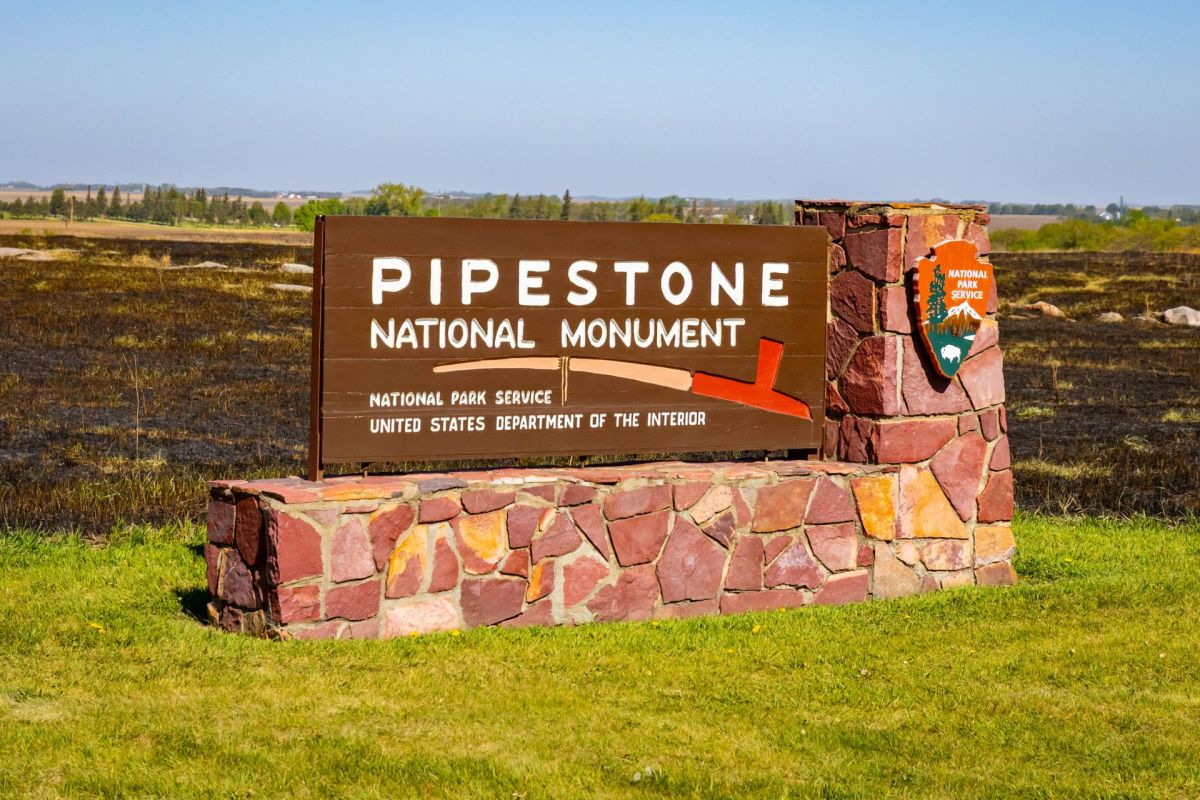
Minnesota regulators have approved a petroleum pipeline reroute near Pipestone National Monument before the cultural and archaeological surveys ordered to inform that decision have even begun.
The Minnesota Public Utilities Commission voted 4-1 Thursday to approve the project, drawing objections from tribal representatives who said their knowledge and concerns had been sidelined.
Here's what to know
The Magellan Midstream Partners project would replace a route connecting Marshall, Minnesota, with Sioux Falls, South Dakota, according to the Sahan Journal.
The U.S. Department of the Interior refused to extend the right-of-way authorization in 2022. That decision ended operations on the original pipeline, which ran beneath the monument.
Tribal opposition led the commission to revoke its approval in January 2025 and require further surveys, slated to begin in April. The commission had approved the project in 2024, following Magellan's 2023 application for a route around the monument.
More than 40 acres across two proposed routes have not been surveyed, and Magellan had yet to file a standalone cultural inventory at the time of the hearing.
TCD Picks » Quince Spotlight
💡These best-sellers from Quince deliver affordable, sustainable luxury for all




Samantha Odegard, an officer with the Upper Sioux Tribal Historic Preservation Office, questioned whether the company had met the commission's cultural survey requirements.
"There was no cultural inventory," Odegard said.
More background
According to the Sahan Journal, Pipestone National Monument has official ties to 23 Indigenous groups and tribal nations. The quarries there are among few places on Earth where catlinite, a soft stone prized for ceremonial pipes, naturally occurs.
Archaeologists have found signs of people using the land for more than 3,000 years.
The dispute also concerned how archaeological findings were evaluated. Survey contractor Chronicle Heritage identified 61 artifact sites and suggested three might qualify for inclusion in the National Register of Historic Places.
The Minnesota State Historic Preservation Office said it had not issued a final eligibility determination for the remaining 58 sites. The office also said the survey failed to meet its standards, warning that depending solely on core samples could leave deeply buried artifacts undetected.
Mark Tilsen, an organizer with the Indigenous Environmental Network, also raised broader environmental concerns, saying the pipeline conflicts with Minnesota's climate goals.
Pipelines like this one carry oil, a fuel whose extraction and burning contribute to air and water pollution linked to asthma, heart disease, cancer, and premature death. That pollution falls hardest on nearby communities, and industry pushback has often slowed cheaper, cleaner alternatives like solar and wind power that could otherwise ease household energy costs.
What's being done?
The commission presented the additional survey process as a "reset" of the contentious relationship. As a condition of approval, Magellan must coordinate that work with tribal nations.
The Minnesota Indian Affairs Council recommended a coordinated cultural resource plan that covers places used for Indigenous gatherings and ceremonies as well as artifact sites.
Magellan's parent company, Oneok, said Magellan had adjusted the planned work area to leave all but two identified resources untouched, with six tribal nations sending a combined 19 cultural specialists to work alongside the archaeological team.
A number of tribal representatives asked the commission for a 5-mile buffer zone around the monument. Commissioner Audrey Partridge, who cast the lone vote against approval, cited her support for that buffer.
Rachel Dionne-Thunder, CEO of the Indigenous Protector Movement, said opponents were considering legal avenues to challenge the permit. Tilsen agreed, adding that tribes and activists planned to meet and map out what comes next.
"We're fighting over a sacred site and a spiritual place," Tilsen said. "We need to regroup and center ourselves in prayer to decide what's next."
Where can I learn more?
The fight over the Pipestone reroute echoes other disputes over pipeline permits and tribal input.
• North Dakota's Standing Rock Sioux Tribe renewed its Dakota Access fight after federal approval.
• Michigan tribes and environmental groups challenged Line 5 tunnel permits through legal action.
• Michigan is re-examining Line 5 permits after its Supreme Court said harms weren't weighed.
• New Jersey's underwater gas pipeline permit was vacated over an approval deemed arbitrary.
• A North Dakota judge said pipeline siting authority doesn't automatically override local zoning.

Get TCD's free newsletters for easy tips, smart advice, and a chance to earn $5,000 toward home upgrades. To see more stories like this one, change your Google preferences here.
Cool Picks






