


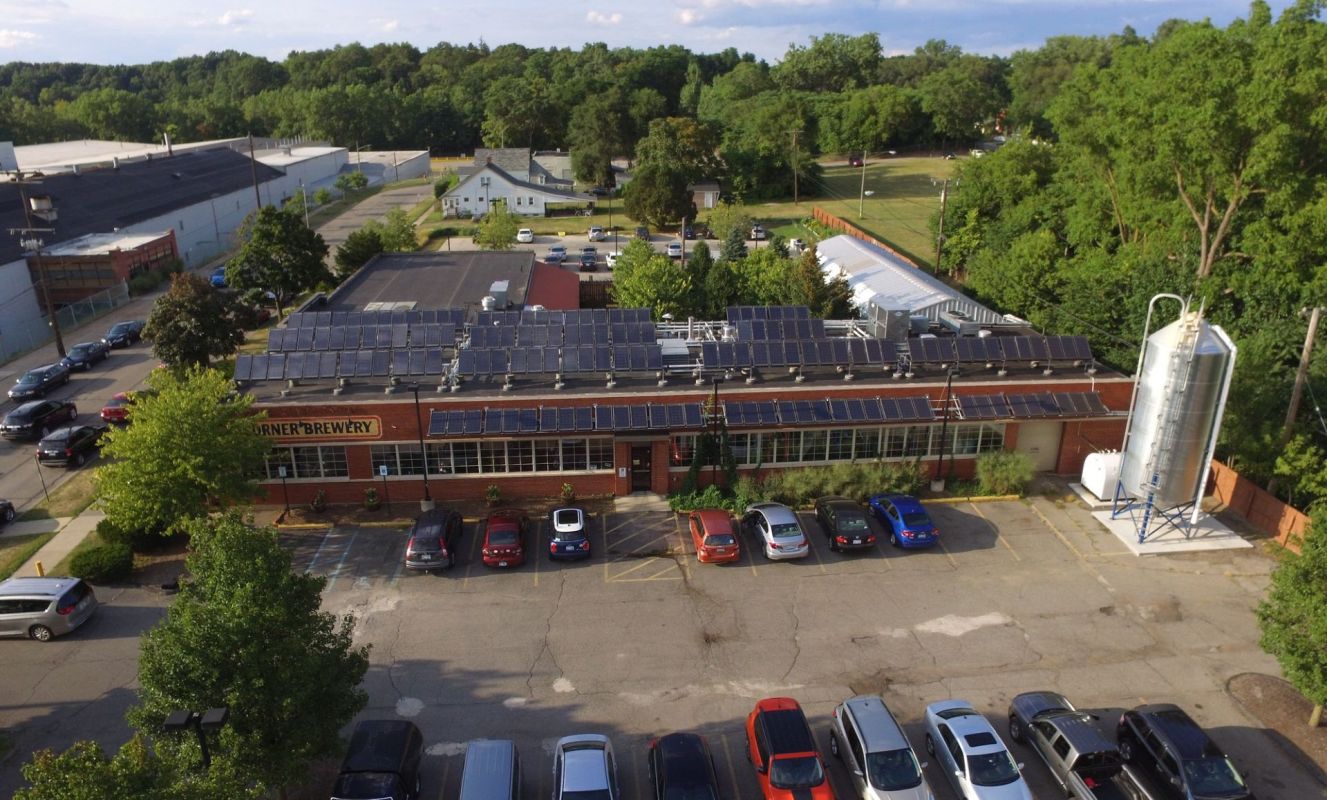
After earning the nickname "man who killed offshore wind," the strategist is now taking aim at Michigan's solar developments, wind projects, and clean energy laws from the platform of a much larger, better-funded think tank.
That shift could have real consequences for households already facing rising utility costs and for communities counting on cheaper, cleaner power in the years ahead, as fossil fuel companies stand to gain from any delays or cancellations of projects that yield effectively free energy from natural factors like wind and sunlight.
What's happening?
Michigan-based Mackinac Center for Public Policy has named David Stevenson its director of energy and environmental policy, according to the Energy and Policy Institute.
Before that, Stevenson was a leading anti-offshore-wind figure at Delaware's Caesar Rodney Institute.
Both organizations are affiliated with the State Policy Network, a national network of right-leaning think tanks that has pushed back against state clean energy policies.
Since arriving at Mackinac, Stevenson has moved quickly to join efforts to weaken Michigan's Healthy Climate Plan and the state's 100% clean electricity by 2040 standard.
TCD Picks » Quince Spotlight
💡These best-sellers from Quince deliver affordable, sustainable luxury for all




He has also backed legislation known as Project Lighthouse, which would roll back key 2023 clean energy laws and reopen disputes over where wind and solar projects can be built.
The outlet reported that the Mackinac Center brought in more than $11 million in 2024, while the Caesar Rodney Institute reported $463,000.
Groups in the Koch network also sent major funding to Mackinac and its lobbying arm.
Why does it matter?
Instead of favoring more wind, solar, and battery storage, Stevenson and the Mackinac Center have pushed to keep coal plants operating longer and to rely more on nuclear and gas.
That approach could prove costly for consumers. Consumers Energy has said that complying with Trump administration orders to delay the closure of the J.H. Campbell coal plant has already cost $400 million, with those expenses spread across customers in the regional grid.
The utility had previously estimated that replacing the plant with solar and storage could save Michigan customers about $600 million through 2040.
Another major coal plant, DTE's Monroe facility, is also part of the debate.
DTE says closing it on schedule would save customers $1.4 billion.
Delays there could mean both higher bills and prolonged exposure to pollution for nearby communities.
What's being done?
In Michigan, Stevenson has testified in support of Republican legislation to repeal parts of the state's clean energy framework.
He has also promoted reports claiming coal, gas, and nuclear would be cheaper than a grid centered on wind, solar, and storage — even while acknowledging, "Our study might be contested."
State officials and environmental groups are pushing back. Michigan Attorney General Dana Nessel challenged federal orders that kept the Campbell coal plant operating.
Clean energy advocates have also warned that repealing Michigan's recent laws would slow deployment of some of the fastest and least expensive new energy sources now available.
"The future of electric generation is clearly nuclear, not solar, and state legislation needs to change in recognition of this reality," Stevenson wrote, according to the Energy and Policy Institute.
Nessel offered a sharply different view: "The Trump Administration is crying wolf over a non-existent energy emergency, while at the same time undermining every effort made to increase the efficiency, affordability, and reliability of domestic energy markets."

Get TCD's free newsletters for easy tips, smart advice, and a chance to earn $5,000 toward home upgrades. To see more stories like this one, change your Google preferences here.






