


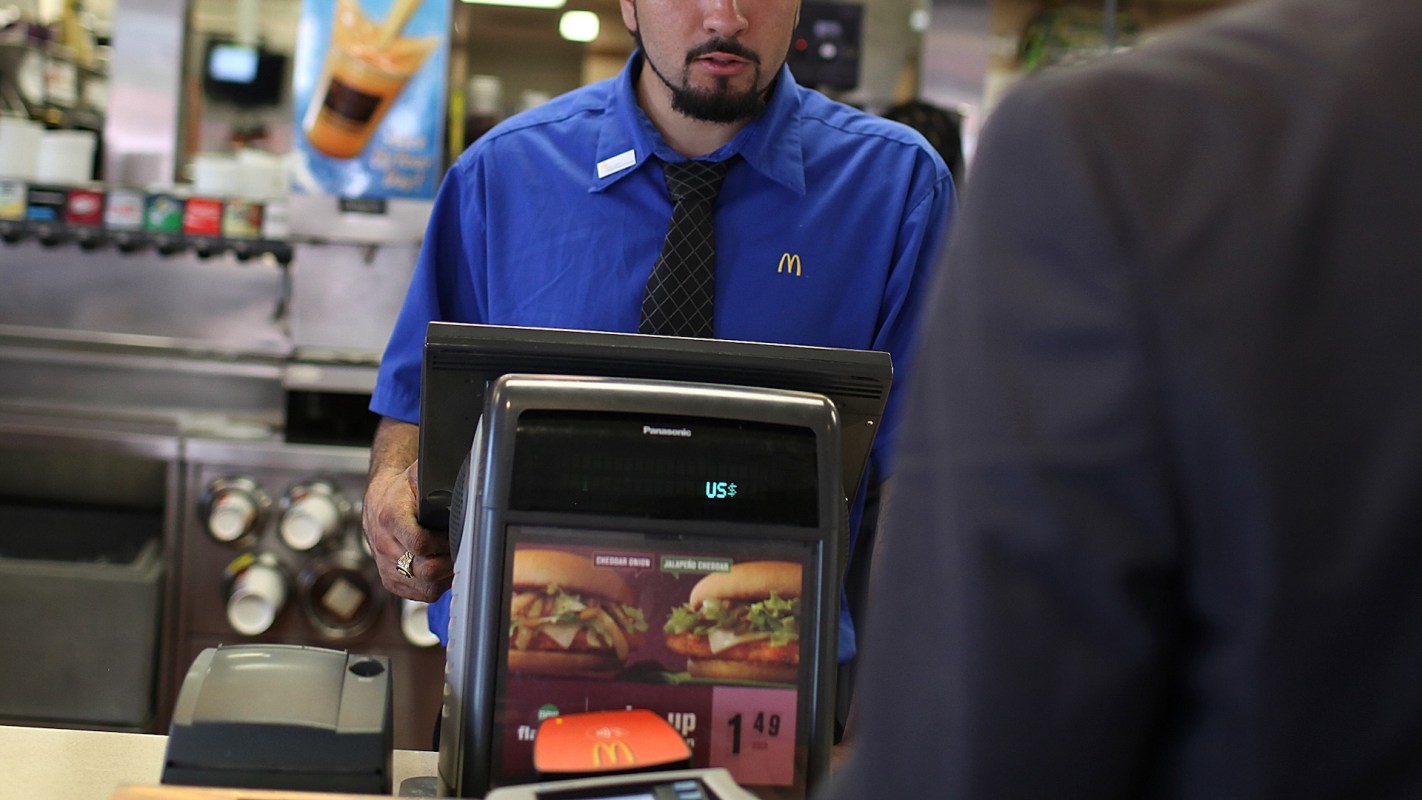
Fast-food chains are going back to traditional customer service after years of steering customers toward kiosks, apps, and other self-service tools.
Here's what to know
Some of the biggest names in the industry are signaling that too much automation may have made ordering feel impersonal — and, for many diners, more frustrating than convenient.
According to The Wall Street Journal, as cited by the Daily Mail, McDonald's will retrain more than 2 million workers globally through its "Make it Golden" program, and Wendy's, Burger King, and Starbucks are also renewing their focus on face-to-face service.
Digital ordering, app-only discounts, and in-restaurant kiosks were designed to speed service and ease labor demands, yet many diners viewed them as less welcoming or straightforward than ordering from an employee.
The change could mean a smoother experience at the counter, especially for people with menu questions, who need help customizing an order, or who simply don't want to navigate a touchscreen while trying to grab a meal quickly.
Hospitality will also factor into McDonald's franchise reviews, as the company begins judging restaurants partly on their service standards.
TCD Picks » Quince Spotlight
💡These best-sellers from Quince deliver affordable, sustainable luxury for all




More background
Having an employee nearby can save time and reduce stress. Stronger in-person service can also improve accessibility for older diners, people with disabilities, and anyone who is less comfortable relying on apps for routine transactions.
Customer preferences can shape how major brands operate. If enough people push back on changes that feel inconvenient or impersonal, companies often respond.
That same kind of pressure can matter in other areas, too, including sustainability. Shoppers who want to encourage better corporate behavior can support eco-friendly initiatives by mainstream brands.
What's being done?
Among the chains mentioned, McDonald's seems to be making the most concrete commitment by combining a worldwide customer-service training campaign with new franchise review criteria. Putting millions of employees through retraining is a sizable undertaking, and linking hospitality to restaurant assessments suggests the effort is intended to carry real consequences.
That could translate into more attentive staff, faster problem-solving, and a better balance between digital tools and human support. The shift does not necessarily mean kiosks or apps are disappearing. Instead, chains seem to be acknowledging that technology works best when it complements service rather than replacing it.
Other major brands watching the trend may decide to make similar adjustments if they see stronger sales and happier customers.
"Food is important," McDonald's global chief people officer Tiffanie Boyd said via the Journal. "Price is important, but experience has also become much more important than it used to be."
Where can I learn more?
These articles look at how fast-food chains are changing packaging, electricity sourcing, and food-waste systems.
• Taco Time Northwest switched to compostable disposables in restaurants with strong employee buy-in.
• Wendy's community solar partnership helps power more than 100 U.S. restaurants.
• Burger King's major update for restaurants expands renewable-energy use through Iberdrola worldwide.
• At McDonald's headquarters, a food-waste management system drew attention for handling scraps.
• McDonald's is studying an array of methods to cut plastic across the chain.

Get TCD's free newsletters for easy tips, smart advice, and a chance to earn $5,000 toward home upgrades. To see more stories like this one, change your Google preferences here.






