


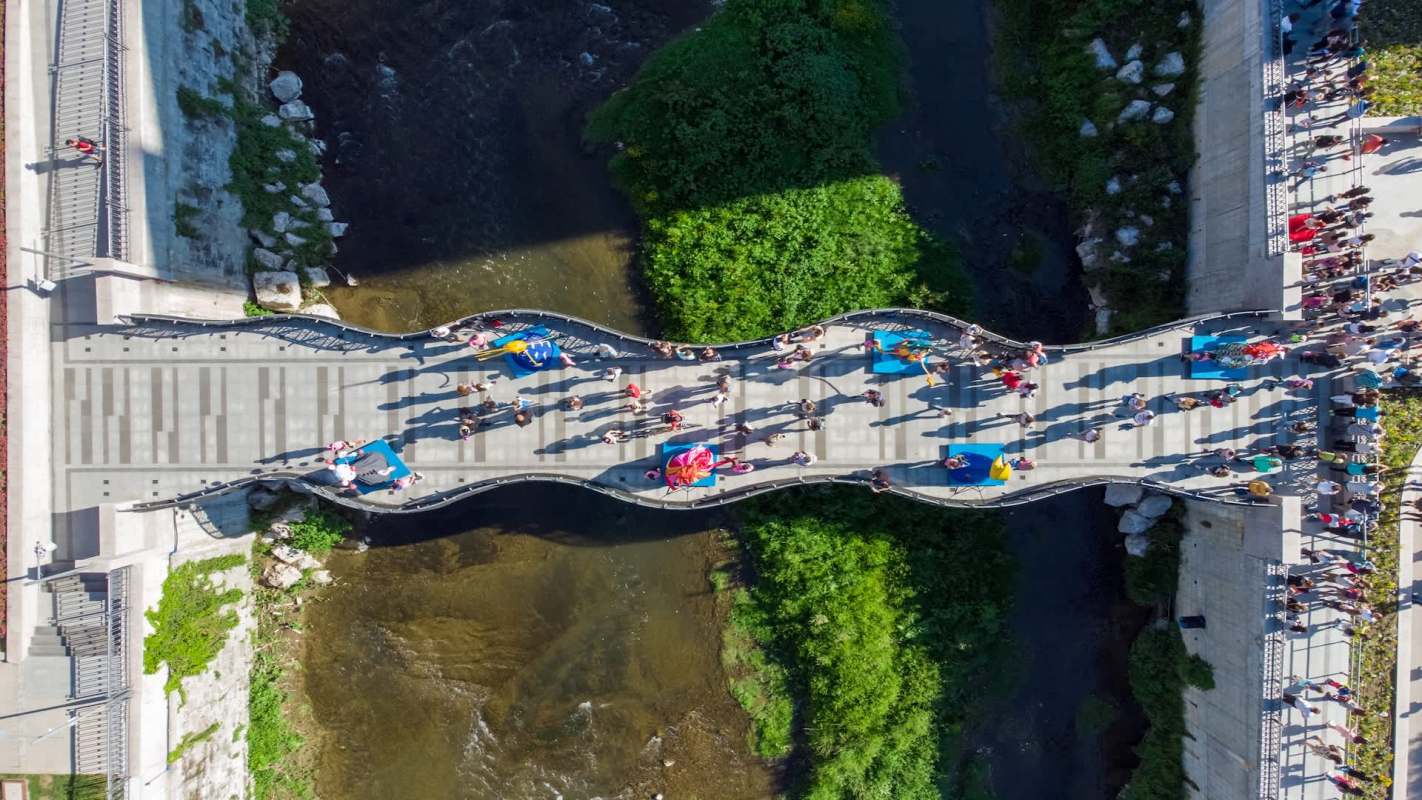
Massachusetts is moving forward with a long-anticipated car-free connection across the Mystic River, clearing the way for a new pedestrian and bicycle bridge between Everett and Somerville.
The project is expected to give walkers and cyclists a safer route, though it is also arriving with a significantly higher price tag than state officials had originally projected.
Here's what to know
Streetsblog Mass reported that a car-free link between the Encore Casino site in Everett and Draw Seven Park in Somerville moved closer to construction on Sept. 23. MassDOT's board unanimously approved a $78.7 million design-build contract for the Mystic River Pedestrian and Bicycle Bridge.
The contract went to Barletta Heavy Division, Inc., and MassDOT expects the work to take about three years, according to the outlet.
Including another $17 million the state has set aside for contingencies, flaggers, and engineering work, the full budget for the bridge reaches $96 million. The contract itself was about 27% above MassDOT's earlier estimate of roughly $62 million, according to Streetsblog Mass.
MassDOT director Thomas McGee, the former mayor of Lynn, called the news "really exciting" in comments to the outlet.
TCD Picks » Quince Spotlight
💡These best-sellers from Quince deliver affordable, sustainable luxury for all




More background
Beyond spanning the Mystic, the bridge is meant to connect residents with the MBTA and trail networks on both sides of the river, making it easier to travel without a car.
"We're talking about the connections with Everett and Somerville and to the MBTA and to the other trails on that side of the river," McGee explained to Streetsblog Mass. "But on the other end there's the final completion of the Northern Strand, heading into Lynn and Nahant Beach. So this is a direct connection."
At the same board meeting, officials also approved a contract for rehabilitation work in Boston's Big Dig tunnels whose bid came in nearly $27 million, or 35%, above MassDOT's estimate.
What's being done?
State officials are moving ahead with the bridge regardless.
According to Streetsblog Mass, MassDOT Director of Major Projects Mike O'Dowd said rising costs on major projects have been driven by "market volatility in materials." He specifically called out "steel costs" tied to President Donald Trump's tariffs.
In the comments, readers wondered about access to Assembly Station, and whether it was contingent on a new soccer stadium project for the New England Revolution being approved by the city. They argued that without access, the new bridge was less useful for transit users.
"I believe it's not even funded — it's contingent on the stadium plan getting approved and built," Streetsblog Mass answered in the comments. "Notably, the Assembly headhouse project is not in the T's current 5-year CIP (capital investment plan)."
Where can I learn more?
There's a lot that goes into major crossings, and they can be used to help nearby wildlife or repurpose difficult-to-recycle materials.
• Massachusetts will use a federal grant to build a bridge over the Mass Pike for wildlife.
• Wyoming transportation officials secured over $20 million for underpasses protecting mule deer migration routes.
• Georgia Tech engineers turned recycled wind turbine blades into a pedestrian bridge with an unusual design.

Get TCD's free newsletters for easy tips, smart advice, and a chance to earn $5,000 toward home upgrades. To see more stories like this one, change your Google preferences here.






