


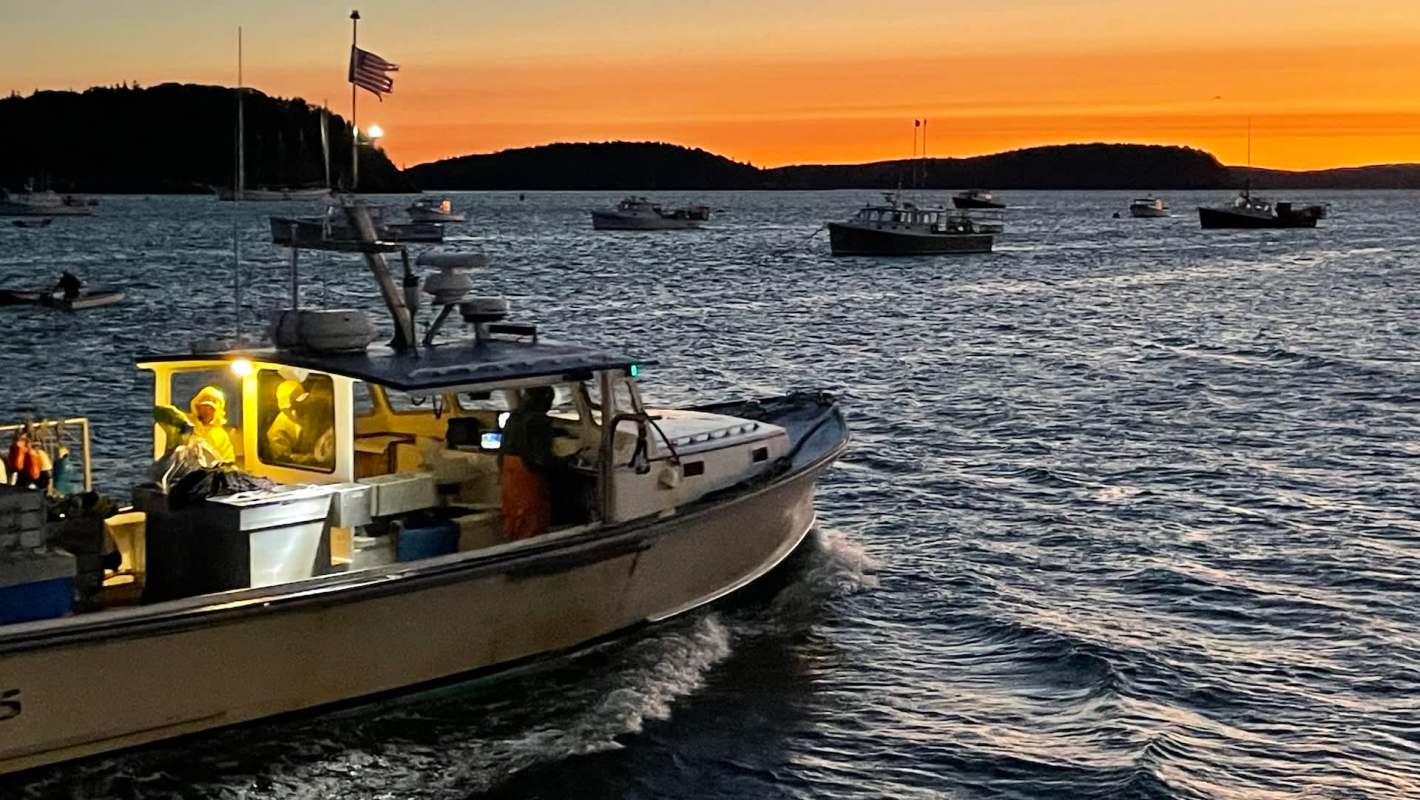
A Supreme Court case over lobster boats in Maine could affect far more than one fisherman's daily routine.
The dispute asks whether Maine can require federally permitted lobster and Jonah crab boats to keep GPS trackers running at all times, including when they are not being used for commercial fishing.
For working waterfront families, the case has become a clash between privacy and property rights on one side and fishery oversight on the other in an industry that helps sustain communities across coastal Maine.
Here's what to know
On September 28, the U.S. Supreme Court will hear a challenge brought by Frank Thompson, a fifth-generation lobsterman from near Vinalhaven, Maine. As Seacoastonline reported, lower courts threw out his case in 2023 and again in 2025, and he is now asking the justices to block a tracking rule tied to commercial fishing licenses.
Maine's rule grew out of a 2023 fisheries management change. After the Atlantic States Marine Fisheries Commission required electronic tracking for federally permitted vessels in the lobster and Jonah crab fisheries, the Maine Department of Marine Resources adopted its own rule requiring fishers to run active trackers in order to keep their licenses.
State regulators have said the devices are intended to improve information gathering in federal waters. The department said the trackers would "provide more detailed data on fishing effort in federal waters," and that the resulting information could help officials monitor fish populations and address other ocean-related issues.
TCD Picks » Quince Spotlight
💡These best-sellers from Quince deliver affordable, sustainable luxury for all




Thompson and other lobstermen, however, say the requirement reaches beyond commercial work because the boats are also used for personal purposes.
More background
By the Maine Lobstermen's Association's count, the state's lobster industry supports tens of thousands of jobs and produces billions of dollars in annual economic activity.
That helps explain the push for more monitoring: scientists say data is important for understanding these kinds of changes, and Maine's lobster populations have been declining.
What's being done?
The next major step is the Supreme Court's review. Thompson wants the justices to rule that Maine cannot require lobstermen to keep the devices on their boats at all times, and a decision in his favor could either strike down the rule or limit it.
According to Matthew Gilliam, Thompson's lead attorney, one possible middle-ground outcome would allow trackers during commercial fishing activity but not during recreational use.
The Maine Department of Marine Resources declined to comment. The state said stronger fishery data could help officials track fish populations and respond to other ocean-related issues.
"There are times when he's not working, and when he's not working, then the government, by placing or keeping this tracker on his boat, is trespassing on his property and violating his Fourth Amendment rights," Gilliam said.
Where can I learn more?
This case is part of a wider fight over how far fishing rules and enforcement can go.
• In Florida, routine vessel searches are now barred without probable cause.
• Near Eastport, an AI underwater data center faced backlash from fishing families.
• In the Gulf of Maine, a shrimp fishing ban was extended again.
• Federal regulators said commercial fishing companies created a substantial threat to waterway safety.

Get TCD's free newsletters for easy tips, smart advice, and a chance to earn $5,000 toward home upgrades. To see more stories like this one, change your Google preferences here.






