


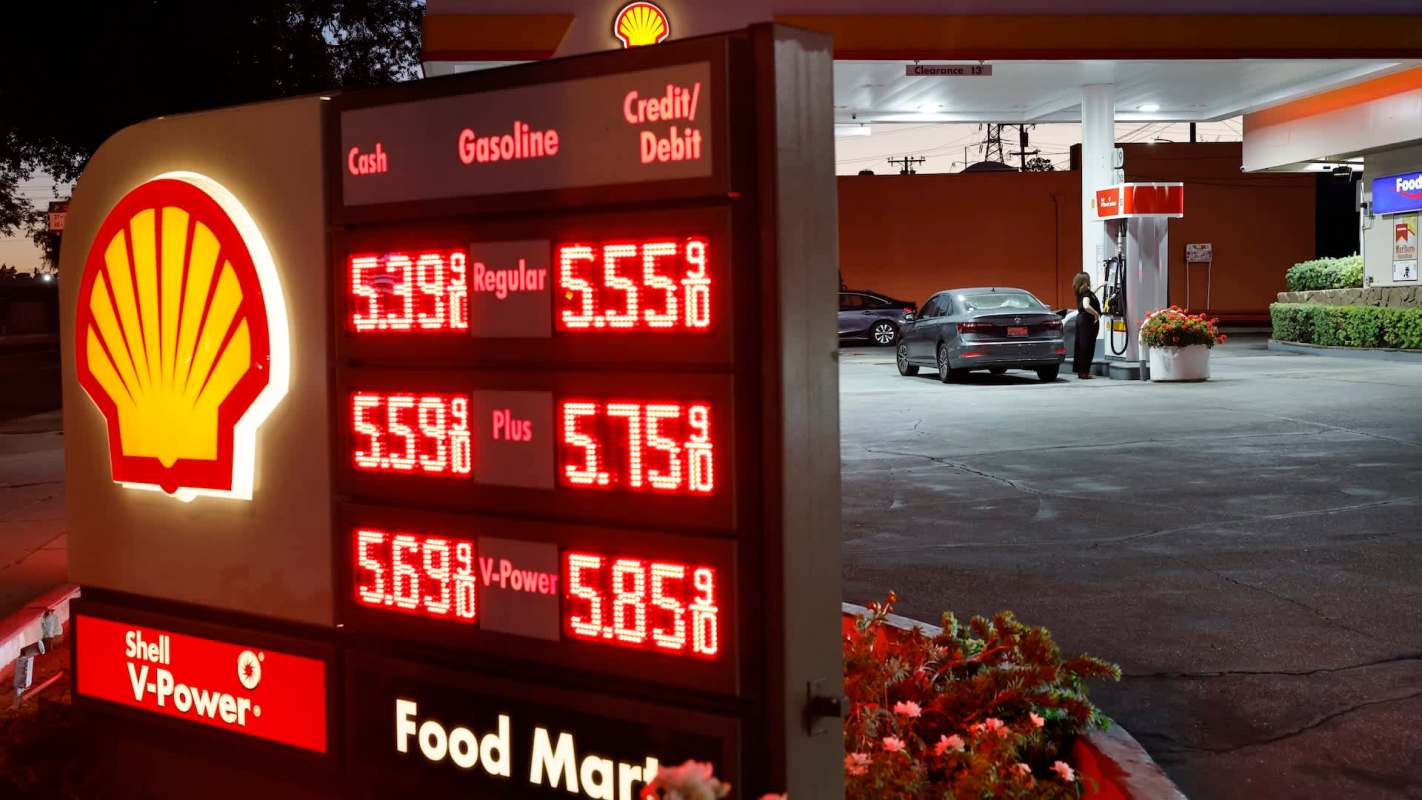
Paying $105 at the pump was enough to persuade one Los Angeles-area driver to leave his car parked and turn to public transit instead.
As gas prices in Los Angeles County rose above $6 a gallon this year, some residents started shifting back to buses, trains, and bike share programs to save money and change how they get around each day.
What's happening?
In May, 27-year-old Glendale resident and professional saxophone player Christopher Astoquillca spent $105 on premium gas for his 2002 Mercedes-Benz Kompressor and took a photo of the receipt, The LA Local reported.
Metrolink ridership increased by about 4% as gas prices began climbing in early March, and March became the agency's busiest month since before the COVID-19 pandemic. Metro rail also posted gains, with ridership in March and April rising 5.4% from the same period in 2025.
AAA data cited showed how sharply prices rose after the Feb. 28 offensive by the United States and Israel in Iran: by late March, gas in LA County was around $5.80 a gallon, and the Los Angeles-Long Beach average later reached roughly $6.10.
After learning he qualified for Metro Life — which offers low-income riders 20 free rides on Metro buses and trains for life — Astoquillca said his routine changed quickly. "I put my car down for a week," he said.
TCD Picks » Quince Spotlight
💡These best-sellers from Quince deliver affordable, sustainable luxury for all




Why does it matter?
Even after coming down from their high point, gas prices remained much steeper than a year ago. AAA figures cited by The LA Local showed LA County at about $5.57 a gallon in late July, compared with roughly $4.40 during the same period last year. For many households, that difference affects one of their biggest regular expenses.
"With gas prices in April averaging roughly $5.70 per gallon, the ability to travel across the county for just $1.75 makes rail an increasingly attractive and cost-effective alternative," Maya Pagoda, a Metro representative, said.
Diego Torres-Casso, a 28-year-old East LA resident, said longer transit trips did not bother him because they gave him more time to read, work, or simply decompress. "I have also just relaxed and looked out the window and enjoyed just being a passenger. It's kind of a nice way to see the city," he said.
What's being done?
Transit agencies benefited from a mix of rising gas costs and better service options. The LA Local reported that recent rail additions, including links to LAX and Union Station, have made the system more practical for more Angelenos.
Metro's Bike Share program saw ridership rise 11.5% this year, giving residents another lower-cost way to avoid expensive fuel. For people who qualify, programs such as Metro Life can bring those costs down even further.
Torres-Casso said he likes the "communal feeling" of taking transit and feels more connected to the people around him when he rides instead of driving alone.
"It weirdly also kind of makes me feel a little bit more connected to my local community by being able to take the bus," Torres-Casso said.
For Astoquillca, the sticker shock that started it all still lingers: "I sent it to a few friends who have Priuses and they were like, 'Oh my god. I'm sorry.'"

Get TCD's free newsletters for easy tips, smart advice, and a chance to earn $5,000 toward home upgrades. To see more stories like this one, change your Google preferences here.






