


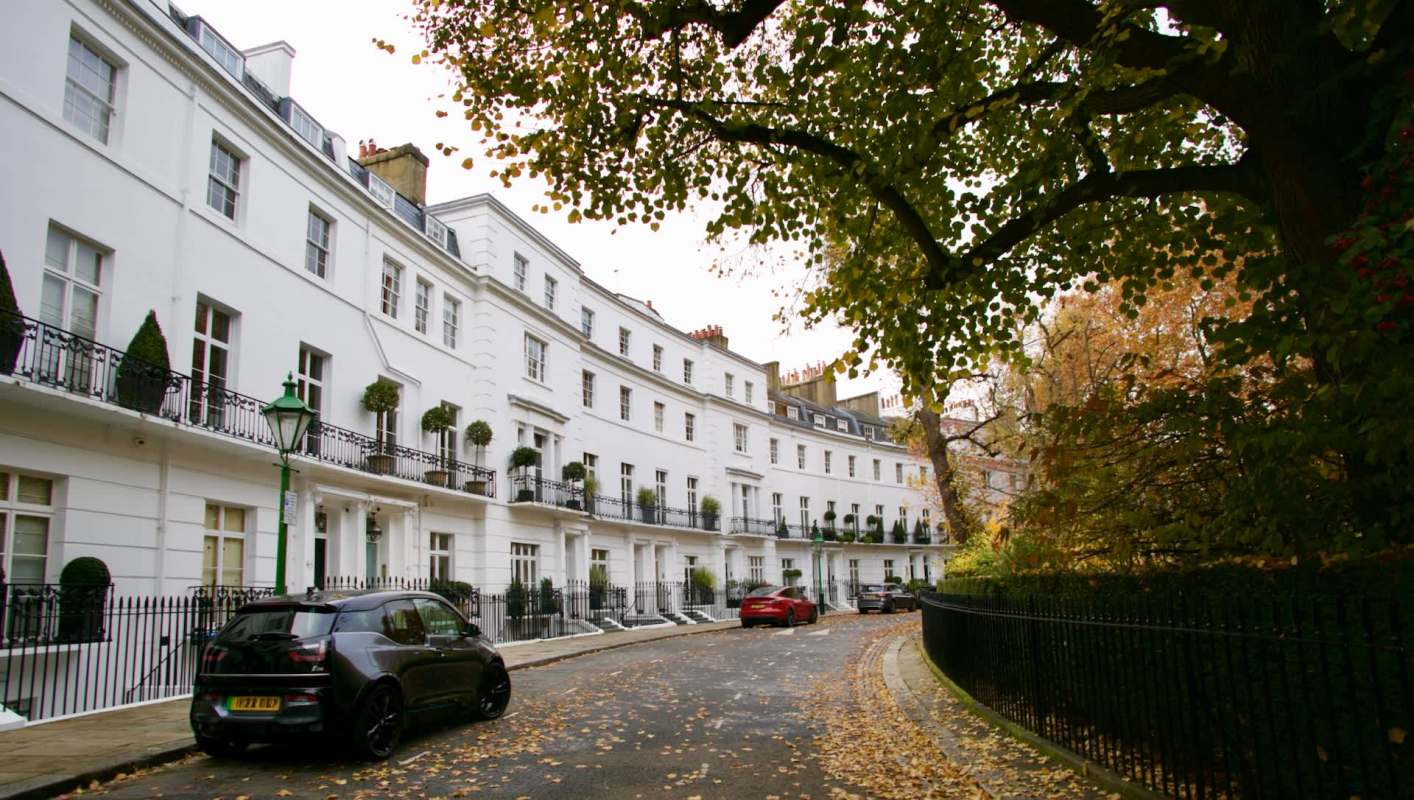
Money is no longer the only issue at the top of London's housing market. Affluent buyers are paying closer attention to whether a home can handle hotter summers and intense rain, as many of the city's most expensive properties were not designed with either in mind.
Here's what to know
Climate exposure is increasingly becoming a pricing consideration for top-end London homes, according to Prime Purchase, Savills UK's buying arm for affluent clients, Insurance Journal reported.
Guy Meacock, a director at Prime Purchase, said the market could suffer if buyers come to view London's housing stock as poorly suited to modern weather conditions. "If London gets a reputation for having architecture that's fundamentally not fit for purpose, then it's not ludicrous to think that it will have as far reaching an impact on property values as anything else," he said.
Cooling is one of the first things many buyers ask about. Meacock said U.S. buyers ask about air conditioning "every single time." Air conditioning is installed in less than 10% of U.K. properties. When they learn how uncommon AC is, even in luxury London homes, "your pool of potential properties suddenly shrinks," he said, per Insurance Journal.
Flood risk is rising up the list of concerns as well. The Environment Agency estimated that almost 320,000 London homes and businesses were at high risk of surface-water flooding. Savills' Prime London index has fallen about 27% since its 2014 high.
More background
The Mayor of London's office described extreme heat as a "major and growing public health threat," while 86% of Londoners surveyed said their homes overheat, according to Insurance Journal.
TCD Picks » Quince Spotlight
💡These best-sellers from Quince deliver affordable, sustainable luxury for all




In London and beyond, rising indoor temperatures can pose serious health concerns, while flash flooding can damage homes; disrupt communities; and strain household finances through repair costs, insurance shortfalls, and declining buyer confidence.
Tracey Garrett, chief executive of the nonprofit National Flood Forum, told Insurance Journal that the organization's helpline "often" gets calls from London residents who cannot find affordable flood insurance.
"They just manage without flood insurance," she said.
Garrett added that even when homeowners are "asset rich," they are not always "day-to-day wealthy," the outlet reported.
Meacock noted that London's "golden postcodes" in Kensington and Chelsea and parts of Westminster may be especially vulnerable given that about half of buyers in that segment come from outside the United Kingdom.
What's being done?
One of the main policy tools in place is Flood Re, the U.K.'s insurer of last resort. However, Flood Re covers only homes built before 2009, and flats in buildings with more than three properties are not eligible, according to Insurance Journal.
Flood Re announced a change intended to keep the program from disproportionately benefiting wealthy homeowners. Starting in 2028, commercial insurers with multimillion-pound homes on their books will receive less public backing than before.
Private brokers are also increasingly relying on detailed, property-by-property risk analysis.
George Seatter, client director at Howden Private Clients, told Insurance Journal that a £2 million ($2.7 million) home built in 2019 near the River Thames appeared to be uninsurable because carriers treated it as a second home in a flood-prone area that could not use Flood Re.
Howden secured coverage through a U.S. insurer after assessing the home's precise location relative to the river.
Seatter said insurers willing to carry out that kind of deeper, site-specific review are gaining business from competitors that reject homes based on flood maps.
Meacock sees the change in buyer thinking as early-stage but not temporary.
"The impact of climate change is having a profound effect on people's mindset," he said. "And although it's not yet having a really material impact on values, that is going to be the likely pathway."
Where can I learn more?
Climate risk is influencing housing decisions far beyond London's luxury market.
• Prospective buyers can now use tools to evaluate climate risk before exposure hits insurance costs and resale values.
• Across the U.S., disaster risk shapes home searches as buyers weigh floods, fires, and storms.
• In California, one insurer's retreat from flood-prone areas raised long-term concerns for homeowners.

Get TCD's free newsletters for easy tips, smart advice, and a chance to earn $5,000 toward home upgrades. To see more stories like this one, change your Google preferences here.






