


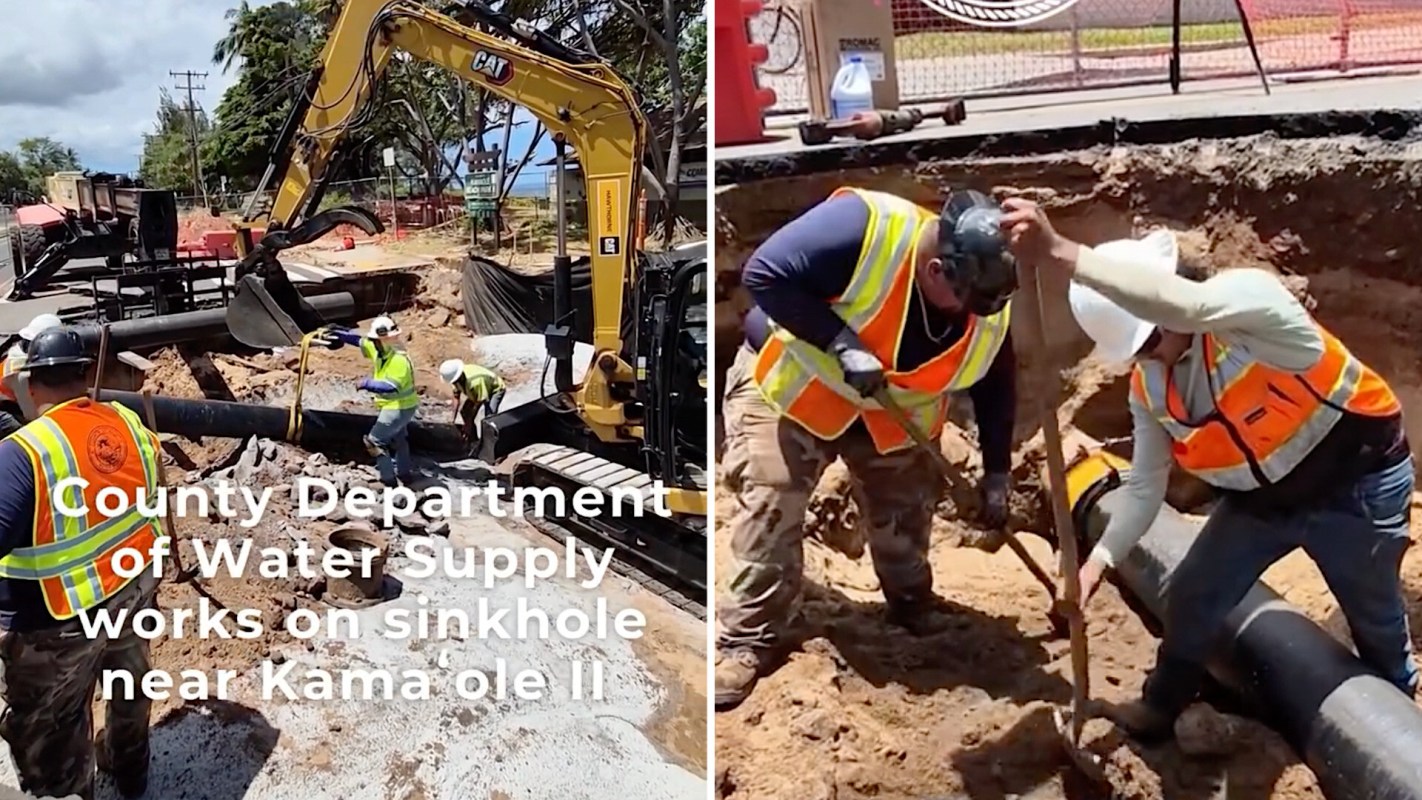
Maui County says the March Kona Low storms left about $100 million in damage across the county, adding a major new recovery burden as the community continues to deal with the aftermath of the Lahaina wildfire.
What happened?
Maui Now reported that damage has been recorded at 92 county-owned infrastructure locations. John Smith, administrator of the Office of Recovery, provided that update last Wednesday to the county council committee on disaster recovery, international affairs and planning.
According to Smith, the county is now looking at roughly $100 million in Kona Low recovery and mitigation needs in addition to $2.36 billion connected to wildfire recovery, for a combined known need of about $2.47 billion. He said the newly approved fiscal year budget did not really account for the Kona Low losses.
Using a map to show the scope of the problem, Smith told council members, "Every circle on there represents damaged infrastructure that the county owns, and the bigger the circle, the bigger the problem." The affected sites extend across East, West, Central and South Maui, along with Upcountry and Molokaʻi, The Maui News reported.
"When the storms hit, it impacted all of Maui very significantly," he said. "We had sinkholes everywhere."
Officials highlighted several of the worst problem areas, including flood damage in Hāna, Molokaʻi, and ʻĪao Valley; the South Kīhei Road sinkhole; major sediment buildup in Kīhei gulches; and the Kula Upcountry Gym, which "appears to be a total loss."
TCD Picks » Quince Spotlight
💡These best-sellers from Quince deliver affordable, sustainable luxury for all




Why does it matter?
The county must pay for repairs first and seek federal reimbursement afterward, Maui Now reported. The federal government typically covers 75% of those costs, leaving Maui County to handle the rest.
Smith said FEMA has already approved millions in help for households. Elizabeth Vargas, an SBA public affairs specialist, said late disaster loan applications can still be submitted through Aug. 13. As of last Wednesday, the SBA had approved more than $11 million across 170 loans.
What are people saying?
Describing conditions in Kīhei, Smith told council members, "Kīhei was overwhelmed with sediment and debris, along with sinkholes and other issues associated with roadway and infrastructure failures."
Council Member Keani Rawlins-Fernandez asked Smith whether FEMA might help with bond-related costs. After Smith replied, "I think the answer is 'no,' but we can follow up," Rawlins-Fernandez answered, "I believe in you; you can change their mind."
Vargas also urged residents not to assume they do not qualify for aid. "SBA offers disaster loans to homeowners and renters, besides businesses," she said. "There is no cost to apply, no prepayment penalty, and no obligation to take a loan if you are approved."

Get TCD's free newsletters for easy tips, smart advice, and a chance to earn $5,000 toward home upgrades. To see more stories like this one, change your Google preferences here.






