


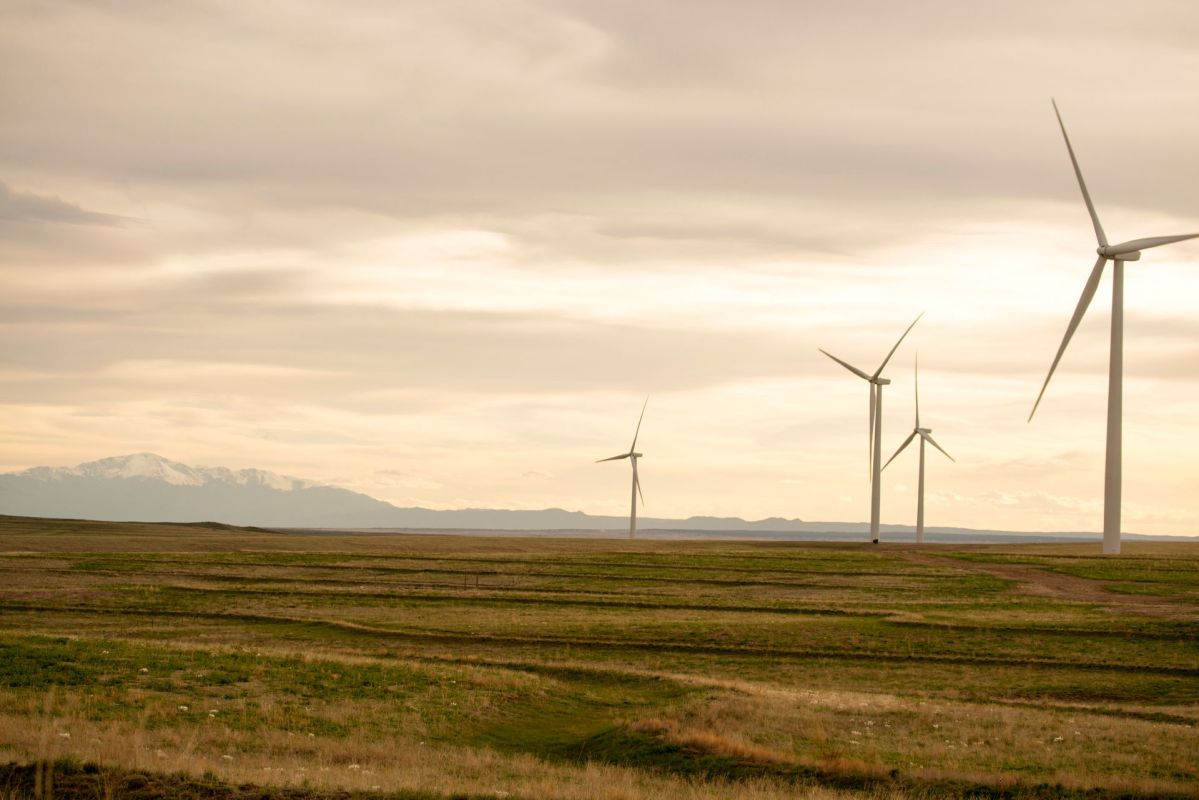
A Kansas rancher who once worried that wind turbines might change his land says they ultimately did something even more meaningful: They helped keep his ranch in the family.
Since 2006, the 50 turbines on Peter Ferrell's ranch have supplied about half of his income, helping steady a business where revenue can swing widely from year to year.
Here's what to know
In the Flint Hills, Ferrell, a fourth-generation rancher, did not immediately agree to host a wind power project that would become the largest in Kansas. As Good News Network reported, he had to weigh the same objections many rural landowners still hear: that turbines would scar the landscape, endanger prairie chickens, or bring in money seen as out of step with ranching culture.
Ferrell said the turbines have turned out to be easy neighbors, and the biggest change has been economic rather than ecological. The added income has helped protect the ranch from the boom-and-bust nature of cattle production, while cattle still graze the land, the prairie remains intact, and prairie chickens continue to nest there.
After Greenlight Energy Resources took on the development, the effort became the Elk River Wind Power project, which now powers 60,000 homes. That kind of energy generation can help communities reduce their reliance on dirtier power sources while expanding access to electricity produced without fuel costs that can fluctuate over time.
Ferrell said the decision was rooted as much in stewardship as in economics.
TCD Picks » Quince Spotlight
💡These best-sellers from Quince deliver affordable, sustainable luxury for all




"My family has been here since 1888, and that weighs heavily on my decision to engage in practices that can be carried on generation after generation without depleting the resources," he said in a statement. "Both the grass and the wind will be here for generations."
More background
For landowners, wind projects can provide dependable royalty income without requiring them to give up the primary use of their land.
That is especially important in agriculture, where debt, weather, and commodity prices can make it difficult for farms and ranches to survive across generations. A second income stream can help families cover costs, ease financial pressure, and avoid selling land that has been in the family for decades.
Wind power can strengthen local tax bases, create jobs tied to construction and maintenance, and reduce air pollution from fossil fuel generation — a public health benefit that can be especially meaningful for communities downwind of power plants.
Ferrell said that stability has reshaped what is possible for his family's future.
"I have two grown children and four grandkids, and they love this place," he said. "Because of the wind farm, they'll be able to perpetuate it without financial burden."
What's being done?
Across the country, developers, utilities, and landowners are increasingly embracing "working lands" models that allow clean energy projects to coexist with farming and ranching. Ferrell's ranch is one example: The turbines occupy part of the property, but the cattle operation continues.
This kind of dual use does not require an all-or-nothing decision. Families can continue producing food, preserve open land, and add income that helps pay bills and plan for the next generation.
He has also become someone other ranchers turn to when they are considering the same option.
"After the wind farm was built, my phone rang off the hook," Ferrell said. "Farmers and ranchers asking, 'How'd you do it? Could we get one?'"
Where can I learn more?
Wind power can bolster rural economies without pushing agriculture aside. In places such as Kansas and Iowa, that has meant new income for farms and local communities, while major projects off coastal Virginia show how those benefits can grow on a much larger scale.
• On another Kansas ranch, expenses almost prevented him from keeping the farm at all.
• In Howard County, Iowa, wind development generated nearly $3 million for a small farm community.
• Off the coast of Virginia, Dominion Energy completed a major offshore build with broad economic stakes.

Get TCD's free newsletters for easy tips, smart advice, and a chance to earn $5,000 toward home upgrades. To see more stories like this one, change your Google preferences here.






