


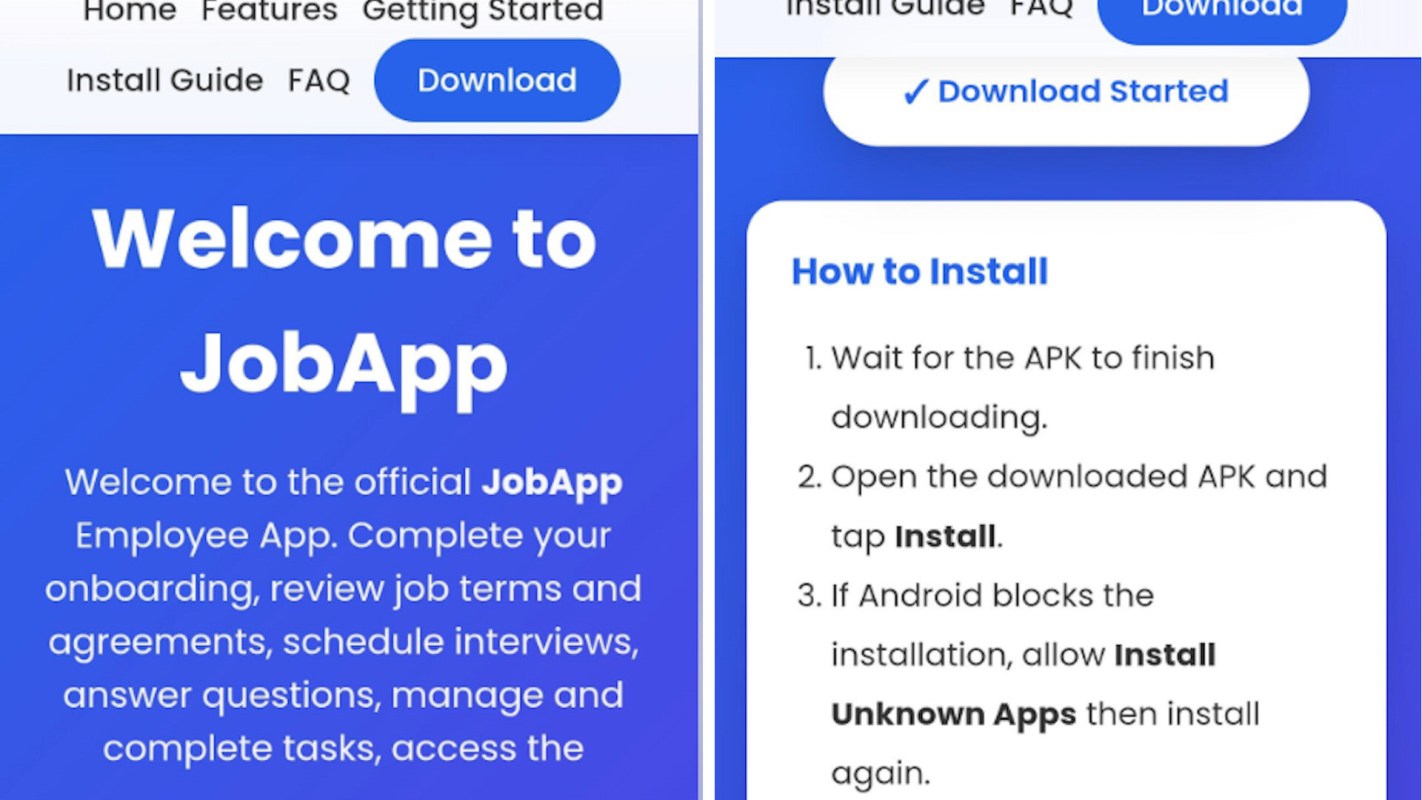
After submitting applications at a breakneck pace, a U.S. job seeker found themselves close to falling for a fake hiring setup that revolved around downloading an app called "JobApp."
In a post on the r/Scams subreddit, the contrite applicant said the message was tempting because "I am in desperate need of a job."
Here's what to know
They said they were contacted by email about a position they might have applied for but could not identify.
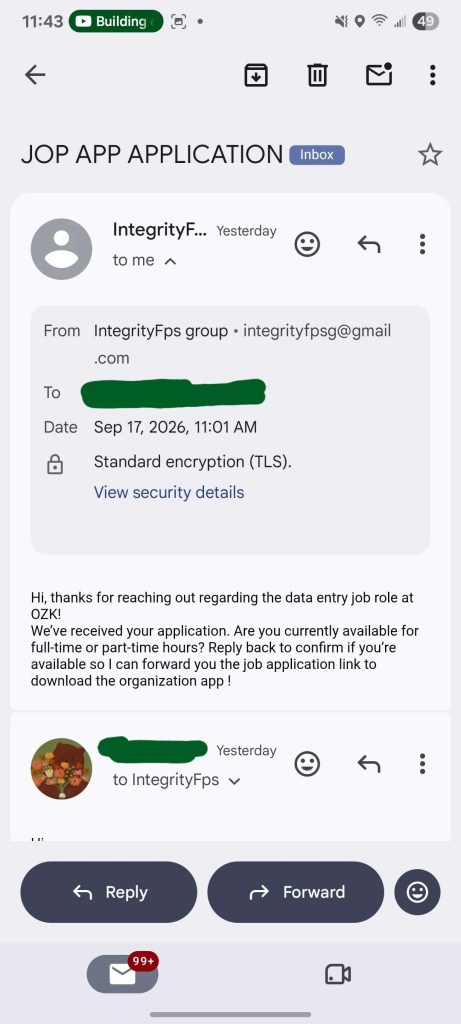
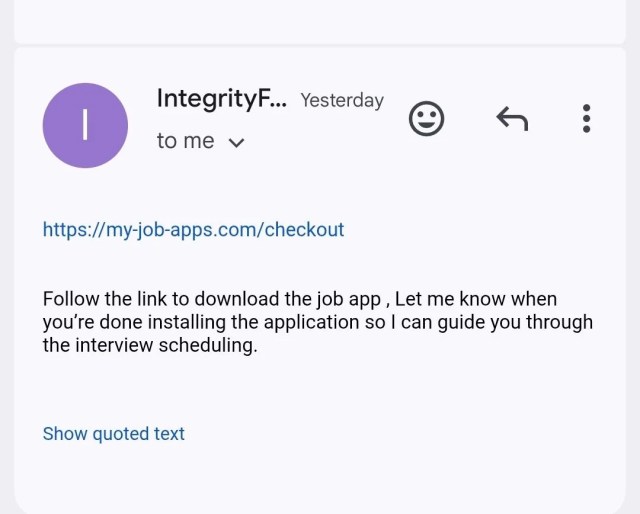
After they answered a question about availability for full-time or part-time work, they were directed to a website and told to download an app that was supposedly meant for interview scheduling, task assignments, and access to a company handbook.
Commenters said those details were major warning signs.
"Do not proceed. This is a complete scam. Block them," one user responded.
TCD Picks » Quince Spotlight
💡These best-sellers from Quince deliver affordable, sustainable luxury for all




"Legitimate companies do not require you to download an app for interviewing," another user clarified. "They use Zoom or another standard videochat app."
Commenters were even more skeptical once they examined the site. An industrious user informed the original poster that "the site they are directing you to was created 10 days ago." Someone else concluded that it was "definitely a scam."
More background
Scams work by mimicking the rushed, impersonal pace of online hiring. A short email, a vague reference to an application, and a request to continue the process on a new platform can sound believable, especially when someone is under financial pressure.
People in the thread also warned that installing software from an unfamiliar site, particularly one that is not distributed through an official app store, can put a phone or computer at risk of malware.
Some commenters focused on the download instructions themselves as another clue.
One person said the installation process looked suspicious.
"The 'How to Install' section is standard for apps that are banned from the play store, like cracked YouTube premium versions," they wrote.
The user who mentioned Zoom also warned that scammers could be after more than access to a device, saying, "Either the download will put malware on your computer, or they will try to trick you into giving them money, or they will get you involved in illegal activities."
What can be done?
One practical safeguard is to keep a record of every job application and the email domain tied to each employer, which can make unexpected follow-ups easy to verify. Commenters also treated any request to install an unknown app as a serious red flag.
Another step is to confirm that a recruiter's email matches a company's domain and that any app connected to the hiring process appears in official app stores. If those basic checks do not line up, that alone is a reason to stop.
These schemes are designed to pressure people when they are vulnerable, and taking a moment to check can protect both finances and personal data.
The original poster summed up the experience with a mix of relief and frustration.
"It all feels a little silly now in retrospect, but I guess that just means I can no longer tell myself I could never be scammed," they wrote in an update.
Where can I learn more?
Online scams tied to job hunting often overlap with other kinds of digital deception.
• Google sued over 9,000 fake sites allegedly used to push AI-driven scam texts.
• Job applicants challenged Eightfold AI hiring software, saying opaque screening decisions deserved clearer explanations.
• In the U.K., scammers took over devices after a crypto ad lured a retiree.

Get TCD's free newsletters for easy tips, smart advice, and a chance to earn $5,000 toward home upgrades. To see more stories like this one, change your Google preferences here.






