


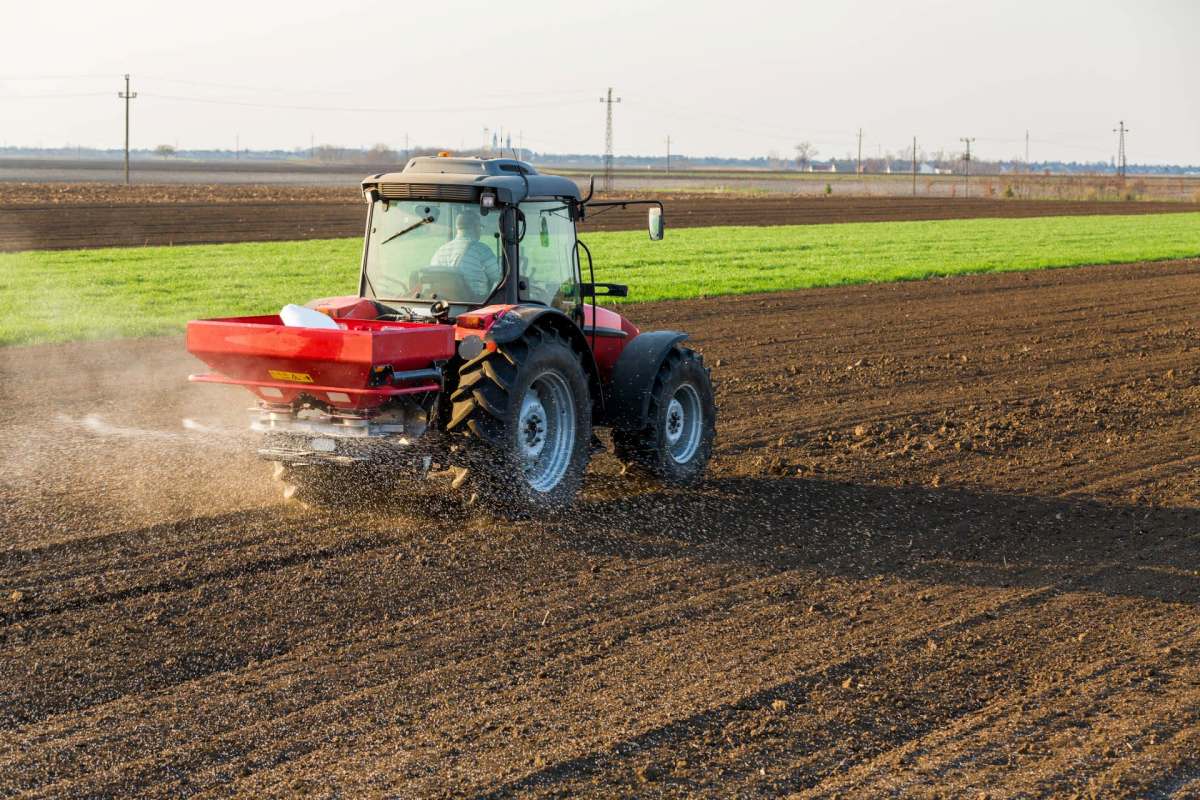
With planting season underway and fertilizer costs rising amid the war in Iran, an Iowa farmer is urging Congress to use the next farm bill to reduce growers' dependence on volatile inputs.
The warning points towards farmers' dependence on fertilizers and pushes a move towards regenerative agriculture.
What's happening?
In an op-ed for Civil Eats, Iowa farmer Wendy Johnson connected the fertilizer pricing shock with memories of the 1980s Farm Crisis.
Growing up on a Charles City, Iowa, farm that produced corn, soybeans, and hogs, the writer described the 1980s as a period when expensive fertilizer, depressed crop prices, and high interest rates combined so severely that the family "qualified for welfare."
The latest price spike was presented less as a temporary disruption than as a sign of how federal policy has steered growers toward a fragile model built around costly inputs, narrow crop markets, and corporate power.
The upcoming farm bill could be used to encourage soil-health practices, expand support for a wider range of crops and local processing, and make farmland ownership more accessible to working farmers than to outside investors.
TCD Picks » Quince Spotlight
💡These best-sellers from Quince deliver affordable, sustainable luxury for all




"The current fertilizer crisis is creating enormous stress among farm families, just as the 1980s Farm Crisis did during my childhood," Johnson wrote. "Now is our chance to secure the future of family farming as a viable livelihood for decades to come."
At the center of the issue was crop insurance and how companies structure valuations, specifically the industry's focus on Average Production History, which causes growers to prioritize fertilizer use over crop rotations.
Why does it matter?
When fertilizer prices rise, the effects reach far beyond the farm itself.
Higher costs can squeeze already thin margins for growers, destabilize rural communities, and eventually affect food prices and food security. For families that rely on farm income, the pressure can be intense.
By favoring corn and soy over a mix of soil-building crops, we deepen our dependence on global markets, chemical inputs, and weather-sensitive production. Johnson argued that this also makes it harder to develop healthier soil that can improve fertility naturally and be more resistant to droughts and floods.
Current rules can also favor large-scale operations and corporate ownership over community stability, Johnson added.
Without a policy shift, family farmers could continue to disappear, soil quality could further decline, and food security could weaken over time.
"Farmers, not corporations, should own farmland," Johnson wrote, arguing that ownership rules should do more to protect working producers and rural communities.
"Instead, we can see this moment as an opportunity, a chance to finally kick our dependence on the global fertilizer market."

Get TCD's free newsletters for easy tips, smart advice, and a chance to earn $5,000 toward home upgrades. To see more stories like this one, change your Google preferences here.






