


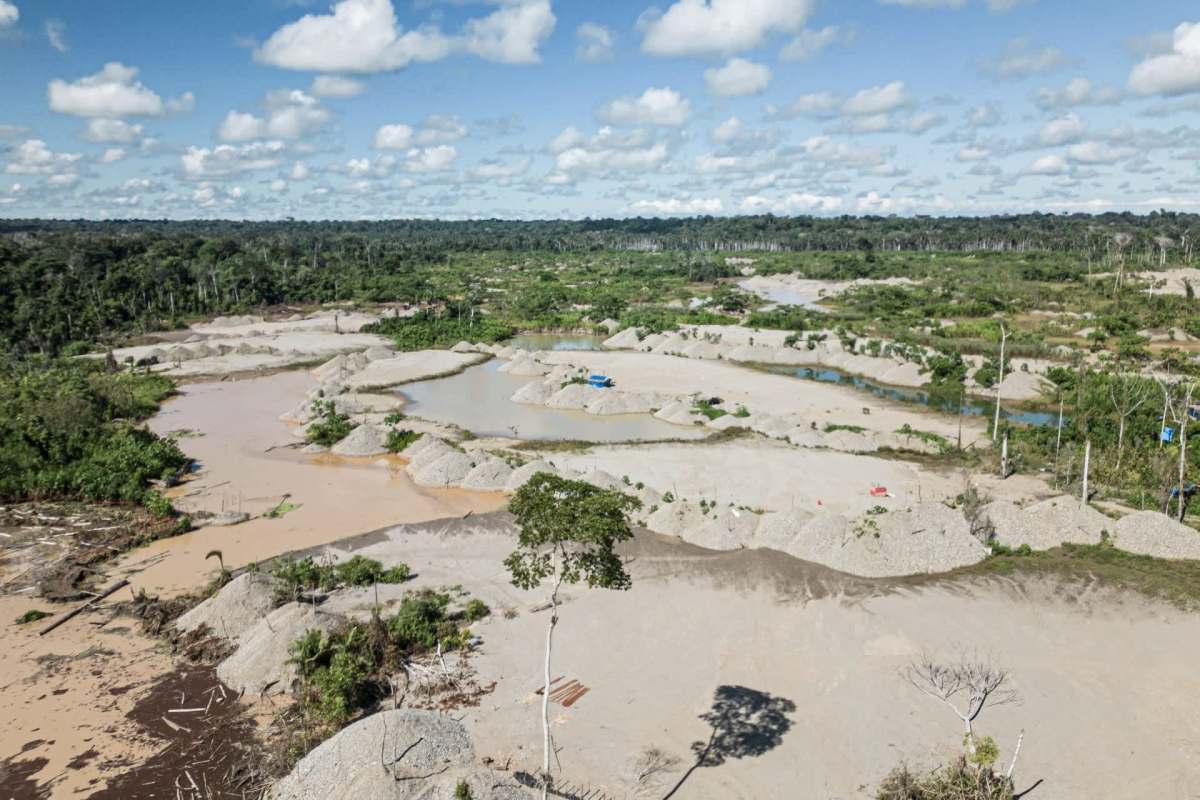
Interpol said a two-month sweep in Latin America and the Caribbean led to 233 arrests and found that Amazon destruction was tied to 161 companies operating across several continents.
Here's what to know
Authorities documented more than 330 cases, identified 312 suspected participants in environmental crimes, and recorded roughly 60,000 hectares (148,000 acres) of illegally cleared forest during Operation Madre Tierra VIII, the Associated Press reported.
Interpol said the operation from June 1 to July 31 spanned Colombia, Costa Rica, the Dominican Republic, El Salvador, Guatemala, Honduras, Mexico, Nicaragua, and Panama.
In Colombia, authorities arrested 16 people and seized digital evidence as part of an investigation into Amazon clearing. That case had already linked the destruction of more than 52,000 hectares (128,500 acres) of protected forest to 11 foreign companies, and intelligence from the latest operation connected another 161 companies and 65 people across several continents.
The case also involved suspected permit fraud and allegations that shell firms and foreign investment structures were used.
Interpol's Regional Bureau for Central America chief Krandall Gullock stressed the importance of tracking the financial trail behind crimes like these. "Following the money, whether from an illegal gold mine in Panama to a buyer in North America, Europe or Asia, helps a case move beyond the individuals physically harvesting the timber, handling the animal or extracting the gold," Gullock said.
TCD Picks » Quince Spotlight
💡These best-sellers from Quince deliver affordable, sustainable luxury for all




The sweep also targeted wildlife trafficking, recovering more than 1,000 live animals, including Bengal tigers, lions, jaguars, ocelots, parrots, and macaws. Authorities additionally seized roughly 165 kilograms (364 pounds) of dried shark fins valued at about $280,000.
More background
Across Latin America, investigators say environmental offenses are increasingly overlapping with organized crime. In remote forest areas, the same transport corridors and money channels can serve illegal mining, logging, wildlife trafficking, and other illicit trades.
For nearby residents, the damage does not stop at a single mine or forest clearing. It can spread outward through poisoned waterways, disappearing wildlife, and weakened ecosystems that communities depend on for food, health, and long-term stability.
Rising gold prices have pushed illegal mining deeper into the Amazon, bringing more deforestation and more mercury and other toxic substances into rivers. Because gold remains one of the biggest drivers of this activity, nearby communities can be left with tainted water, damaged fisheries, and degraded land.
Authorities also highlighted the supply chain behind illegal extraction. In Costa Rica, they seized about 4.6 metric tons (5.1 tons) of cyanide and 11 containers of mercury, both used in gold extraction.
Those substances carry serious risks: mercury is highly toxic and can pollute rivers, wildlife, and people, while cyanide can also cause severe environmental damage if it is improperly handled or released.
What's being done?
A central aim of the crackdown is to reach beyond the people physically working at mine sites, forest clearings, or wildlife trafficking routes and go after the commercial networks behind the crimes. As part of the Colombia-linked case, Interpol issued international notices seeking information or action involving suspects tied to that network.
Authorities are also trying to pair field enforcement with financial investigations. In Peru, The Associated Press reported that authorities are increasingly working to disrupt the money networks behind illegal gold operations because miners often return after raids that focus only on equipment.
Regional coordination is expanding as well. In a separate cross-border operation involving Brazil, French Guiana, Guyana, and Suriname, authorities arrested nearly 200 people and seized gold, cash, mercury, firearms, and mining equipment.
This latest effort builds on a similar Interpol operation that resulted in 225 arrests and uncovered more than 400 environmental crimes, including illegal logging, wildlife trafficking, mining, and pollution.
Interpol assistant director of environmental security Thomas Ungerbuehler explained, "These cases demonstrate the transnational nature of environmental crime, with biodiversity-rich countries increasingly targeted as sources of high-value commodities destined for illicit markets around the world."
Where can I learn more?
These stories look at the same mix of Amazon deforestation, illegal mining, and the networks behind both.
• Along the Brazil-Guyana frontier, authorities arrested nearly 200 individuals in a widening illegal gold-mining crackdown.
• In Peru, claims of illegal deforestation intensified scrutiny of a palm oil supplier's forest footprint.
• Across the Amazon, community-based protection efforts showed how local stewardship can slow forest loss.
• In Colombia's Amazon, a cocaine warlord emerged as a powerful force shaping rainforest protection.

Get TCD's free newsletters for easy tips, smart advice, and a chance to earn $5,000 toward home upgrades. To see more stories like this one, change your Google preferences here.






