


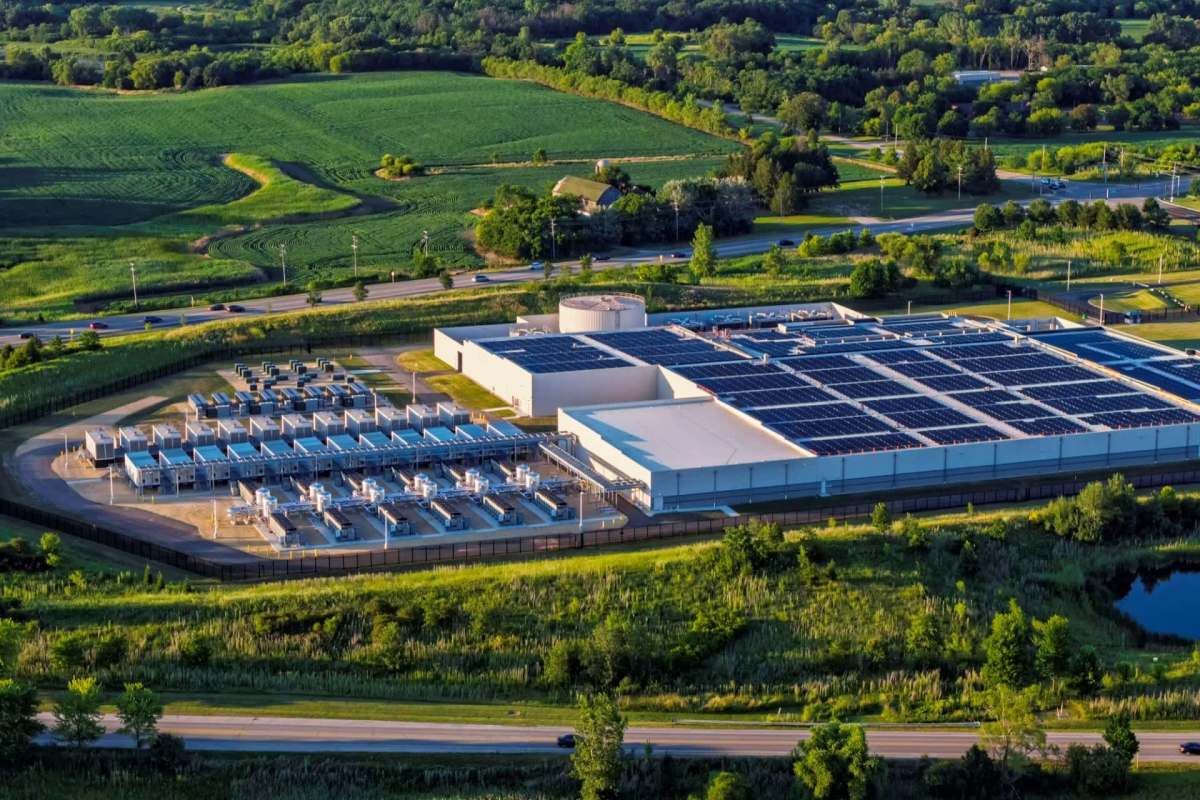
Residential and small business customers in Illinois may face $2 billion in costs to connect data centers to the electric grid, the Environmental Law & Policy Center and Citizens Utility Board warned.
ComEd argued that the advocates' calculation omitted financial protections and rejected their conclusion, according to Capitol News Illinois.
Here's what to know
Connecting 30 data centers to the grid is expected to cost $3.1 billion, according to a ComEd filing in a pending regulatory case.
Some facilities are already connected, while the remaining projects are scheduled to begin operating by 2031. ComEd's records show that developers' advance deposits total $721 million, covering less than one-quarter of the total cost.
"Ordinary households should not foot the bill to provide power to data centers," Environmental Law & Policy Center senior associate attorney Nick Wallace said, per Capitol News Illinois. "ComEd and the [Illinois Commerce] Commission can protect ratepayers and the grid by requiring data centers to pay for 100% of their power supply and infrastructure investments."
ComEd countered that the groups' analysis excluded $1.1 billion in secured credit guaranteeing transmission rate payments for 10 years.
TCD Picks » Quince Spotlight
💡These best-sellers from Quince deliver affordable, sustainable luxury for all




More background
Distribution lines deliver low-voltage electricity to customers, while transmission lines carry high-voltage electricity to substations.
Connecting the facilities requires infrastructure for both.
Planned transmission spending alone totaled $1.6 billion, with two individual projects expected to cost as much as $289 million and $269 million, according to ComEd.
The deposit total could rise as the projects develop.
ComEd economic and workforce development director Max Leichtman said the $721 million in deposits should be compared only with distribution costs, Capitol News Illinois reported.
Customers outside the large-user rate class would not have to cover any remaining distribution costs, Leichtman said; those expenses would be divided within that class.
Advocates are also concerned about infrastructure built for projects that never happen.
Some hyperscale data center developers submit duplicate requests to several utilities, meaning the demand reflected in those requests may never materialize.
Local opposition has also prompted developers to withdraw projects, raising questions about who would pay for infrastructure left behind.
What's being done?
Regulators approved ComEd's transmission security agreement requirement in 2025.
TSAs require large customers to secure a decade of transmission payments with credit that remains available if their projects fall through, per Capitol News Illinois.
However, the requirement took effect only after 19 of the 30 projects were approved.
Leichtman said the agreements have led to "substantial attrition" in ComEd's data center request queue. The utility also proposed assigning costs directly to individual data centers instead of allocating them within customer groups.
While ComEd supports charging large users for their projects, it opposes requiring full infrastructure payment up front, saying that would make doing business difficult.
The CUB maintained that the credit agreements still leave a substantial gap.
"We don't want to pay for grid bridges to nowhere," general counsel Eric DeBellis said. "If they don't have these upfront payments, then we're left footing the bill for all of it."
Where can I learn more?
The debate over who pays for data centers' growing electricity needs extends beyond Illinois.
• In Alberta, Meta's data center could raise household power bills by $270 to $460 annually.
• Florida is weighing whether Duke's data center tariff could leave households paying data centers' costs.
• California bills look to prevent data centers from raising household utility costs.

Get TCD's free newsletters for easy tips, smart advice, and a chance to earn $5,000 toward home upgrades. To see more stories like this one, change your Google preferences here.






