


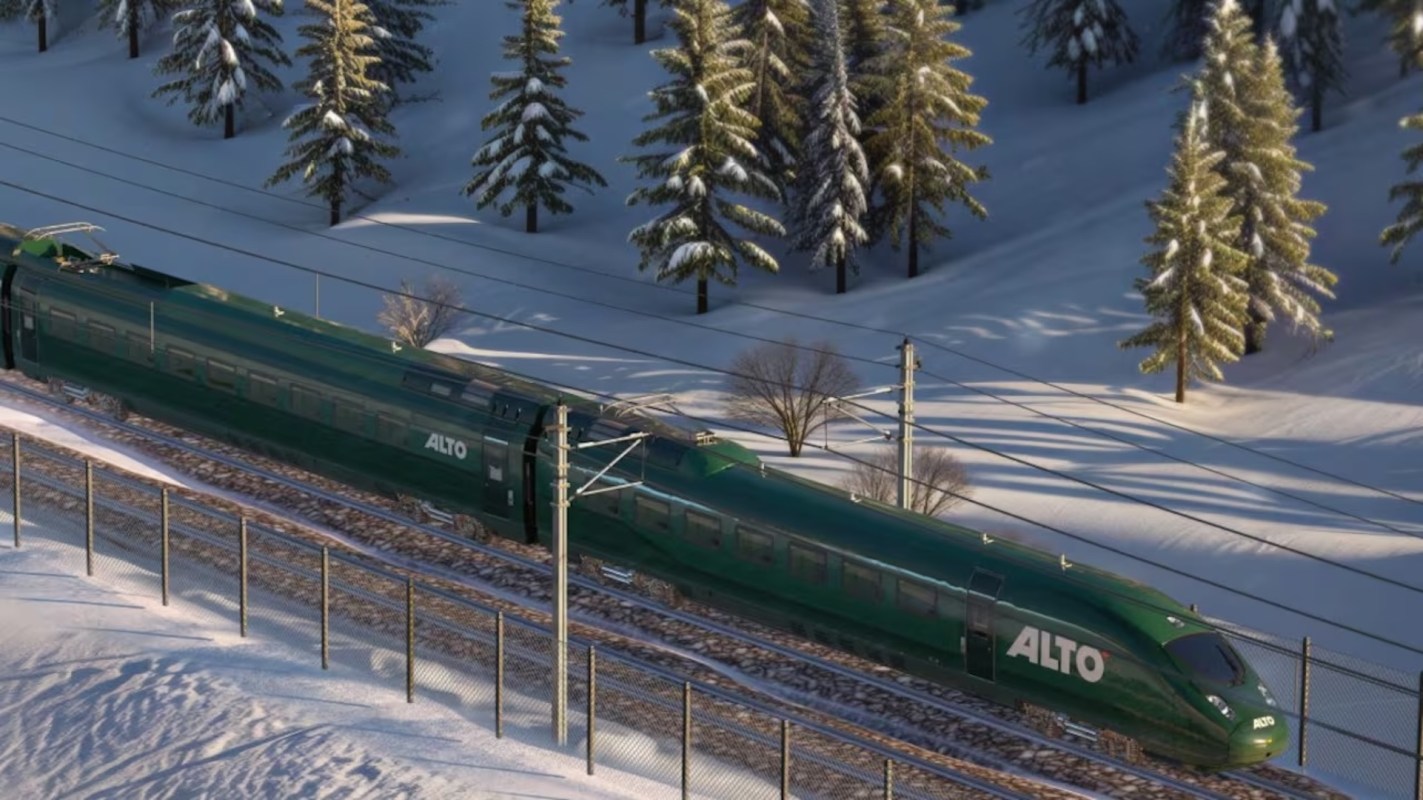
A proposed high-speed rail line between Toronto and Quebec City is being promoted as a faster, more modern way to move people through one of Canada's busiest travel corridors.
However, the latest estimate suggests the price tag could be even higher than many Canadians had already anticipated.
Canada's Parliamentary Budget Office estimates the project could cost about $75 billion ($53 billion) to $113 billion ($79 billion), a figure likely to sharpen debate over whether the plan can remain financially and politically viable, according to CBC News.
Here's what to know
The estimate followed a request from the Senate finance committee.
In the report, the federal budget watchdog assessed the proposed Alto high-speed rail corridor, which is meant to cut travel time between Toronto and Montreal to about three hours.
The office said its baseline route — which does not include Kingston, Ontario — comes in above earlier official estimates of $60 billion CAD ($42 billion USD) to $90 billion ($63 billion), while also stressing the uncertainty that comes with projects of this scale.
TCD Picks » Quince Spotlight
💡These best-sellers from Quince deliver affordable, sustainable luxury for all




"This range reflects the considerable uncertainty inherent in large-scale rail infrastructure projects," the cost analysis found.
Much of the added expense comes from tunnels and elevated structures.
According to the report, each extra 0.62 mile (one kilometer) of tunnel could raise the total by about $169 million ($119 million), and each additional 0.62 mile (one kilometer) of elevated structure could add roughly $153 million ($107 million).
Including Kingston would make the estimate less certain, the report said.
It noted that although the area may be easier to build through geographically, denser nearby populations and greater ecological sensitivity could offset that.
More background
Supporters of the project argue that a true high-speed line could reshape travel in central Canada by offering an alternative to driving or taking short-haul flights between major cities.
Transport Minister Steve MacKinnon defended the plan as a way to "build a strong economy and create new opportunities for Canadians."
Still, opposition has been building on several fronts.
Conservative transport critic Dan Albas claimed Alto "will come late, go over budget and leave taxpayers stuck with the bill, if it even gets built at all."
The Bloc Québécois raised concerns about expropriations and consultations, and residents in eastern Ontario along the proposed line have also voiced opposition.
What's being done?
The Parliamentary Budget Office projects that the buildout, which is expected to begin in 2030, would deliver only a modest economic stimulus.
For the Ottawa-Montreal portion, the report projected real GDP growth of about $1.8 billion ($1.3 billion) in 2029, rising to $2 billion ($1.4 billion) by 2033, while employment gains were estimated to increase from roughly 4,300 jobs to 9,000.
To inform its estimates, the analysis looked at rail projects in Europe, the United Kingdom, and the United States.
It found that projects in the U.K. and U.S. often became more expensive because of land acquisition disputes, permitting delays, litigation, design changes, and weak project management.
The Parliamentary Budget Office said federal legislation aimed at speeding approvals, including Bill C-5, also known as the One Canadian Economy Act, may reduce those risks in Canada.
"The robustness of these provisions before Canadian courts, as well as their inherent effectiveness in targeting sources of cost escalation, will be a key success factor in mitigating significant project risks of the baseline estimate," the analysis concluded.
Where can I learn more?
High-speed rail debates elsewhere often come down to the same issues: cost, construction, and promised economic benefits. These stories look at funding pushes in Texas and what it would take to make high-speed rail a reality in the United States.
• In Texas, officials pushed a high-speed rail project as a jobs and economic boost.
• The Dallas-Houston proposal took a major step forward with new funding support.
• Across the U.S., planners say two main things are essential before high-speed rail expands.

Get TCD's free newsletters for easy tips, smart advice, and a chance to earn $5,000 toward home upgrades. To see more stories like this one, change your Google preferences here.






