


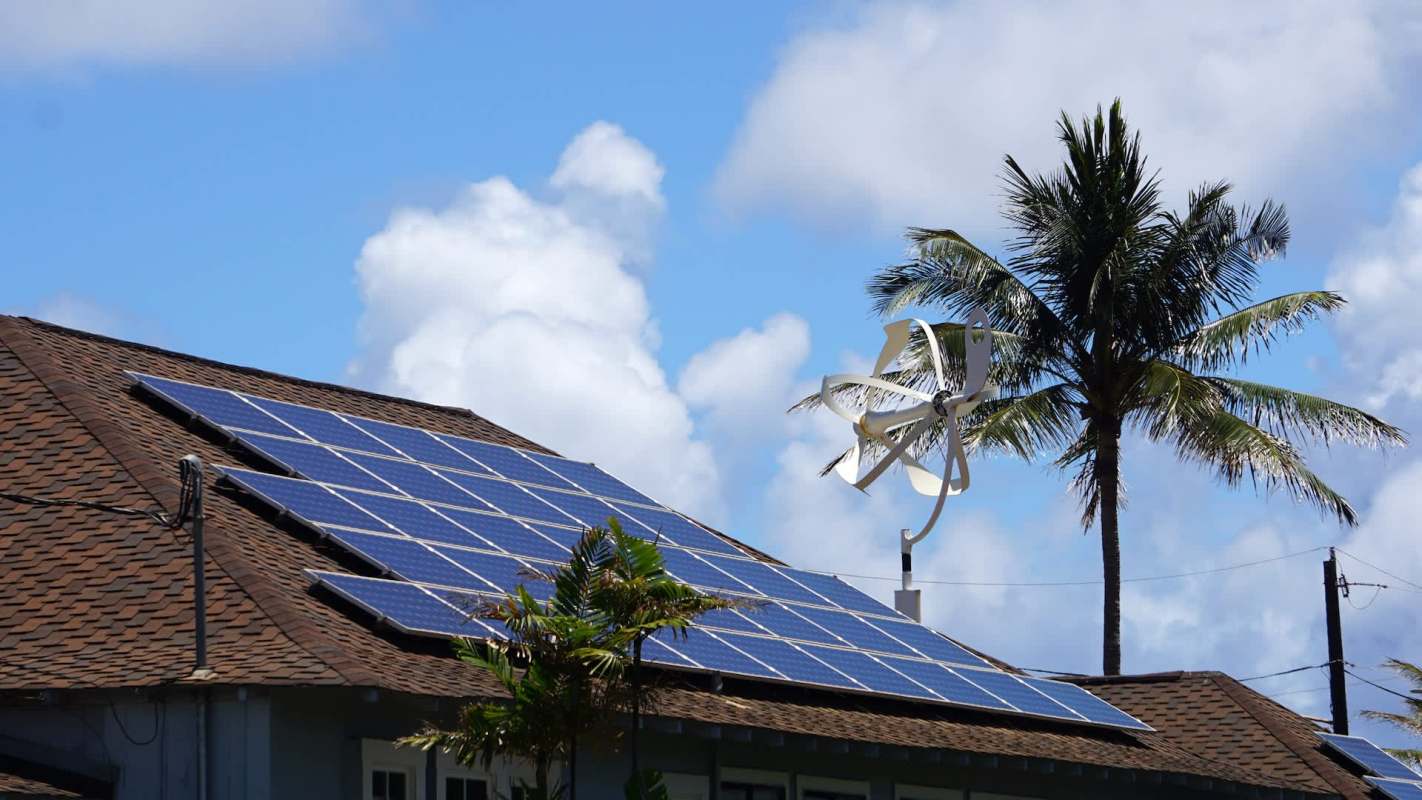
While residential solar can help homeowners lower their electricity bills, a knock at the door promising a free, state-provided system could be cause for concern. Deceptive pitches for solar panels and battery storage — including fabricated government connections — have prompted a warning to Hawai'i residents from state officials.
Here's what to know
Hawai'i News Now reported that the Department of Commerce and Consumer Affairs' consumer protection office issued the warning alongside Hawai'i's economic development department and the Hawai'i Green Infrastructure Authority.
A supposed state program offering solar panels and batteries at no cost is one false claim described in the reports behind the warning. Another is that certain contractors have shut down.
Unsolicited calls and doorstep visits are not channels state employees use to market solar systems or promote state programs. The state also does not supply solar systems for free.
Outside of deceptive deals and contracts, residential solar can lower electricity bills, and $0-upfront solar leases may save some households hundreds of dollars per month, depending on their circumstances. EasyHome offers a free explorer tool to estimate potential savings and find vetted local installers, giving residents a way to investigate options beyond an unsolicited pitch.
More background
State and federal consumer protections extend to in-person sales beyond the seller's business address, the warning notes. Transactions at a resident's doorstep are among those covered.
Misleading a customer into a door-to-door purchase falls under the ban on unfair or deceptive commercial practices in Hawai'i Revised Statutes §480-2.
Cancellation carries no penalty or further obligation when buyers act within three business days after a purchase.
Crushed by your bills? See instant solar savings from vetted installers in just a few clicks With energy prices through the roof, there's never been a better time to go solar — and EasyHome can help you find the best prices from the best installers in your area. EasyHome takes the guesswork and headaches out of energy upgrades by showing you estimated savings from a network of vetted local partners. To get started, just enter your ZIP and share a few details about your home — seeing your estimate is really that easy. |

False assertions of ties to a state agency or the electric utility are grounds for a complaint. To check someone's claim of state employment, residents can request an official State of Hawai'i employee photo ID.
What can be done?
The Department of Commerce and Consumer Affairs' Business Check portal lets residents research companies, individuals, and licensed professionals before doing business with a salesperson.
For more information about complaints, residents can call 1-844-808-3222, extension 5. The Office of Consumer Protection accepts complaints about salespeople falsely asserting ties to the Hawai'i Green Infrastructure Authority, GEM$ — Green Energy Money $aver — another state agency, or a resident's power provider.
The Hawai'i Green Infrastructure Authority is another direct contact, reachable at 808-587-3868 or dbedt.greenbank@hawaii.gov, for residents encountering aggressive pitches about its programs or salespeople claiming to represent the state or utility.
For homeowners evaluating storage beyond the misleading offers, EasyHome also provides battery-storage quotes. Pairing solar with batteries can help manage electricity costs and provide backup power during outages, depending on the system's design and household needs.
Where can I learn more?
Homeowners elsewhere have also raised concerns about solar sales tactics and the costs of signing up. These stories examine doorstep solar debt, disappointing savings, unwanted sales visits, disputed tax-credit claims, and how to vet installers.
• A widow says door-to-door solar debt outlasted her husband, but the company won't communicate.
• A Texas homeowner says promised solar savings became $32 saved against a $417 payment.
• A home improvement store shopper says a solar sales representative visited his home despite receiving a fake number.
• A San Diego buyer says claims about expired tax credits steered him toward leasing solar.
• A Maryland homeowner seeking solar asks how to avoid 'con artist-type' installers before committing.

Get TCD's free newsletters for easy tips, smart advice, and a chance to earn $5,000 toward home upgrades. To see more stories like this one, change your Google preferences here.
Cool Picks






