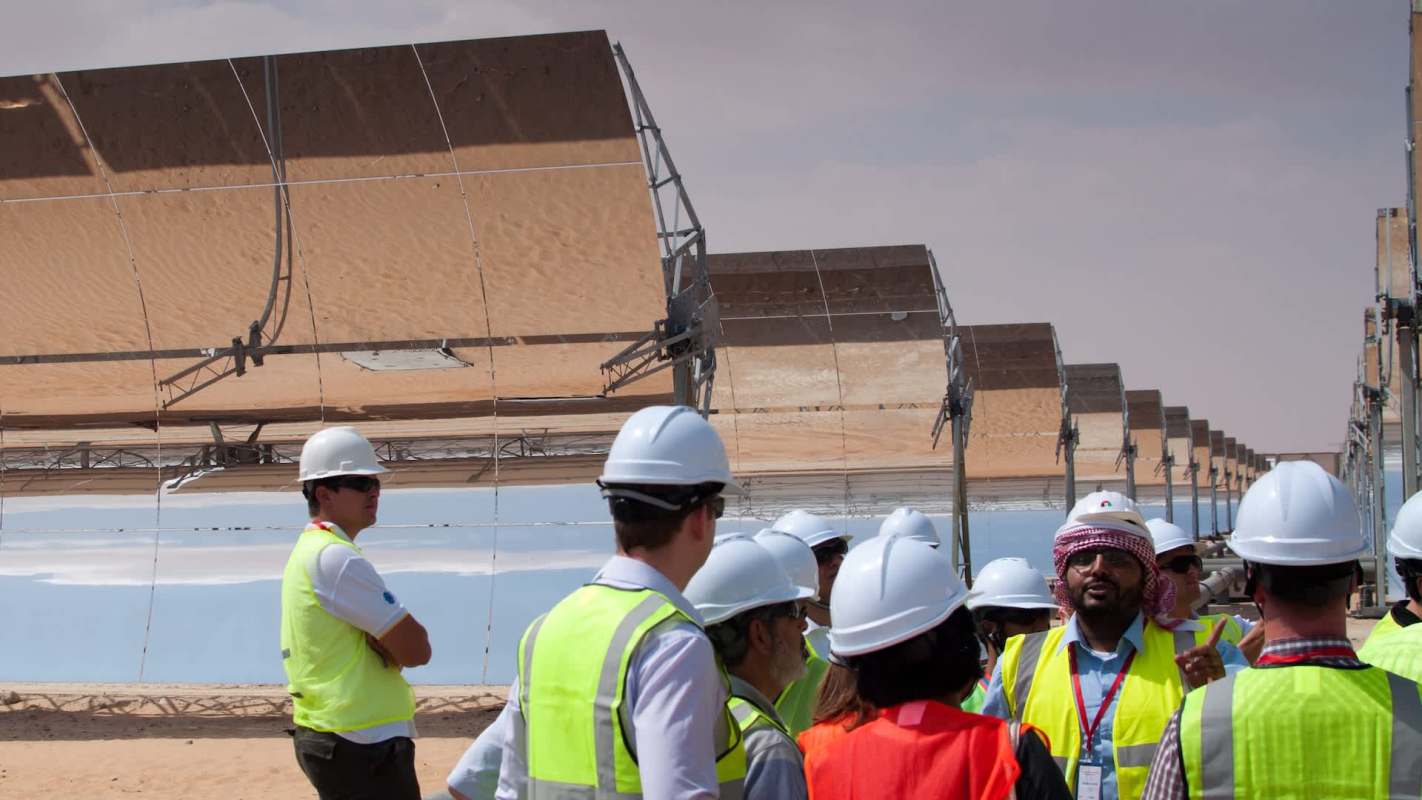
Gulf states are now looking to speed up clean energy investments abroad, according to Fortune.
What happened?
A new wave of Gulf state investment in renewables reportedly comes as Iran's blockade of the Strait of Hormuz has forced major regional oil producers to cut output.
The shift is especially evident in the United Arab Emirates. In April, Abu Dhabi-based Masdar entered a $2.2 billion joint venture with TotalEnergies covering onshore renewable projects in nine Asian countries.
Mubadala Investment Company then bought a stake in renewable software company Power Factors in May. It also invested $325 million in Orsted's Hornsea 3 project in the United Kingdom. Along with Hornsea 1 and 2, they will form the world's largest single offshore wind farm.
Masdar alone has reached 65 gigawatts of renewable capacity globally and has set a 2030 target of 100 gigawatts, according to Fortune.
"I think there is also an acceleration taking place due to Gulf countries increasingly considering their domestic energy security," Robin Mills, CEO of Qamar Energy, told Fortune. "Current events are leading to an improved investment landscape for their overseas renewables portfolios due to the desire to be more diversified and strategic."
TCD Picks » Good Store Spotlight
Get 10% off your next purchase with code TCD10




Why do the Gulf states' investment in renewable energy matter?
This global event shows how quickly fossil fuel-dependent economies can shift. Clean energy projects, especially wind and solar, are beginning to look more like essential infrastructure.
As the global economy increasingly relies on technology and energy-based infrastructure, reliability and uptime are becoming base requirements for investors to look at. If there is a single point of failure, the downstream effects can be massive.
More renewable investment can help create jobs in fast-growing industries and reduce price spikes that often follow oil and gas disruptions.
The same Hormuz disruption that is speeding overseas investment is also slowing renewable development inside the Gulf.
TCD Picks » Quince Spotlight
💡These best-sellers from Quince deliver affordable, sustainable luxury for all




Fortune reported that solar imports into the UAE, Saudi Arabia, and Oman fell sharply in March. Container costs on the Shanghai-to-Gulf and Red Sea route rose from $980 to $4,131. Rystad Energy now expects the Middle East's active renewable pipeline to face delays between three and 12 months.
What are people saying?
Mills told Fortune, "The UAE is keen to monetize its oil resources more quickly in anticipation of peak global demand as well as in order to free up larger gas supplies to cater to its ambitious industrial and AI development plans."
Christopher Gooding, an energy transition analyst at Cornucopia Capital and a research fellow at Gulf Sustain, was even more direct. He said to the publication, "The Hormuz disruption means that capital that might have flowed into domestic project finance is being redirected toward more stable deployment environments while supply chain uncertainty persists."

Get TCD's free newsletters for easy tips, smart advice, and a chance to earn $5,000 toward home upgrades. To see more stories like this one, change your Google preferences here.