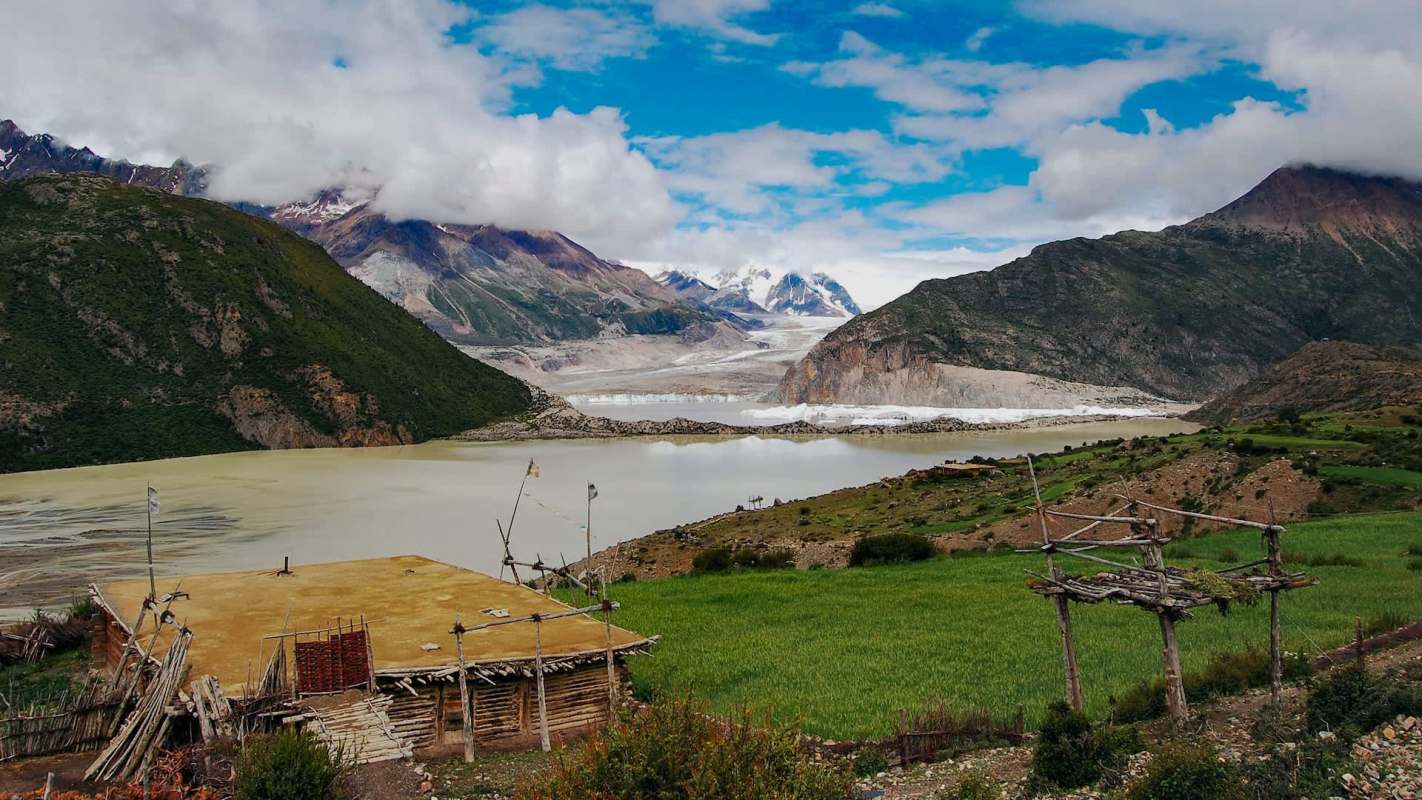
A flagship adaptation program has gotten approval to aid glacier-dependent regions when they need it most.
What's happening?
According to Dawn, the Green Climate Fund approved $250 million for the Glaciers to Farm program — a landmark effort to help communities in glacier-dependent regions of Central Asia, the South Caucasus, and Pakistan adapt to rising environmental challenges.
The program, led by the Asian Development Bank, will focus on four glacier-fed river basins, strengthening local agriculture and water systems, improving early warning networks, and investing in science-based glacier assessments. The plan will support about 13 million people, from farmers to mountain residents who depend on glacier-fed resources.
"Rapid glacial retreat is one of the most complex development challenges faced by our region," said ADB Director Yasmin Siddiqi, noting that these projects aim to protect "lives and livelihoods now and for future generations," per Dawn.
Why is this important?
Rivers, reservoirs, crops, cities, and power stations all depend on glacier runoff. In parts of Central Asia, glaciers are melting four times faster than the global average, threatening the main water sources that feed entire regions.
As glaciers shrink, the impacts spread far beyond the mountains. Higher tides, heavier floods, and disrupted food supplies already affect millions of people. Scientists note that extreme weather isn't new — but human activity has made today's storms, droughts, and floods far more intense and destructive.
TCD Picks » Quince Spotlight
💡These best-sellers from Quince deliver affordable, sustainable luxury for all




What's being done about it?
Programs like Glaciers to Farms aim to build resilience from the ground up by combining local knowledge with advanced science. Around the world, similar efforts are already making a difference.
Local groups in the Solomon Islands are safeguarding shores as storms grow more unpredictable. In the United Kingdom, the Sea Ranger Service takes young workers out to sea to help restore marine life. South Korean scientists monitor live data to warn people before flash floods hit.
These projects prove that practical solutions can protect communities and help secure water, food, and power systems for the future.
You can make your community stronger by saving water, planting native trees and flowers, and supporting local projects that improve energy and infrastructure. Staying informed and pitching in — even in small ways — adds up to a safer, more resilient neighborhood.
Small steps like these strengthen neighborhoods and help communities weather whatever comes next.
|
Should taxpayers help pay to clean up the Great Pacific Garbage Patch?
Click your choice to see results and speak your mind. |
 We should pay for all of it 👍
💰Get TCD's free newsletters for easy tips to save more, waste less, and make smarter choices — and earn up to $5,000 toward clean upgrades in TCD's exclusive Rewards Club.