


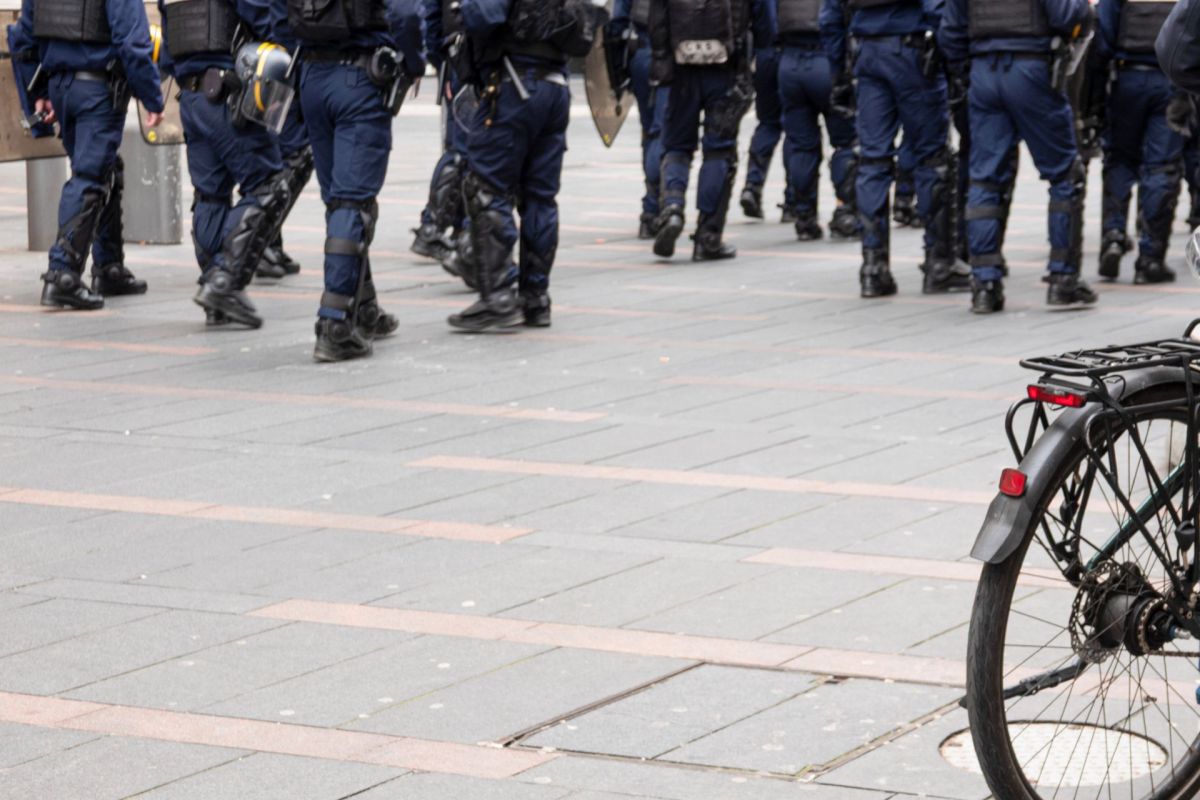
France deployed roughly 70,000 police officers and security personnel as protesters took to the streets on Nov. 21 for a sixth consecutive Saturday to highlight living costs, student rights, and police violence, Euronews reported.
Several instances of violence were reported, but the demonstrations were largely peaceful overall.
Here's what to know
France's Interior Ministry and protest organizers reported different turnout figures for Nov. 21: 82,500 and 150,000 nationwide, respectively.
In Paris, the ministry counted 21,500 participants, compared with organizers' estimate of 45,000, Euronews noted.
The Paris crowd included marchers wearing trade union T-shirts and the Yellow Vest movement's recognizable clothing. Demonstrators carried flags along the route from Place de la République to Place de la Nation.
National attendance fell from Nov. 14, when authorities counted 106,000 protesters, and organizers estimated 200,000.
TCD Picks » Quince Spotlight
💡These best-sellers from Quince deliver affordable, sustainable luxury for all




Police in Lyon broke up several unauthorized marches with tear gas, an AFP journalist reported.
The groups had tried to enter the city center despite a ban on demonstrations across a large area. The Marseille demonstration split, with one group continuing in an unauthorized march.
Police figures cited by Euronews estimated turnout at 4,600.
More background
The Yellow Vest movement expanded from opposition to fuel tax increases in November 2018 into a broader protest over the cost of living and social inequality.
The French demonstrations coincided with its eighth anniversary.
Workers in Lisbon called for higher wages and pensions to ease financial strain, along with affordable housing and better public services. Thousands participated, despite heavy rain.
Buses brought participants from cities including Aveiro and Faro, while others traveled from Porto on special trains. Home prices have risen to more than twice their 2017 level, while new tenants have faced sharply higher rents, Euronews indicated.
According to Eurostat, Portugal's average annual earnings in 2025 stood at 63% of the European Union average.
Demonstrators said they were struggling to cover their housing, food, and energy costs.
What's being done?
CGTP-IN's demands for the Lisbon demonstration included lower prices on essential goods and services and measures to make housing more affordable.
The federation, Portugal's largest, organized the protest.
The group also scheduled another rally for Nov. 24 outside the Assembly of the Republic.
In Barcelona, protesters demanded affordable housing, increased funding for public education, and stronger public services. Euronews reported that police estimated attendance at 3,000, while organizers put the figure at 5,000.
The march followed student and worker demonstrations across more than 20 European countries on Nov. 20.
A separate protest in Madrid, organized with Marea de Residencias, demanded truth, justice, and compensation over care home deaths during the COVID-19 pandemic. Participants also called for care homes to come entirely under public ownership and management.
Protesters challenged regional protocols that restricted hospital transfers for certain residents. The regional government defended its handling of the crisis.
In a Facebook campaign video, CGTP-IN described the difficult choices facing households struggling to afford necessities.
"They talk about the economy, but they don't know what it's like to stretch every penny to pay the rent and electricity bills," the federation said.
"They don't know what it's like to have to choose between buying medicine and putting food on the table."
Where can I learn more?
The protests reflect a global struggle to afford housing, food, and fuel. These stories cover housing protests in Portugal, cost-of-living fears in Germany, and fuel shortages and government responses.
• Fuel shortages ignited protests worldwide as governments blame the war with Iran.
• In Portugal, protesters pitch tents in Lisbon and Porto as rents triple and wages lag.
• In Germany, soaring daily costs have overtaken immigration as the public's biggest fear.

Get TCD's free newsletters for easy tips, smart advice, and a chance to earn $5,000 toward home upgrades. To see more stories like this one, change your Google preferences here.






