


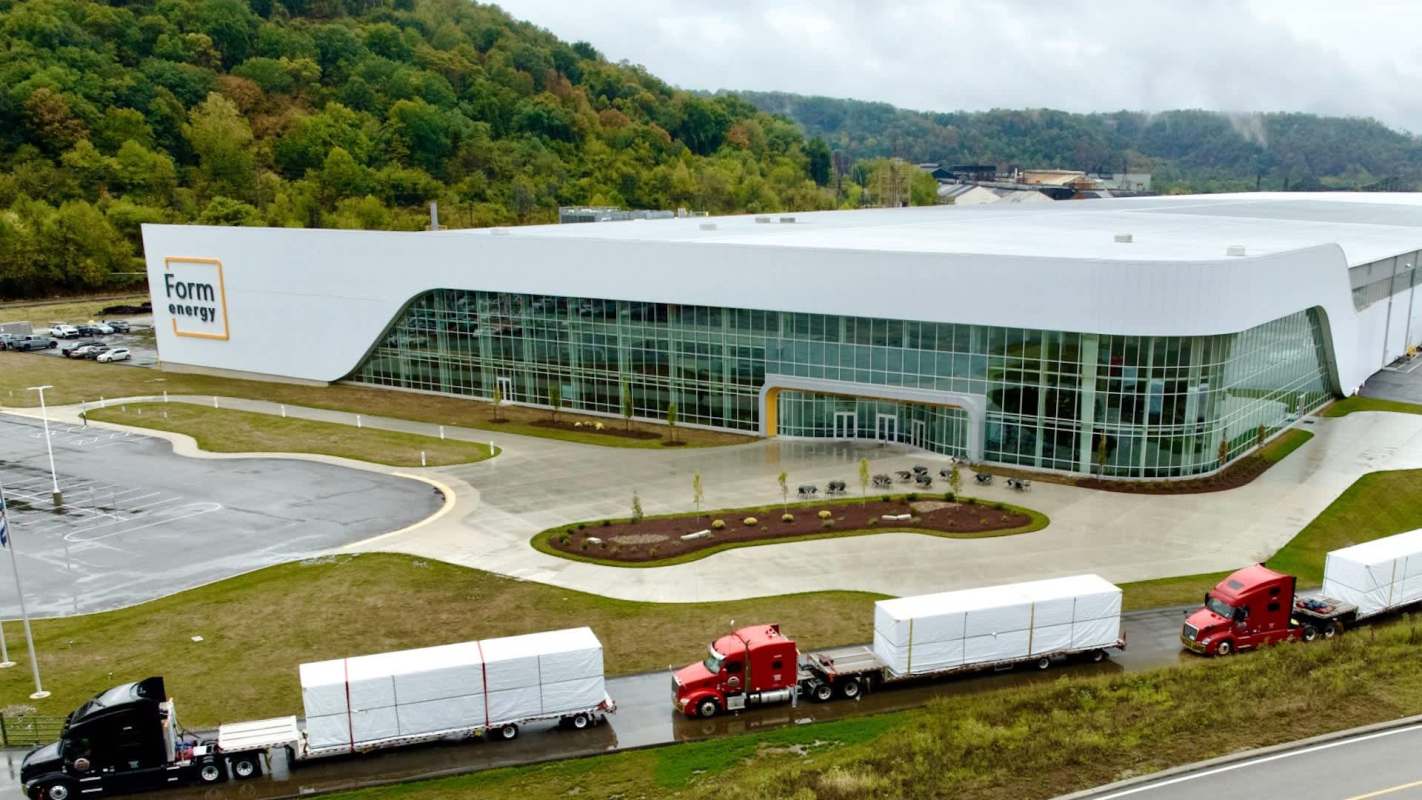
Form Energy, a Massachusetts battery developer, has secured $750 million to expand its iron-air battery factory in Weirton, West Virginia, giving fresh momentum to one of clean tech's most closely watched bets: long-duration energy storage built in the United States as data center demand surges.
Here's what to know
Form says the new money will help increase output at its West Virginia facility as customer demand accelerates.
T. Rowe Price led the Series G round, with additional backing from Sequoia Capital, Franklin Templeton, Breakthrough Energy Ventures, GE Vernova, and other major investors.
As Data Center Dynamics reported, Form says it already has more than 80 gigawatt-hours in commercial projects under agreement, many of them tied to the data center sector.
Data centers, especially those supporting AI workloads, are putting new pressure on power systems. Utilities and technology companies are looking for ways to add reliable electricity without locking themselves into greater dependence on fossil fuels, and long-duration storage is increasingly seen as part of that solution.
Form's pitch centers on iron-air batteries that the company says can deliver more than 100 hours of storage. Form also says the technology carries no risk of thermal runaway, a major concern associated with some lithium-ion battery systems.
TCD Picks » Quince Spotlight
💡These best-sellers from Quince deliver affordable, sustainable luxury for all




More background
Major investors are backing companies they believe are positioned for long-term growth, particularly as the electric grid modernizes and energy demand rises.
Form says four-fifths of the materials needed for its batteries come from the United States. That could help shield the company from some of the supply-chain volatility affecting battery makers that rely more heavily on materials from China, while also bolstering domestic manufacturing.
The Weirton factory expansion could bring benefits beyond the energy sector as well. More production capacity can mean more manufacturing jobs, stronger regional economic activity, and a more resilient U.S. supply chain for critical energy infrastructure.
As tech companies build more data centers, they need power solutions that can operate for long stretches and support the grid when solar and wind output dips. Multi-day storage could become an important tool for keeping electricity reliable while helping avoid more pollution-heavy generation.
What's being done?
Form is already moving beyond the pilot stage. The company has a deal with Google and Xcel Energy to place its batteries at Google's first data center in Minnesota, and in March it also signed an agreement with Crusoe covering up to 12 gigawatt-hours of multi-day storage for the AI data center sector beginning in 2027.
As electricity demand rises, battery makers that can deliver reliable, U.S.-built storage may become some of the most important companies in the energy transition.

Get TCD's free newsletters for easy tips, smart advice, and a chance to earn $5,000 toward home upgrades. To see more stories like this one, change your Google preferences here.






