


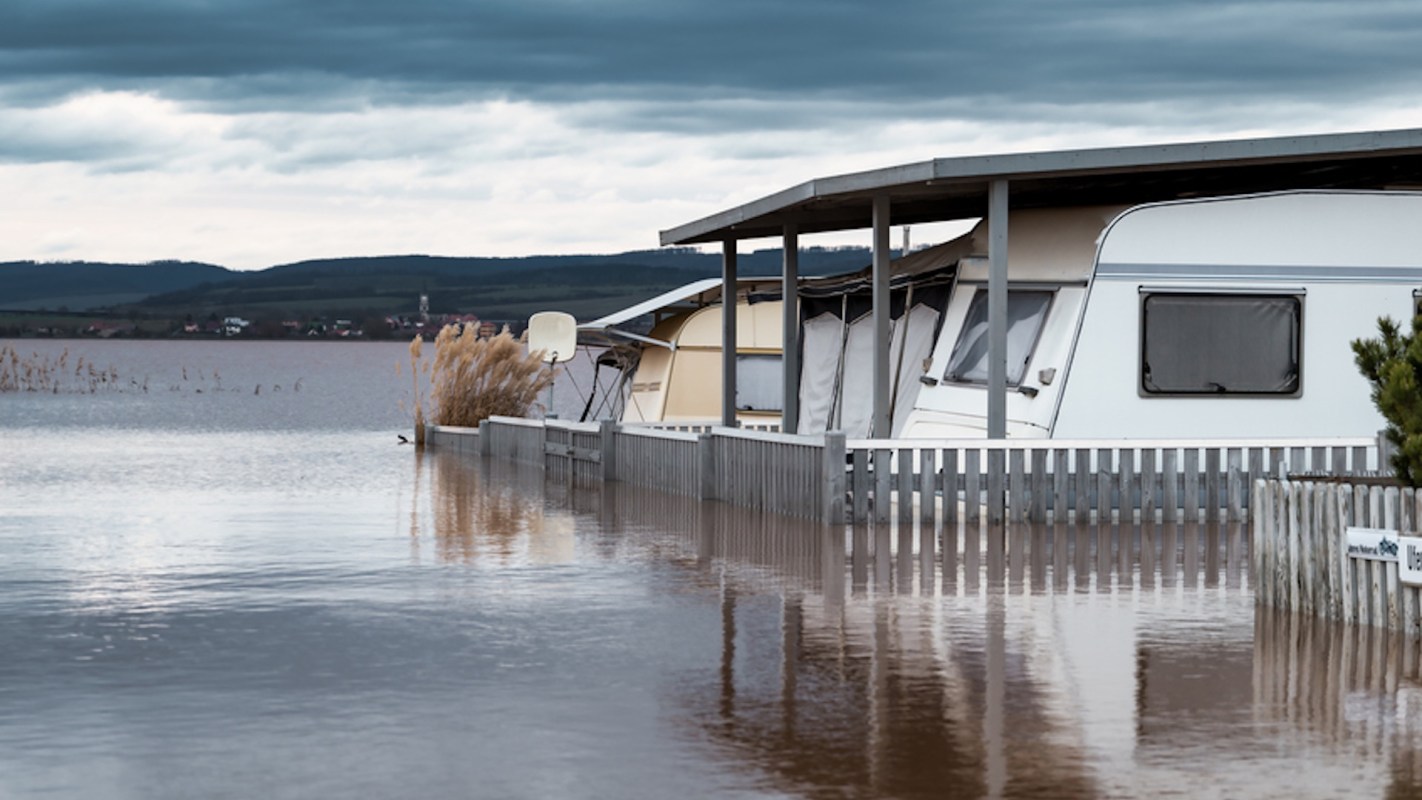
For many families in Southwest Virginia, flood recovery is still out of reach. Tens of millions of dollars intended to help residents rebuild homes, bridges, and retaining walls have still not reached many of the people who need it most.
For David Cruey, a 57-year-old former coal miner in Richlands, the long delay has become a threat to his health.
What happened?
So far, only about $6.7 million in aid has been distributed through the Virginia Disaster Assistance Fund — roughly 13% of the total available. The money came from the $50 million Virginia set aside during the 2025 legislative session for recovery from flooding linked to Hurricane Helene in September 2024 and Winter Storm Jett in February 2025, Cardinal News reported.
For the Crueys, floodwater soaked their trailer home, and mold spread through the structure afterward. David Cruey and his wife, Renee Cruey, are still waiting for help, and Cruey — who is on palliative care and uses oxygen — said the conditions are worsening his health: "All of this stuff is killing me."
Even when assistance comes through, program rules can leave some residents far short of what repairs actually cost. Help for damaged homes is based on a property's tax-assessed value, a formula that can sharply limit awards for older mobile homes. Tanya Mullins, grant administrator in Tazewell County, told Cardinal News: "They may have $10,000 worth of damage, but their trailer may only assess for $2,000."
Additionally, only $6,800 had been distributed for bridge or retaining wall work so far, Cardinal News reported, after just one of 147 applications for that part of the program was approved.
TCD Picks » Quince Spotlight
💡These best-sellers from Quince deliver affordable, sustainable luxury for all




Why does it matter?
As Cardinal News reported, the fund covers only "real property," leaving renters outside the program altogether. Even for homeowners, strict caps can mean that people with the least valuable properties receive the least assistance, even when their damage is severe. Eric Young, Tazewell County administrator, said some homes "were assessed for $1,800 or $2,500, which capped the program award at one or two thousand dollars."
What's being done?
State officials say they are working to speed up the process. Tamarah Holmes, director of the Virginia Department of Housing and Community Development, said approvals have increased under the new administration: "There's been over a 100% increase in the number of applications that have been approved over the last few months."
Governor Abigail Spanberger's office said the administration has been holding monthly meetings with local leaders, agencies, and planning district commissions to better coordinate efforts and clear up confusion around applications. The state says those efforts are helping move more bridge and retaining wall projects into other programs that can cover higher-cost work.
Local nonprofits are also stepping in to fill gaps. Dan Rice, disaster services manager at United Way of Southwest Virginia, said the organization has worked with counties to supplement state awards and pay contractors directly when funding falls short. By mid-June, Rice said United Way had helped pay for roughly 90 repair and infrastructure projects.
Still, major changes would likely require action from the General Assembly. Until then, many residents remain in damaged homes, still waiting for relief that was promised but has yet to arrive.
"Before the flood we loved it, living here," Renee Cruey said. "You don't get help and you have to rebuild."
She added: "I just wish all of us could get some help."

Get TCD's free newsletters for easy tips, smart advice, and a chance to earn $5,000 toward home upgrades. To see more stories like this one, change your Google preferences here.






