


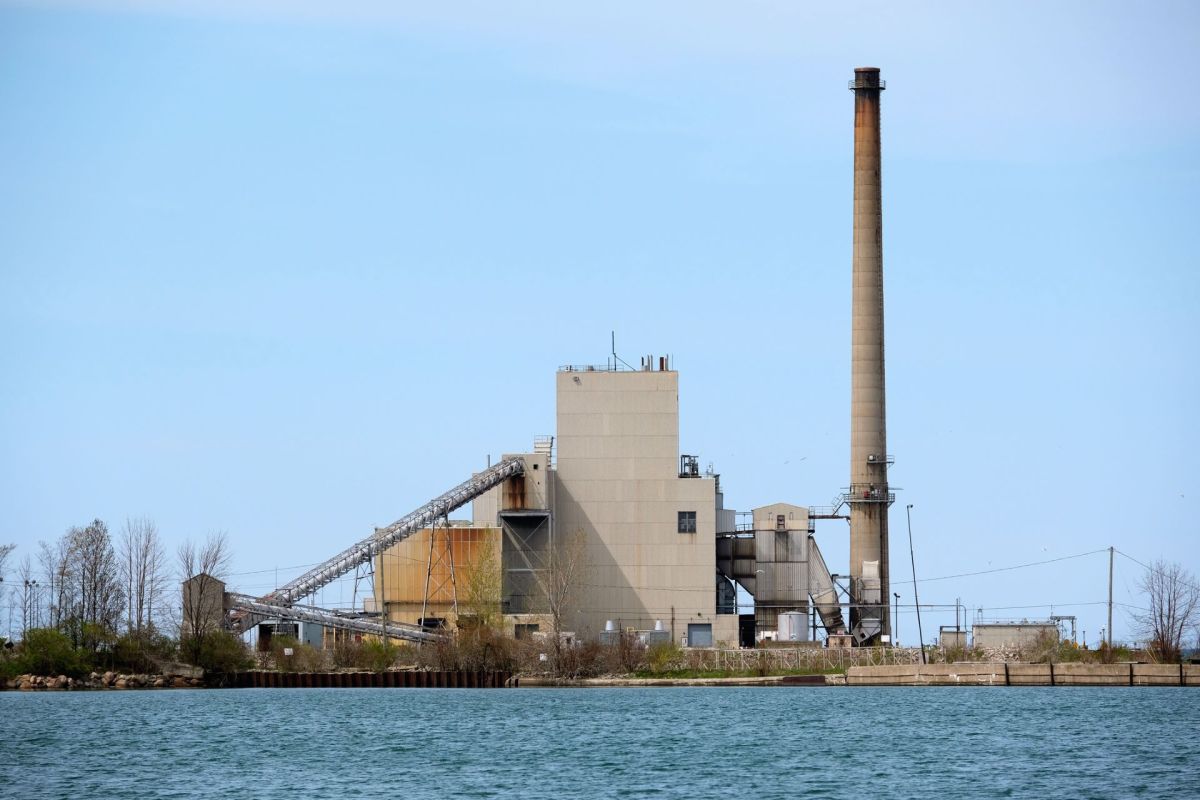
A federal appeals court held that the Department of Energy exceeded its authority by using emergency powers to keep a Michigan coal plant operating in one of the first successful court wins against President Donald Trump's use of "energy emergency" powers.
The decision could have implications far beyond a single aging power station. It may help define how far the federal government can go to keep polluting plants online after they were scheduled to retire, Grist reported.
Here's what to know
At the center of the case is the J.H. Campbell coal plant in West Olive, Michigan.
The plant was set to be retired in May, but just before that happened, the Trump administration used temporary powers under the Federal Power Act, arguing that potential grid outages and growing electricity demand from data centers justified keeping it open, according to Grist.
The D.C. Circuit rejected that reasoning.
Judge Cornelia Pillard wrote that the emergency statute "is essentially a narrow, last-resort backstop," meaning broad claims about looming energy shortages do not justify extending the life of older fossil fuel plants, per Grist.
TCD Picks » Quince Spotlight
💡These best-sellers from Quince deliver affordable, sustainable luxury for all




Campbell is one of seven fossil fuel plants the administration has tried to keep running.
Ted Kelly, director and lead counsel for U.S. Clean Energy at the Environmental Defense Fund, said the ruling did not cancel the administration's "energy emergency" declaration but that it did narrow how the administration can use that declaration, Grist noted.
The decision to keep the plant operating carried major environmental and financial costs.
Since it was ordered to stay open, the facility has released about 1,000 tons of nitrogen oxides, 2,000 tons of sulfur dioxide, and 140 tons of particulate matter, Grist said.
Kelly noted that the move has cost $259 million, which Consumers Energy wants to recover from ratepayers in Michigan and 10 other states.
More background
The administration has relied on emergency authorities to bolster fossil fuels while deprioritizing cleaner energy developments.
In 2025, Trump declared a "national energy emergency" and directed agencies to use emergency tools to increase energy production, particularly from fossil fuels, as Grist reported.
The consequences of fossil fuel use extend well beyond the power grid. Their extraction, production, and combustion worsen extreme weather disasters that destroy homes, jobs, and economies.
They also contribute to air and water pollution linked to asthma, heart disease, cancer, and premature death, while households continue to face high energy bills as corporate profits rise.
Industry lobbying also slows the transition to cleaner, cheaper alternatives that could better protect families and lower costs.
EDF estimates the added pollution could be linked to roughly 100 asthma cases among about 3,000 residents in West Olive, according to Grist.
The ruling may also affect other pending cases.
Kelly told Grist that parties to lawsuits over several other fossil fuel plant orders had effectively been waiting for this decision because the legal issues overlap.
What's being done?
Environmental groups want the Campbell plant shut down permanently and courts to apply the same rule in similar disputes: Emergency powers should be used only when officials can show an emergency exists.
Kelly hopes the administration backs off without being forced to, per Grist. If it does not, more litigation could settle the matter.
Gavin McCabe, a senior litigator at the Natural Resources Defense Council, indicated that the administration could seek a rehearing or ask the Supreme Court to review the case, which could slow the next steps.
Kelly observed that the court's ruling reinforced a basic limit on federal power.
"You can say there's an 'energy emergency' as much as you want — even if you're the president. But what you can actually do depends on what the real facts on the ground are and what the law actually lets you do in different situations," he told Grist.
Where can I learn more?
The Campbell case is part of a broader fight over whether aging coal plants should stay online despite rising pollution and costs. It also highlights how courts, utilities, and changing power markets are impacting coal's future on the U.S. grid.
• A federal court allowed President Joe Biden's coal plant rules to move forward without immediate disruption.
• Across the U.S., keeping old coal plants alive is costing hundreds of millions of dollars.
• In West Virginia, coal plant costs impact consumers long after the facilities stop making economic sense.
• Nationally, solar and wind produced more electricity than coal.

Get TCD's free newsletters for easy tips, smart advice, and a chance to earn $5,000 toward home upgrades. To see more stories like this one, change your Google preferences here.






