


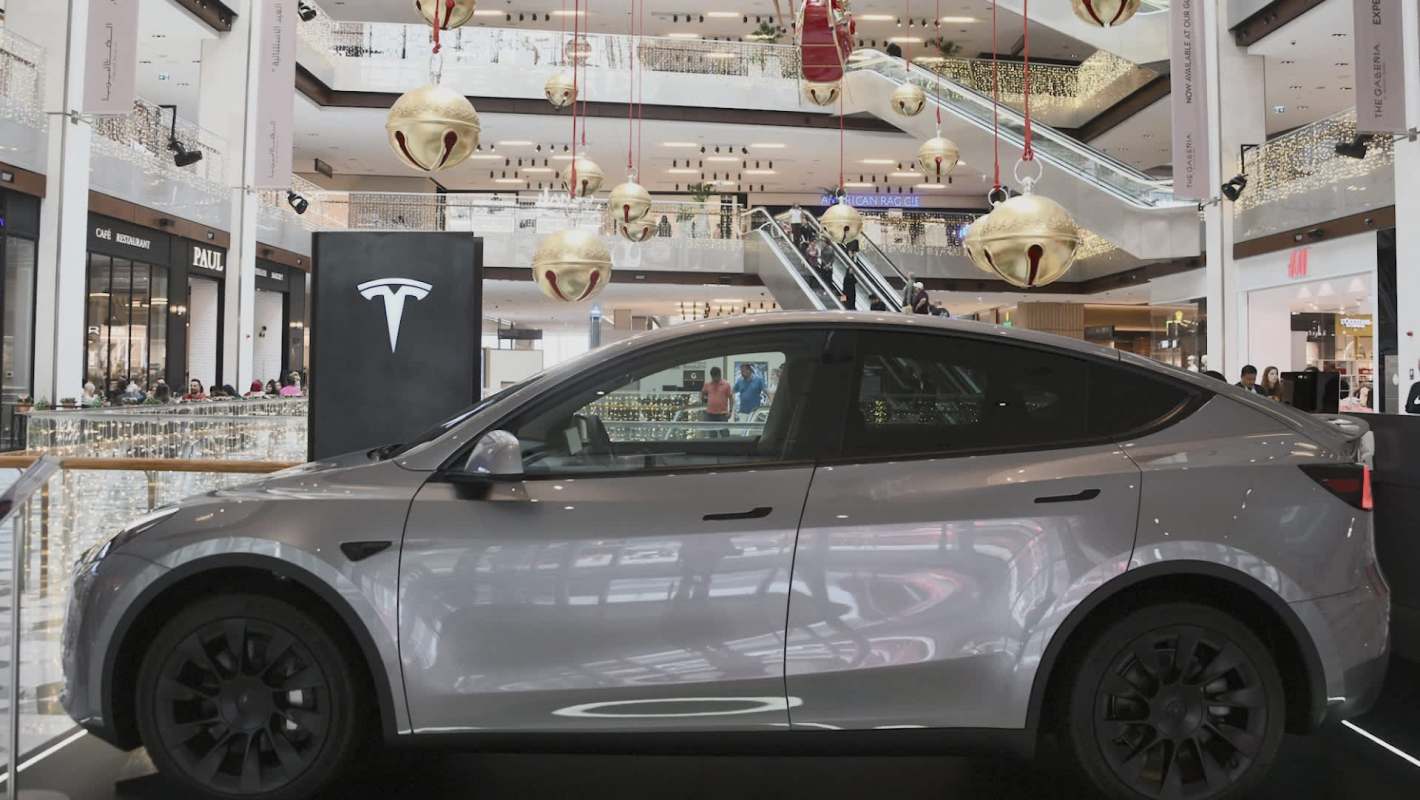
A driver who used to scoff at electric cars said that, after comparing costs, buying a Tesla Model Y became "elementary math."
Because he covers far more miles than most motorists, he said the change lowered expenses in multiple areas — charging, financing, and insurance — by thousands of dollars per year.
What happened?
In a Facebook group for Model Y Juniper owners, Tesla owner Tom Forsythe said he had spent years doubting EVs. After driving roughly 100,000 miles in three years in a Chevy Silverado 2500 Series, he concluded that much of his travel did not actually call for a heavy-duty truck.
According to Supercar Blondie, citing Torque News, Forsythe wrote that he was the kind of driver who "laughed at EV cars."
He added: "I shook my head when I saw people sitting at chargers as if to say 'That makes no sense.'"
His view changed when he ran a cost comparison between his pickup and a Tesla Model Y Premium AWD.
TCD Picks » Quince Spotlight
💡These best-sellers from Quince deliver affordable, sustainable luxury for all




"With the price of the Model Y Premium AWD, .99% financing and the delta of savings between these 2 vehicles for the number of miles I log, buying the Model Y was elementary math," he explained.
He said the biggest savings came from charging at home: with hardwired equipment and about 90% of his charging done in his garage, he estimated the annual benefit at $7,000 to $8,000.
Why does it matter?
Forsythe's story shows that for drivers who spend a lot of time on the road, the savings can add up fast. He said the financial benefits did not stop with charging costs.
"On top of that, the finance money on the Silverado pickup was 5%," he observed, according to Supercar Blondie "The money on the Tesla is 1%. There's another couple thousand annually. The Chevy Silverado was costing me $1,200 a year in insurance. The Tesla is $1,032. The gas savings alone is making the payment."
Sticker price alone does not always reflect what a vehicle truly costs over time. Monthly ownership expenses — including fuel, maintenance, insurance, and financing — can make one vehicle much more affordable than another.
EVs do not produce tailpipe pollution, which can help reduce heat-trapping gases and air pollution associated with gas-powered driving, especially when drivers are replacing larger, less efficient vehicles.
What can I do?
Forsythe's experience does not mean every driver will save the same amount by switching to an EV. His results were shaped by his especially high mileage and his access to home charging, which is often one of the biggest factors in making EV ownership more cost-effective.
Shoppers can look at how many miles they drive each year, whether they truly need a large gas-powered vehicle, what charging options they have at home or nearby, and the total cost of ownership rather than just the purchase price.
Comparing financing offers, insurance quotes, and fuel costs side by side can also help. For some households, particularly commuters or people replacing larger vehicles, the math may be more favorable than they expect.
John Higham, the Electric Vehicles Association's communications vice president, told Supercar Blondie: "We hear this all the freaking time. We call it the butts in seats conversion."

Get TCD's free newsletters for easy tips, smart advice, and a chance to earn $5,000 toward home upgrades. To see more stories like this one, change your Google preferences here.






