


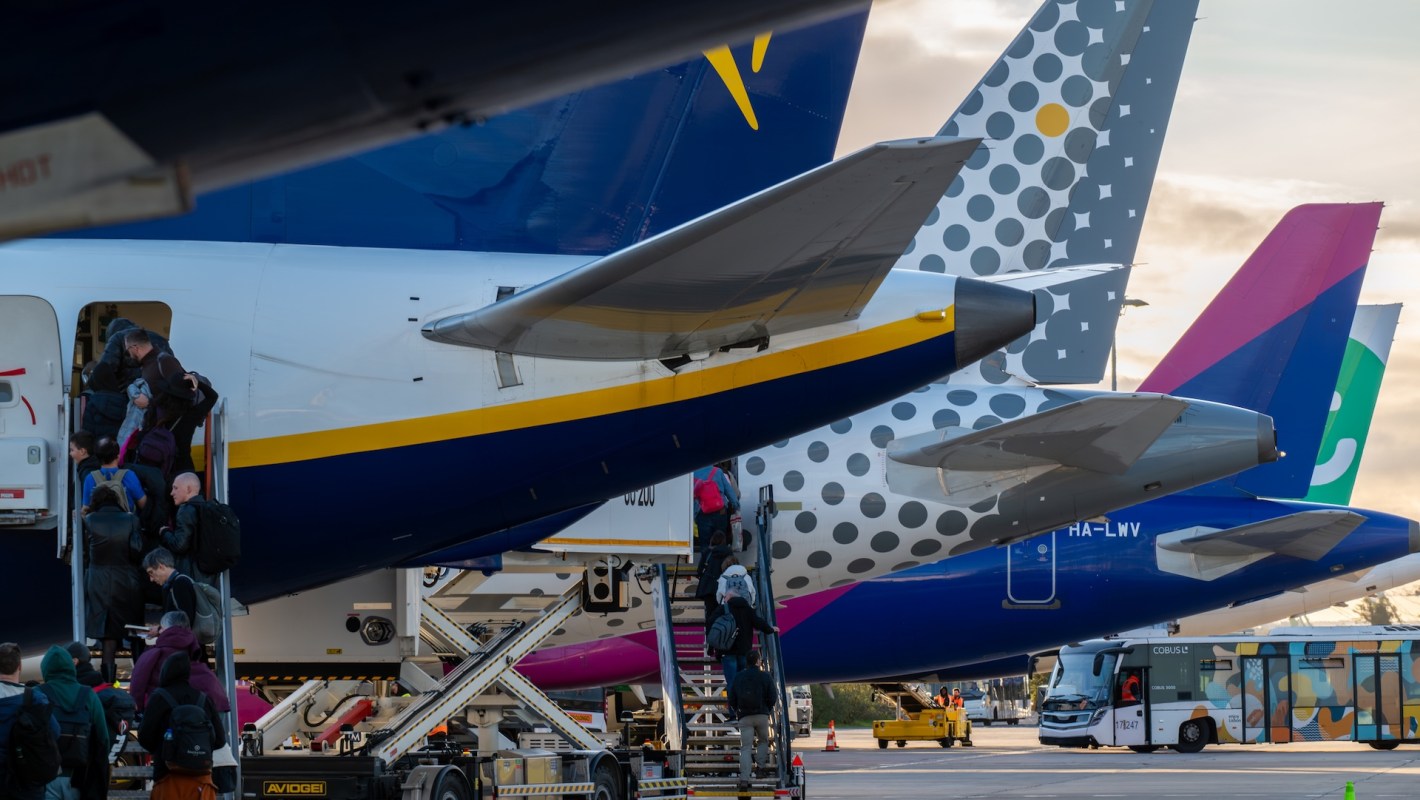
Europe's airline pollution problem is moving in the wrong direction.
According to the Guardian, new analysis from Transport & Environment found that Ryanair emitted 16.6 megatons of carbon dioxide in 2025, roughly 50% more than it did in 2019.
The airline carried just over 200 million passengers last year, compared with about 140 million before the pandemic.
Across the broader industry, European aviation produced 195 megatons of CO2 on outbound flights in 2025, about 2% above pre-pandemic levels.
T&E said the increase shows that airline expansion is outpacing efforts to reduce pollution, even as carriers add newer aircraft and promote efficiency gains.
"Aviation emissions hitting a new high is a clear signal that the industry has no intention of cleaning up its act," said Giacomo Miele, author of the T&E analysis, according to the Guardian. "It is time to stop subsidizing fossil fuel dependency and start investing in the future of a sustainable aviation sector."
TCD Picks » Quince Spotlight
💡These best-sellers from Quince deliver affordable, sustainable luxury for all




The group also argued that Europe's carbon-pricing system fails to capture much of the industry's impact because it applies only to flights that both begin and end within Europe. Many long-haul routes, often among the most fuel-intensive, are excluded.
Ryanair disputed the findings, arguing that its emissions have risen largely because of rapid growth and increased passenger numbers while pointing to its investment in newer, more fuel-efficient aircraft.
"Ryanair's growth is also displacing air travel on less-efficient legacy airlines whose GHG per passenger is much higher than Ryanair's," a company spokesperson told the Guardian.
Air travel remains one of the most pollution-intensive forms of transportation, especially on long-distance routes, and rising aviation emissions make it harder to slow rising global temperatures.
The consequences extend far beyond frequent flyers. Additional planet-warming pollution contributes to more extreme weather. Communities that rarely benefit from air travel can still bear many of those costs.
The findings highlight a broader issue. Companies may improve efficiency while still increasing total pollution as they expand.
Even if emissions per passenger decline, overall pollution can continue rising as more flights take off and more people travel.
T&E argued that current policies provide an incomplete picture of responsibility because some of the highest-polluting routes are not fully priced for the environmental damage they cause.
That effectively leaves the public subsidizing a high-emissions industry while cleaner alternatives struggle to compete.
T&E also said that industry complaints about environmental regulations are not supported by data. Its analysis suggests that rising fuel costs contribute far more to ticket price increases than clean-fuel mandates or carbon-pricing policies.
The organization is urging Europe to expand its emissions trading system so it applies to every departing flight, not just routes within Europe.
That change could generate significantly more public revenue by 2030 while helping fund cleaner aviation technologies, including sustainable aviation fuel and efforts to reduce warming caused by contrails, the cloud-like trails planes leave behind.

Get TCD's free newsletters for easy tips, smart advice, and a chance to earn $5,000 toward home upgrades. To see more stories like this one, change your Google preferences here.






