


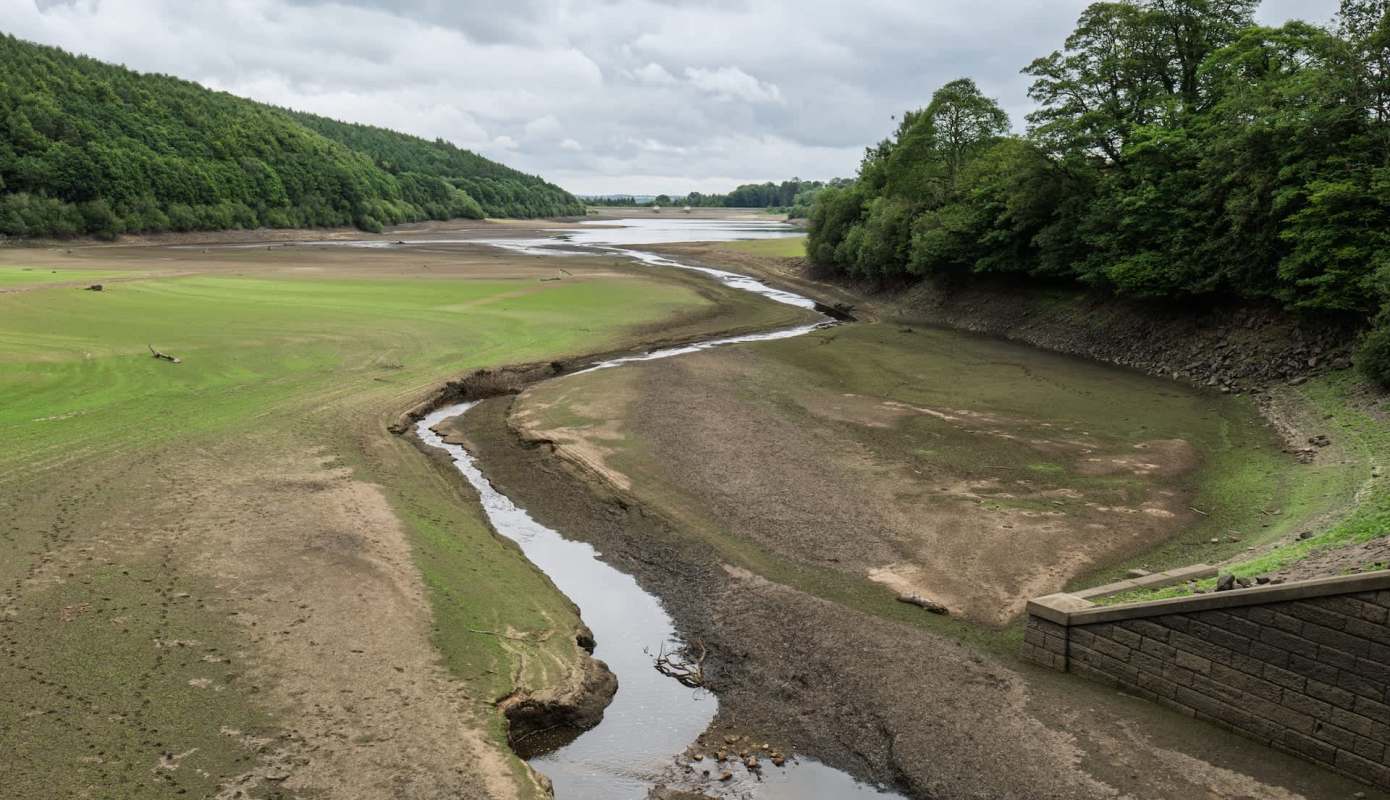
As drought conditions persist across England, businesses could face stricter water restrictions, including bans on using mains water to maintain golf courses and private school playing fields, as well as potential shutdowns of commercial car washes.
Here's what to know
According to The Guardian, South East Water, Southern Water, and South West Water have each asked the Department for Environment, Food and Rural Affairs to authorize "non-essential use bans" for businesses in parts of their service areas to extend drought rules beyond households.
Those requests come as 11 areas of England are still officially in drought. Yorkshire joined that list on Oct. 9, and reservoir storage across England has dropped to 54% full — 21% below the usual autumn level.
The outlook remains bleak. The Met Office said only a sustained period of wetter-than-normal weather — about seven months — would lift all areas out of drought. The grim reality is that England received only about 65% of its normal September rainfall, with the biggest shortfalls in the east and south.
More background
Defra data shows exceptionally low river flows in seven parts of England, including the River Derwent in the northeast, the Yare and Ely Ouse in the east, and the River Tone and Hampshire Avon catchments in the southwest. Recovery could take years, with major consequences expected for fish spawning and overall river health.
Southern Water is also seeking a drought order in Hampshire that would allow extra drawing from the River Test — an internationally prized chalk stream and rare salmon habitat — even below levels considered ecologically safe because of the "clear threat to supplies" in Hampshire and the Isle of Wight, The Guardian reported.
TCD Picks » Quince Spotlight
💡These best-sellers from Quince deliver affordable, sustainable luxury for all




Reservoir data also shows how stretched supplies have become. Ardingly Reservoir in West Sussex, which serves 280,000 people, is holding about 277 million gallons (1.05 billion litres) out of a roughly 1.37 billion-gallon (5.2 billion-litre) capacity. Colliford reservoir on Bodmin Moor is 37% full, while Wimbleball in Somerset is 18% full despite helping supply water to 390,000 people.
What's being done?
According to The Guardian, Mark Owen, the Angling Trust's head of fisheries, said, "We must continue to reduce unnecessary demand for water. It makes little sense to ban people from washing cars at home while commercial car washes can continue operating."
The measures cannot take effect without government approval. If Defra signs off, they could help protect supplies for homes and communities while reducing the burden on rivers and wildlife that are already facing significant strain during a long-running dry spell.
Owen also called for swift steps to cut leakage by water companies and curb unsustainable river abstraction, while South East Water and South West Water have already been permitted to change river withdrawals to help preserve reservoir storage.
According to The Guardian, South West Water's director for drinking water services, Sam Bottomley, stated, "Many people understandably think a drought is over once it starts raining. In reality, recovery takes much longer. Some rivers still remain at their lowest levels and with no significant rain forecast for the coming weeks, the immediate challenge is reducing demand and preserving enough stored water to maintain supplies until river flows and reservoir levels recover."

Get TCD's free newsletters for easy tips, smart advice, and a chance to earn $5,000 toward home upgrades. To see more stories like this one, change your Google preferences here.






