


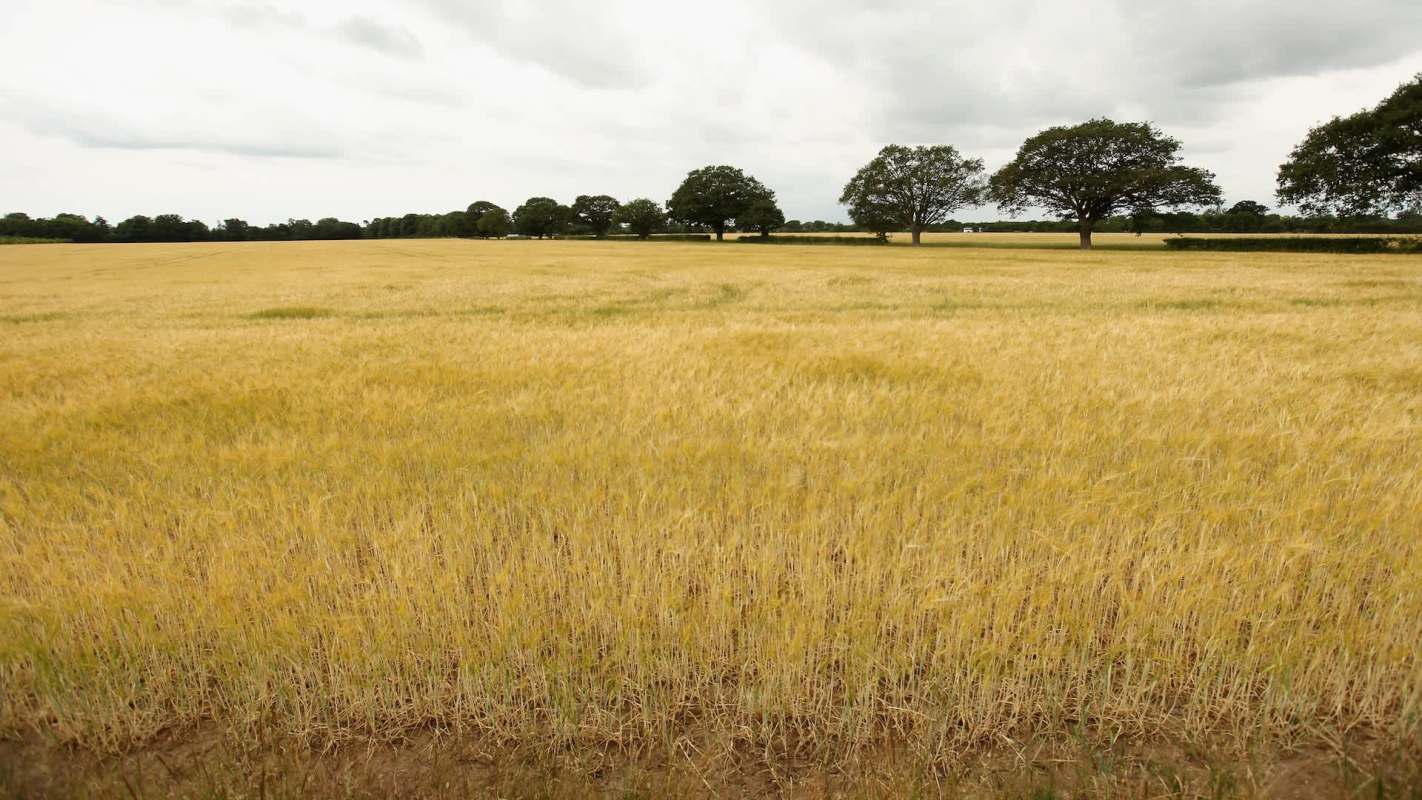
A large share of England's food supply is being grown in areas already facing serious drought risk, raising concerns about grocery prices, farm output, and the resilience of the country's food system.
Here's what to know
Ongoing dry weather in several of England's key farming regions is straining staple crops many households rely on, including cereals, potatoes, sugar beet, and oilseed rape, a new analysis by Rebalance Earth reported by The Guardian shows.
The analysis found 81% of England's supply is concentrated in areas already under water stress. More specifically, 77% of wheat, 75% of barley, and 74% of oilseed rape grow in parts of England rated moderately to very highly at risk of drought. It also found that 70% of sugar beet and 67% of potatoes grow in these drought-risk areas.
The report also said roughly one-quarter of the country's staple crops are grown in places facing acute drought risk. That includes 30% of wheat and barley, 28% of oilseed rape, 27% of fresh produce, and 21% of potatoes.
Kirsty Wilman, Rebalance Earth's chief operating and financial officer, described how widely the impact can spread.
"Drought builds slowly and quietly, and rarely gets the same attention as flooding, but its impact runs right through the economy: lower yields, strained supply chains and higher prices in all of our shopping baskets," she said.
TCD Picks » Quince Spotlight
💡These best-sellers from Quince deliver affordable, sustainable luxury for all




More background
East Anglia and Kent are among the regions under pressure, despite their long-standing importance to British agriculture and the U.K.'s food supply. Both areas have gone through extended dry spells.
The 2026 cereals results in England and Wales fell short of expectations, according to the Agriculture and Horticulture Development Board's final 2026 harvest report. It said wheat, spring barley, and oats volumes all came in below historical U.K. averages.
On Suffolk's Elveden estate, crop yields are running well below normal across 9,000 hectares (22,000 acres) of farmland.
Andrew Blenkiron, who manages the farms on the Elveden estate in Breckland, said repeated drought has become a recurring challenge.
"For three years out of five we have been in drought conditions," he said. The operation produces cereals like wheat and barley, along with root crops such as onions and potatoes.
Blenkiron argued that the answer is not simply to abandon drought-stressed farmland, particularly in places that remain highly productive.
"Water for food is key for us to function as a business and make sure we produce 100,000 tonnes of food here on an annual basis," he said.
"If we didn't grow on this land that is totally suitable for it, we would just import more and let other people deplete their natural resources," Blenkiron said.
Where can I learn more?
Drought and other weather extremes are already disrupting crop production and food prices far beyond England.
• Across global markets, relentless droughts devastate food supplies, pushing up prices everywhere.
• Around the world, extreme weather is cutting yields of staple crops and straining budgets.
• In South Australia and Victoria, drought threatens key farming regions and food prices.
• In Ukraine, recent drought devastated farms so severely that some growers lost everything.
• In Nigeria, weather threatens key food sources as already-surging prices climb higher.

Get TCD's free newsletters for easy tips, smart advice, and a chance to earn $5,000 toward home upgrades. To see more stories like this one, change your Google preferences here.






