


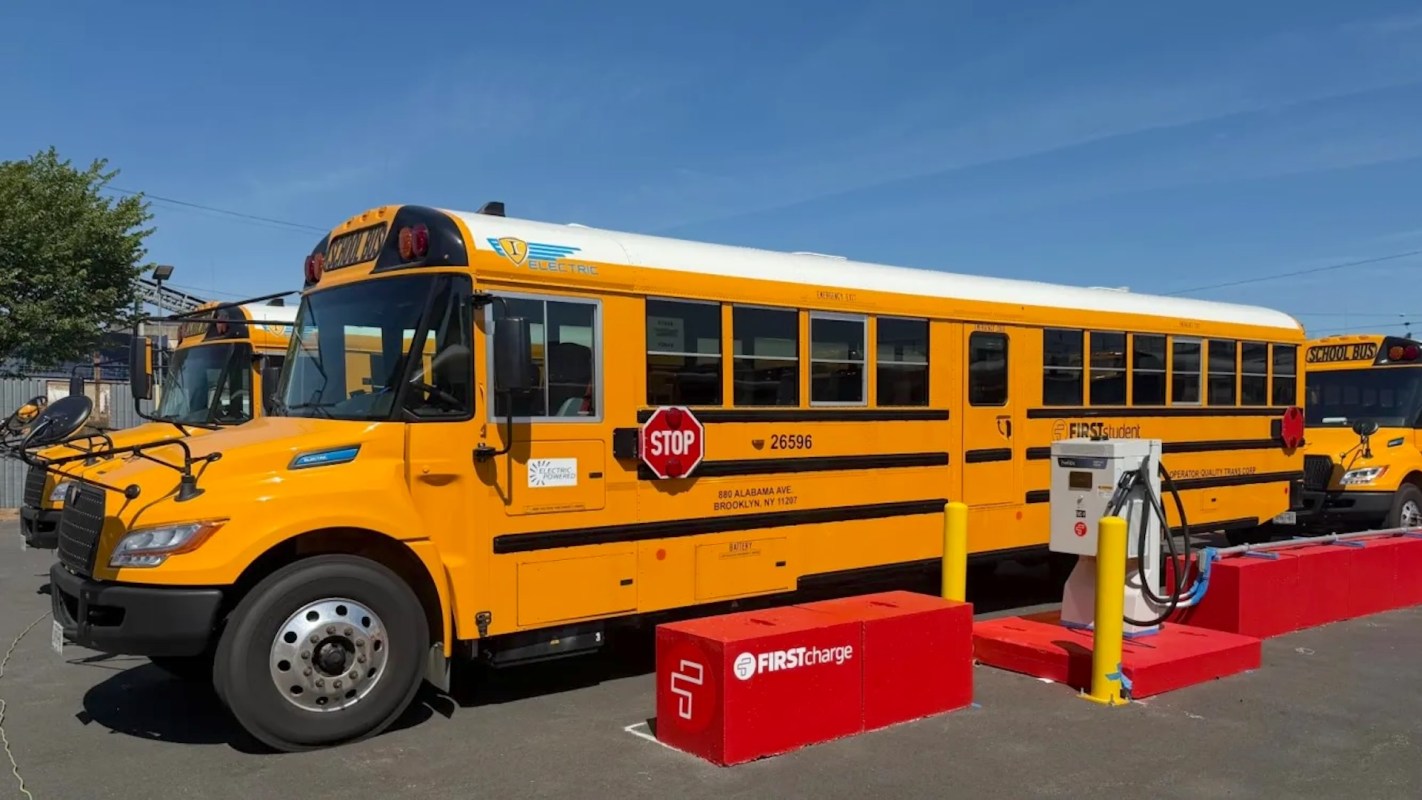
New York City is expanding its electric school bus fleet after a pilot project found that a simpler charging setup could cut infrastructure costs by 20%, according to Electrek.
The move will add 40 electric school buses for NYC Public Schools in Brooklyn and Queens while offering a potential model for other dense cities looking to electrify large fleets without major construction work or soaring installation costs.
Here's what to know
Their rollout builds on a Con Edison demonstration that explored a less disruptive way to install charging equipment in dense urban settings.
A key part of that effort was First Charge, First Student's above-ground charging system.
By running electrical lines overhead rather than burying them in trenches, the setup reduces construction in paved bus yards, speeds installation, and cuts infrastructure costs by 20%.
Vicki Kuo, senior vice president of Customer Energy Solutions at Con Edison, addressed the initiative's specifics.
TCD Picks » Quince Spotlight
💡These best-sellers from Quince deliver affordable, sustainable luxury for all




"Eliminating the need to bury the service line to these chargers lowers the upfront costs for First Student and is a strategy that other fleet owners can replicate to save money and complete projects more quickly," she explained.
More background
Con Edison and the New York State Energy Research and Development Authority also supported the pilot.
Through NYSERDA's New York School Bus Incentive Program, the project received six electric school bus vouchers, along with support to convert four diesel buses to electric.
The move also fits into New York State's zero-emission transportation timeline.
State rules require newly purchased school buses to be zero-emission by 2027, and the full fleet must meet that standard by 2035.
For students, families, and surrounding communities, that means quieter streets, cleaner air near schools, and less exposure to diesel tailpipe pollution.
What's being done?
To manage charging, First Student is using load-management software that schedules buses to charge during off-peak periods, when electricity is usually cheaper.
For a large fleet, that planning can help control energy costs and reduce strain on the grid.
First Student is also considering additional clean energy features for its Brooklyn facilities, including solar power and a smart energy hub.
Installing workable charging infrastructure remains one of the biggest challenges in fleet electrification, separate from purchasing the vehicles themselves.
In dense cities, where excavation can be costly and disruptive, overhead charging systems can help schools, transit agencies, and private fleets move ahead faster.
"Deploying electric school buses at scale requires more than vehicles; it requires the right infrastructure, technology, and utility partnership," said Kevin Matthews, head of electrification at First Student.
"Working with Con Edison, we've demonstrated a more efficient approach that can help overcome some of the cost and construction challenges that have traditionally made fleet electrification difficult in dense urban environments," he added.
Where can I learn more?
These articles on electric school bus costs and EV incentives show how widespread electrification efforts are taking shape nationwide.
• Across the U.S., orders for electric school buses rose tenfold since early last year.
• School districts can see lifetime savings of up to $173,000 per electric bus.
• Many EV owners say cheap charging and lower maintenance prompted them to switch.
• Los Angeles will offer an extra $4,000 to help low-income residents buy EVs.
Taken together, they illustrate a gradual shift away from gas-powered transportation and how policy initiatives can facilitate the switch.

Get TCD's free newsletters for easy tips, smart advice, and a chance to earn $5,000 toward home upgrades. To see more stories like this one, change your Google preferences here.






