


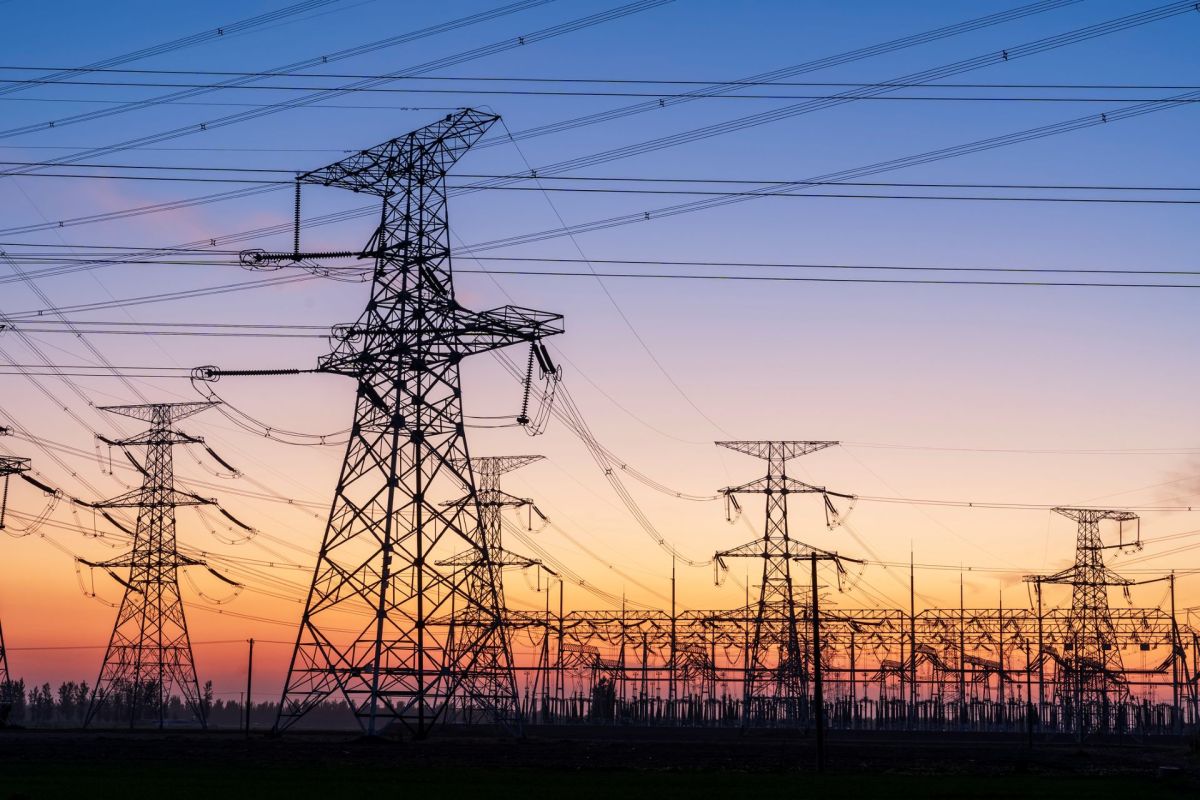
Delaware electric customers are facing rising costs from several directions at once, Public Advocate Jameson Tweedie said.
He said pressure on households and small businesses comes from all three main parts of a power bill: generation, transmission, and distribution.
Here's what to know
Delaware LIVE reported that on an Oct. 26, 2026, episode of the public policy podcast "A Better Discussion" hosted by Jane Brady, Tweedie outlined the problem.
He said Delaware needs more power generation, but the shortfall is tied to a broader regional system that is also struggling to keep up with demand.
Customer bills already reflect that pressure. In a report released April 6, 2026, the Delaware Division of the Public Advocate said residential distribution rates had more than doubled since 2006.
The same report found transmission costs rose 93.5% from 2020 to 2025, and summer residential supply rates climbed 114.1% from 2021 to 2026.
TCD Picks » Quince Spotlight
💡These best-sellers from Quince deliver affordable, sustainable luxury for all




Tweedie also pointed to PJM capacity-market prices, which Delaware LIVE described as payments to generators for committing future power availability. He said those prices have increased roughly tenfold in three years, suggesting demand is outpacing new supply.
More background
Delaware consumes far more electricity than it generates locally.
U.S. Energy Information Administration data cited by Delaware LIVE show that in 2024 Delaware had about 3,303 megawatts of net summer capacity, produced roughly 4.8 million megawatt-hours, and had retail sales of about 11.4 million megawatt-hours.
Because of that gap, the state depends heavily on imported electricity through PJM Interconnection, the regional grid operator and power-market manager for 13 states and Washington, D.C.
That means even a larger in-state generation buildout wouldn't let Delaware officials set regional power prices or control electricity availability on their own.
It's still unclear how much of the planned generation will materialize. In August 2026, PJM had nearly 1.8 gigawatts of proposed Delaware capacity under review, including three gas plants, four solar projects, and two battery-storage projects.
Those plans can shift quickly: an independent review said an approximately 1.5-gigawatt gas project in Sussex County had been removed from consideration.
What's being done?
State officials are trying to prevent major new electricity users from passing their costs on to everyone else.
In August 2026, Governor Matt Meyer signed House Bill 233, which created a separate utility rate category for very large power users such as data centers, and House Bill 445, which requires qualifying large energy facilities to secure or build enough new generation to serve their own demand.
Tweedie said the issue became more urgent because Delmarva had previously weighed multiple possible data-center proposals that together could have nearly doubled the state's peak power demand.
Projects of that size can drive the need for new power plants, transmission lines, and other infrastructure, raising the question of who should pay for the expansion.
Separately, Tweedie's office is reviewing Delmarva Power's latest rate case. In December 2025, the utility sought an additional $67.8 million a year in base-rate revenue before later revising that request to about $75.8 million.
While the rest of the case remains under review, the Delaware Public Service Commission allowed a roughly $34.3 million interim increase to take effect in July 2026. Tweedie said his office will contest any costs it considers unjust or unreasonable.
The Delaware Division of the Public Advocate says it can help directly with billing issues, shutoff threats, and similar utility problems while the broader rate dispute continues.
Where can I learn more?
These stories add context on the pressures behind rising electricity costs and the fight over who should cover them. They look at Delaware's new rules for data centers, utility bill changes in nearby states, and broader disputes over rate hikes and grid expansion.
• Delaware lawmakers said data centers must pay their fair share before they can shift power costs onto residents.
• A federal audit found overbilled transmission charges were passed through to Atlantic City Electric customers.
• Pennsylvania regulators opened a data-center cost review as utility profits came under scrutiny.
• Utilities nationwide are seeking $31 billion in hikes as they pursue a massive grid buildout.

Get TCD's free newsletters for easy tips, smart advice, and a chance to earn $5,000 toward home upgrades. To see more stories like this one, change your Google preferences here.






