


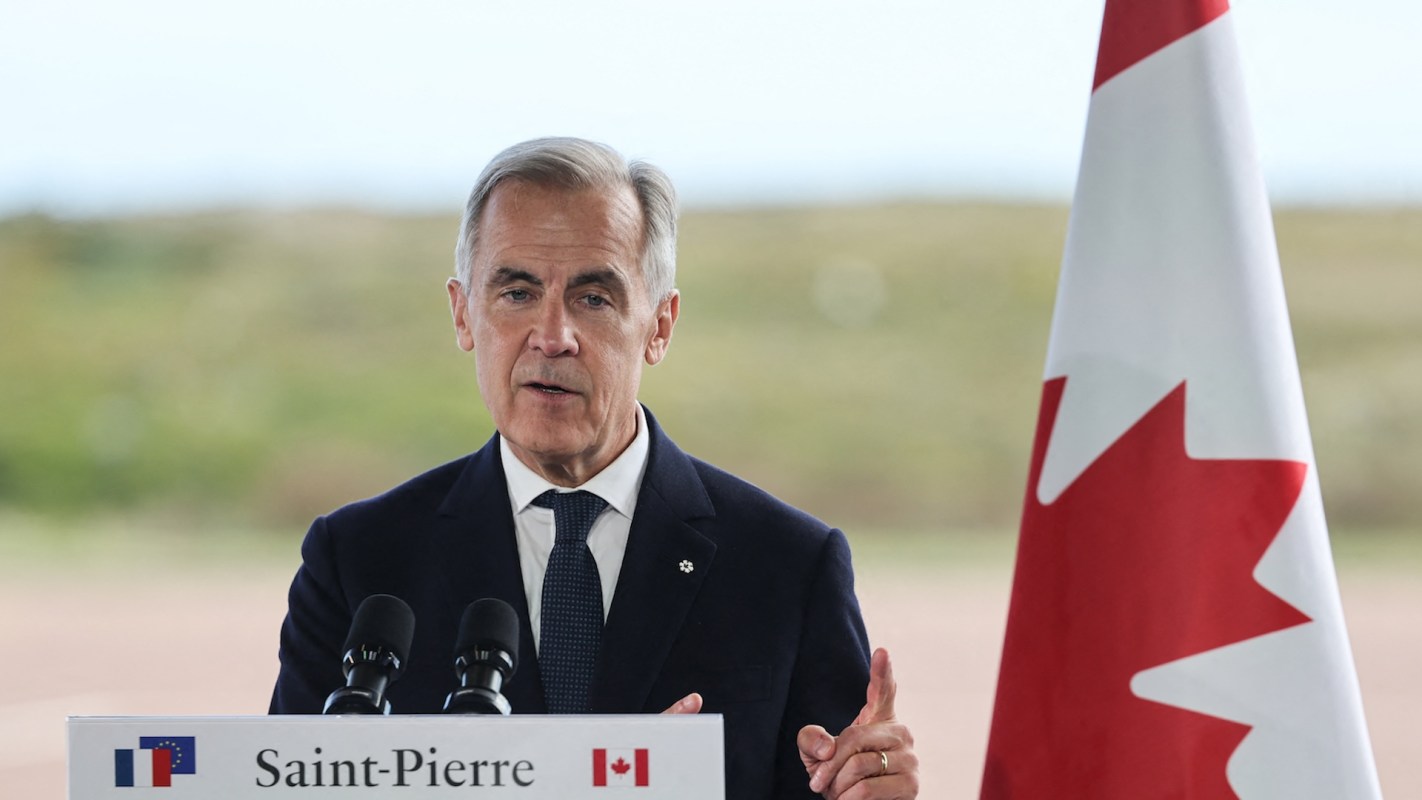
An 88-year-old man lost $450,000 over 10 months to an online investment scam launched by a deepfake video of Prime Minister Mark Carney.
Ralph Moore, a Qualicum Beach, British Columbia, resident, said TD Bank still hasn't reimbursed him.
Here's what to know
According to CBC's Go Public, Moore started sending money in May 2025 after seeing the bogus investment promotion. He made online payments and repeatedly went to his local TD branch for transfers, bank drafts, and credit-card payments in other people's names. TD closed his account in February.
Moore's daughter, Leslie Herrndorf, said a bank that had dealt with her father for decades should have seen the activity as a far bigger red flag.
"How could $450,000 be allowed to be given away by a bank who'd been dealing with my dad for decades?" she asked. "They knew this was unusual behaviour."
Go Public reported that TD questioned several transactions, warned Moore and his wife about scams, notified its internal fraud-prevention unit, and temporarily restricted the account. But Herrndorf had her father's mental capacity tested, and he failed. That left the family asking why the bank didn't freeze the account, permanently block the transactions, contact relatives, or notify police.
TCD Picks » Quince Spotlight
💡These best-sellers from Quince deliver affordable, sustainable luxury for all




More background
The Canadian Anti-Fraud Centre said people in Canada reported more than $700 million in losses to fraud in 2025, and Go Public said the agency estimates only 5% of victims report it. Banking-specific totals were not available.
Go Public said it heard from victims across the country, including cases of e-transfer fraud, fake bank calls, and bogus investment schemes. In many of those cases, banks denied reimbursement and argued that customers had shared passwords, account details, or otherwise cooperated with scammers.
Alexandre Plourde, a lawyer and analyst at the Montreal consumer advocacy group Option consommateurs, pushed back on that characterization.
"These are not negligent people, not stupid people," he said. "I don't think the law does enough to protect consumers."
According to Go Public, other cases include Scotiabank customer Karla Zwicker, who lost more than $13,000; RBC customer Ivanka Bubic, who was held responsible for $15,000 drawn from her line of credit; and BMO customer Deepak Kadaba, who was out $3,400 through unauthorized withdrawals and debit-card transactions.
What's being done?
Consumer advocates said Canada is falling behind countries that place more responsibility on banks. Since October 2024, the United Kingdom has required financial institutions to reimburse fraud victims. "The bank must reimburse consumers when they're a victim of fraud … unless the consumer has been grossly negligent," Plourde said. "That's a very high threshold for the banks to prove."
Plourde said stronger liability rules could change how banks behave.
"Putting more liability on Canadian banks would be a big incentive for banks to develop better security measures," he said.
He also called Moore's $450,000 loss "unacceptable" and said banks "should have protocols to go deeper, ask more questions" when a scam appears obvious.
In Canada, advocates, some Members of Parliament, and the banking ombudsman have called for fraud-liability laws. But as Go Public reported, when Ottawa rolled out Bank Act changes on March 26, the updates did not require banks to cover customer fraud losses.
Finance Minister François-Philippe Champagne told CBC News that the government is working on a national anti-fraud strategy, though he did not commit to making banks financially responsible. Option consommateurs commissioned a Léger poll, released October 13, showing 87% of Canadians believe banks should cover fraud losses unless a customer was grossly negligent.
Plourde said, "We're reaching record highs of fraud every year. It's time to act."

Get TCD's free newsletters for easy tips, smart advice, and a chance to earn $5,000 toward home upgrades. To see more stories like this one, change your Google preferences here.






