


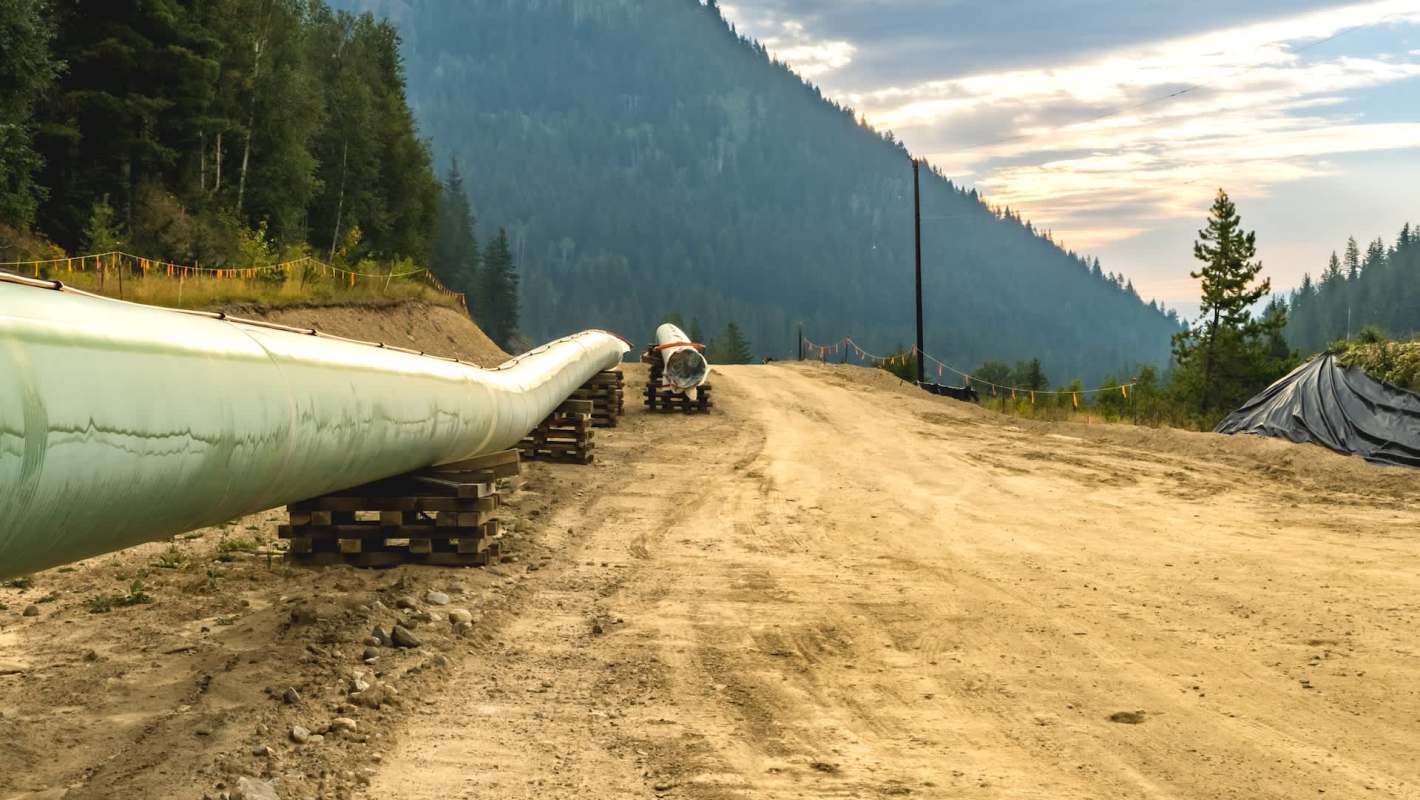
The premiers of Ontario and Alberta cast a proposed new crude oil pipeline as a national project, saying it could support jobs, expand exports, and strengthen Canada's energy security.
But the 3,300-kilometer (2,051-mile) corridor is also reviving a familiar debate over cost, public risk, and whether expanding fossil fuel infrastructure makes sense as cleaner energy options become cheaper.
What's happening?
According to CTV News, Ontario Premier Doug Ford and Alberta Premier Danielle Smith proposed a west-east oil route known as the Northern Shield Energy Corridor, running from Hardisty, Alberta, to Sarnia, Ontario, where it would connect to the province's refining hub.
Officials have already begun a feasibility review of the project, with results expected by the end of 2026.
CTV News reported that the pipeline is being planned to move about 500,000 barrels a day for Canadian use and exports, with the option of increasing that volume to 800,000 barrels daily. The route would remain entirely within Canada and be built with Canadian steel.
"By connecting Alberta's energy with Canadian refineries and markets, we can create jobs, grow our economy, and make better use of the world-class resources we already have," Smith said, per CTV News.
TCD Picks » Quince Spotlight
💡These best-sellers from Quince deliver affordable, sustainable luxury for all




The outlet reported that Ontario is also looking at port-related extensions, including one that Manitoba and the Manitoba Crown-Indigenous Corp. could assess as a possible link to the Port of Churchill.
Why does it matter?
Supporters argue the project would give Canada more room to move its own oil to domestic customers and export markets while relying less on energy routes that cross the border.
Heather Exner-Pirot, the Macdonald-Laurier Institute's director for energy, natural resources and environment, noted that Sarnia relies on Enbridge Line 5, which has been "under a lot of political risk," per CTV News.
Critics say the economics are far from certain. Keith Stewart, senior energy strategist with Greenpeace Canada, argued, "There is no private proponent for this pipeline because there's no business case," adding that Energy East was previously abandoned for similar reasons, according to CTV News.
Fossil fuel extraction, transport, and burning harm people and communities by creating pollution that also worsens extreme weather disasters that destroy homes, livelihoods, and economies.
The industry contributes to air and water pollution linked to asthma, heart disease, cancer, and premature death, while volatile oil and gas markets can keep household energy costs high even as corporate profits rise. Critics further note that lobbying by the fossil fuel industry slows the rollout of cleaner, cheaper energy options that would protect families.
What's being done?
For now, the corridor remains only a proposal.
Ontario has started consulting Indigenous partners and communities, while a feasibility study continues.
Stewart warned that taxpayers could end up carrying the burden if private industry declines to take it on. "Spending what's probably going to be on the order of $40 billion, $50 billion [in] public money to subsidize oil companies building a new pipeline doesn't make sense when we should be looking at getting Ontarians, Quebecers, everyone into electric vehicles," he said. "... The only way this gets built is if you and I pay for it."
Exner-Pirot told CTV News the project may be easier to justify if it is treated as a security investment rather than a strictly commercial one, though she cautioned that the cost would still need to be weighed carefully.

Get TCD's free newsletters for easy tips, smart advice, and a chance to earn $5,000 toward home upgrades. To see more stories like this one, change your Google preferences here.






