



Lisa Says Gah, an "Insta-Famous" brand that has prided itself on claiming it was environmentally conscious and predominantly made in California, was investigated by an Instagram creator who found it was importing its clothing from the same factory that works with fast fashion brand Fashion Nova.
The Instagram creator, Abby French, runs @SustainableFashionFriend, where she has exposed signs of greenwashing or exaggerated marketing across several influencer-run fashion lines, like Kim Kardashian's SKIMS, Paige Lorenze's Dairy Boy, Danielle Bernstein's WeWoreWhat, and Chelsea Parke Kramer's Parke, and mainstream fashion outlets like Reformation and Aritzia.
"It's very much worth looking into even if a brand openly says they're 'ethically made,'" French told The Cool Down. "Terms like 'sustainable,' 'clean,' 'ethical,' and 'eco-friendly' aren't really regulated strictly, unfortunately, so brands can use them in very different ways."
French, who is based outside of the U.S., hadn't heard of Lisa Says Gah until many of her roughly 75,000 followers kept asking her to investigate it. She told The Cool Down that once she read all the promising language on the brand's site, she decided to verify the claims.
"The most surprising thing, in my opinion, was the gap between the brand's ethical positioning and the lack of detailed information published by the brand to support it," French told The Cool Down. "A lot of the language LSG uses sounds nice on the surface, but there is limited verifiable detail behind those claims."
In French's April 14 video, she highlighted language in the brand's "FAQ" section, which, according to her screenshots, originally said that the brand strives "to ensure our supply chain is as sustainable as possible" and the clothing is made "predominantly in California," with the page title on the website in search results showing "Ethically Made Clothing."
TCD Picks » Quince Spotlight
💡These best-sellers from Quince deliver affordable, sustainable luxury for all




French looked at 60 items listed on the site and told The Cool Down that 56 of them were listed as "imported." Using publicly available U.S. import databases, French cross-referenced shipments and found that Lisa Says Gah was importing from the same factories used by fast-fashion brands like Fashion Nova and Lulu's. (While these databases are public and obtained through Freedom of Information Act requests, French said she does pay a subscription fee to access this information.)
However, as French noted in her Substack, these factories do not tie to a brand's identity — the fact that Lisa Says Gah uses the same factory as Fashion Nova does not imply the brand qualities are the same, as it generally has more to do with the work performed than the materials used. The problem French wants to emphasize is that Lisa Says Gah heavily advertised it was made in California, when shipping records and import data suggest many of the brand's products were made in China.
The problem is not as much where the clothes are made, French said, but that Lisa Says Gah had advertised it was predominantly made in California when its items are more consistently linked to China, therefore putting into question how open and honest the brand is to shoppers.
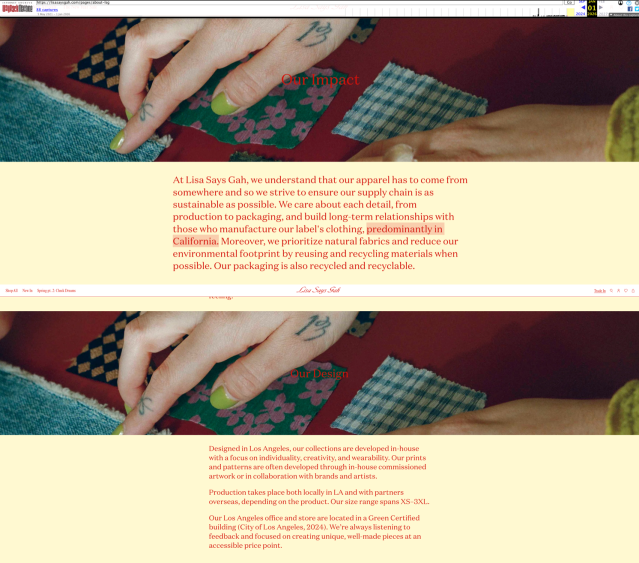
"What they're telling consumers doesn't fully line up with what's actually shown," French told The Cool Down. "It's possible these claims matched more closely at one point, but … it feels like they may still be benefiting from an ethical image that isn't clearly backed up by current, detailed information."
|
Which of these savings plans for rooftop solar panels would be most appealing for you?
Click your choice to see results and earn rewards to spend on home upgrades. |
 Save $1,000 this year 💸
 French also pointed to how certain pages hadn't been updated in years, including the brand's "responsibility" page, which led to an FAQ that, according to the Wayback Machine, had not been updated since 2021 and remained online through at least March.
That page now returns a 404 error, which could be interpreted as a decision to take down an outdated page when brought to the brand's attention, as French advocated for, though it remains unconfirmed if LSG made any changes in response to French's video.
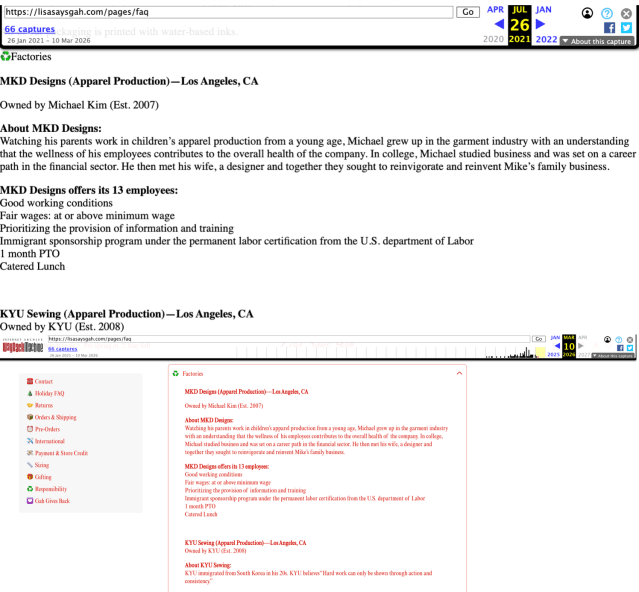
"If a brand's 'responsibility' or sustainability page hasn't been updated in years, it's a red flag to me because it's supposed to show what they're doing now, not just repeat old information," French said. "It gives the impression that they're still relying on older claims instead of showing what they're actually doing now."
As French noted in a follow-up post, much of the language on the site seems to have changed since her prior video, including what she highlighted as signs of greenwashing. The Cool Down verified French's claims through the Wayback Machine, which shows that, in January 2026, the brand's website language aligned with what French talked about in her video. French also posted her own screenshots to Instagram, most notably showing that "Ethically Made Clothing" had been removed from the page title.
French told The Cool Down she has noticed some brands that she's investigated for greenwashing have tweaked their language slightly after her videos went viral. In this case, French claims she checked Lisa Says Gah's site within 24 hours after posting her video and noticed "some of the things I brought up or showed in the video were removed or adjusted, without any real explanation or communication to customers."
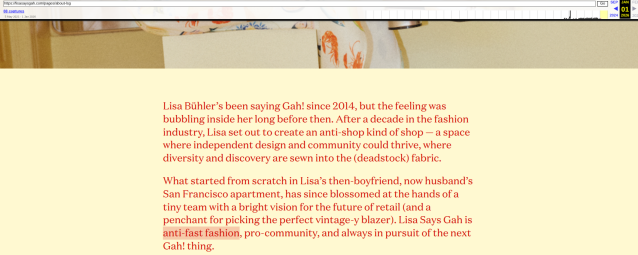
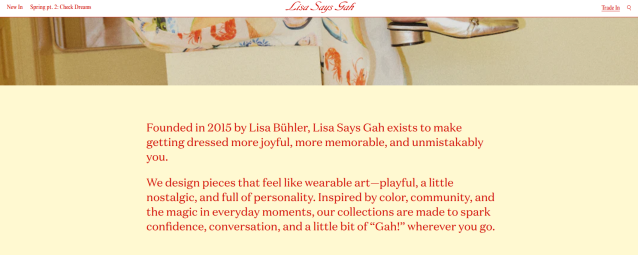
Overall, French's problem with Lisa Says Gah is their language — and she is not the first one to point it out. According to Good On You, a sustainable fashion and beauty brand rating platform, Lisa Says Gah's environmental rating is "not good enough" because of a lot of the ambiguity surrounding the brand's environmental claims. Lisa Says Gah did not respond to The Cool Down's request for comment.
While no conclusion can be drawn that changes were directly in response to French's video, as of reporting, Lisa Says Gah's website no longer has claims about sustainable supply chains, does not state that it manufactures predominantly in California, does not mention prioritizing natural fibers and using recycling and reusable materials whenever possible, and no longer mentions "deadstock" or the phrase "anti-fast fashion."

Get TCD's free newsletters for easy tips, smart advice, and a chance to earn $5,000 toward home upgrades. To see more stories like this one, change your Google preferences here.






