


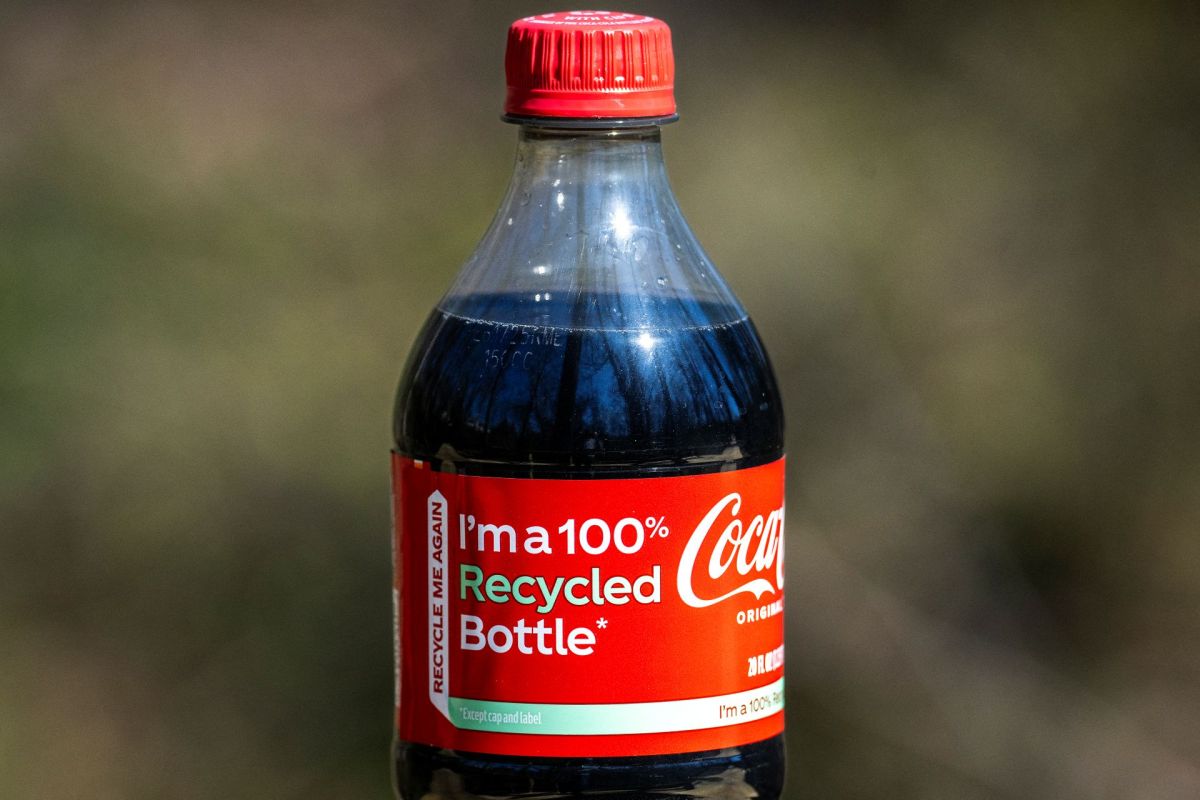
Coca-Cola, Nestlé, and Danone are changing how they describe recycled plastic on their bottles after European regulators challenged several environmental claims on their packaging.
The shift is a notable setback for some of the world's biggest beverage brands, whose labels helped shape how shoppers understood recycled content and what could actually be recycled.
Here's what to know
After discussions with the European Commission and EU consumer protection authorities, Nestlé, Coca-Cola, and Danone said they would revise the recycling language used on plastic bottles, Swissinfo reported.
Officials were examining whether the wording on those bottles conveyed an overly sweeping message about both recycled content and how recyclable the packaging really is.
Under the revised labeling, a bottle described as "100% recycled plastic" would need to spell out that the cap and label are not included in that claim.
The companies are also dropping language that tells shoppers to recycle the bottle again, replacing it with a simpler prompt to just "Recycle me." That difference can suggest a level of certainty about repeated recycling that real-world collection and processing systems do not always support.
TCD Picks » Quince Spotlight
💡These best-sellers from Quince deliver affordable, sustainable luxury for all




EU officials said the new wording meets consumer protection rules, and the Commission added that Coca-Cola and Nestlé had already started applying some of the commitments, including recycling pledges on digital channels.
More background
Scrutiny began in 2023, when the European consumer organization BEUC raised concerns about misleading recycling messages on plastic bottles. That led the European Commission and national consumer protection authorities to begin discussions with the companies.
Packaging claims can strongly influence everyday buying decisions. A label suggesting a bottle is fully recycled — or can simply become the same bottle again — may sound straightforward to a shopper in a store aisle, even when the cap and label are excluded, or the recycling outcome depends on local systems.
Regulators took a closer look at that gap between marketing and reality. More precise wording gives consumers a clearer sense of what they are paying for, rather than forcing them to decode broad sustainability promises from multinational brands.
What's being done?
The response is tighter wording enforced through consumer protection oversight, not a new recycling technology or a major packaging redesign. The companies are amending specific statements so bottle labels say exactly what is recycled and avoid overstating how easily the package can be recycled again.
The Commission also said Coca-Cola and Nestlé have already extended some of those commitments to digital channels, where they make environmental claims to consumers as well.
Where can I learn more?
These developments are part of broader scrutiny over Coca-Cola, Nestlé, and their plastic-packaging claims.
• Nestlé and Coca-Cola previously faced legal scrutiny over misleading claims on bottle packaging.
• In Queensland, Coca-Cola threatened to back out of a recycling scheme over reputation concerns.
• In Samoa, Coca-Cola was slammed over a packaging update amid a monumental waste crisis.

Get TCD's free newsletters for easy tips, smart advice, and a chance to earn $5,000 toward home upgrades. To see more stories like this one, change your Google preferences here.






