


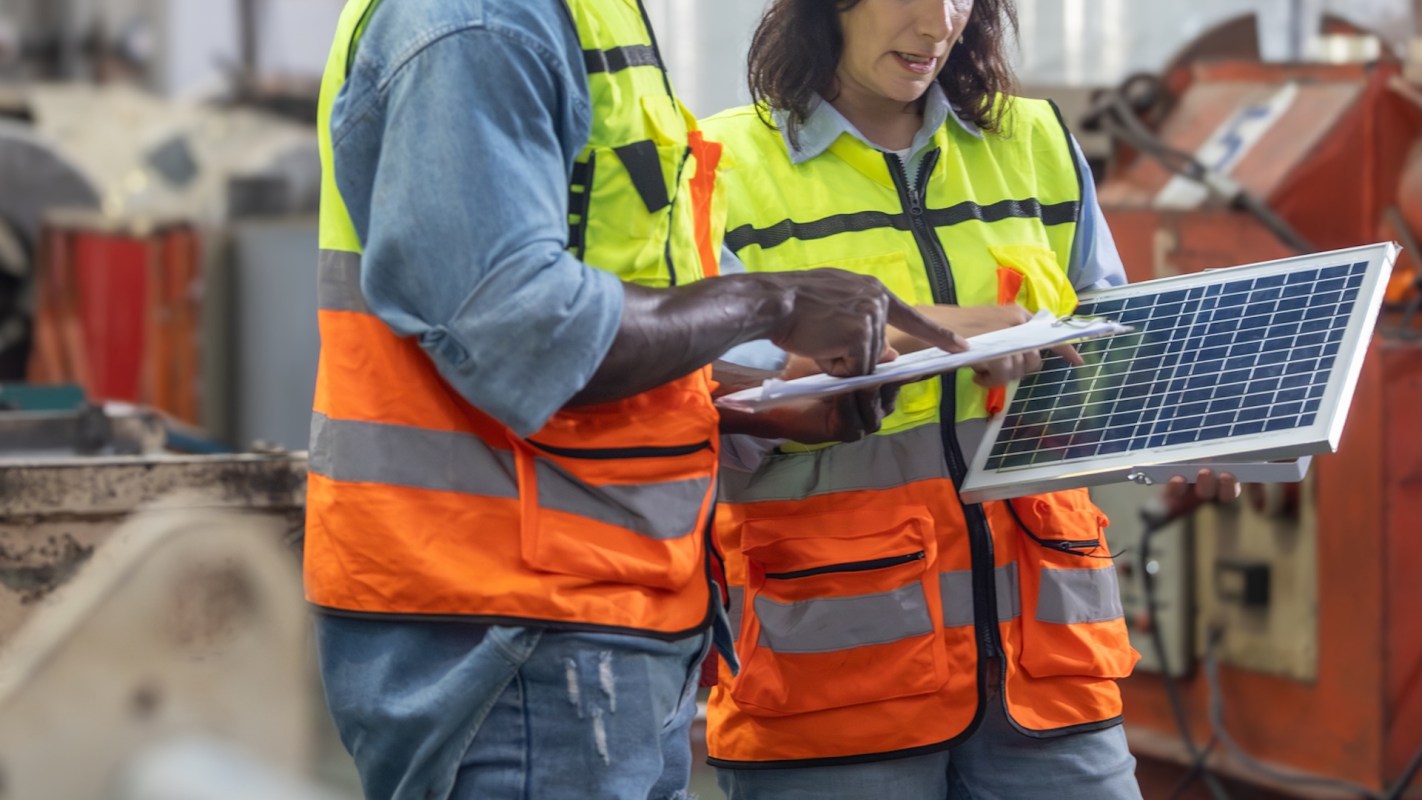
Clean energy manufacturing now has a footprint in every state — not just a handful of regional hubs. A new industry report found that U.S. facilities making solar, energy storage, and wind components collectively support 215,700 jobs nationwide.
What's happening?
Workers at U.S. clean energy component plants are earning well above the national norm, with average pay about 35% higher, according to the American Clean Power Association's latest report. As PV magazine reported, ACP counted 825 operating manufacturing facilities across the country that directly employ roughly 50,000 people.
The industry's economic impact reaches far beyond the factory floor. ACP said another 50,000 jobs support upstream activity tied to those facilities, while worker spending drives nearly 107,000 more jobs. Altogether, that brings the total employment impact to 215,700 jobs.
Separate from day-to-day factory operations, construction on new or expanded clean energy manufacturing sites in 2025 supported 207,000 jobs and contributed more than $20 billion to the gross domestic product, according to PV magazine. Solar manufacturing accounts for 106,100 jobs, compared with 53,100 in energy storage and 56,500 in wind.
Looking ahead, ACP projects especially strong gains in solar and battery manufacturing by 2030, including more than 63,000 additional solar jobs and over 91,000 storage jobs. At present, Texas, Michigan, Illinois, Ohio, and Georgia rank among the leading states for clean energy manufacturing GDP.
Why does it matter?
The report points to tens of thousands of manufacturing jobs with above-average wages, along with ripple effects for suppliers, construction workers, and local businesses supported by household spending.
Increased domestic production could help strengthen the supply chain behind rooftop solar and batteries. When more of those components are made in the United States, the market may be better positioned to avoid some of the delays and price swings that have complicated clean energy projects in recent years.
Cleaner and more abundant energy technologies can help lower utility bills while reducing pollution. As solar modules and batteries continue to scale up, households may have more opportunities to cut their dependence on volatile energy costs.
Save $10,000 on solar panels without even sharing your phone number Want to go solar but not sure who to trust? EnergySage has your back with free and transparent quotes from fully vetted providers that can help you save as much as $10k on installation. To get started, just answer a few questions about your home — no phone number required. Within a day or two, EnergySage will email you the best local options for your needs, and their expert advisers can help you compare quotes and pick a winner. |

Factory investment can create jobs in communities that may never host a wind farm or solar array but can still benefit from the clean energy transition.
What's being done?
The industry is expanding manufacturing capacity in the areas where demand is rising fastest, especially solar modules, solar cells, battery modules, and lithium iron phosphate battery cells. If that buildout continues, it could make it easier for more households to access the equipment needed to generate and store their own power.
Adding battery storage to a solar setup can protect your home during outages, save money on energy, and help you go off-grid. Homeowners can also pair solar panels with efficient electric appliances to drive their utility costs even lower. EnergySage is an excellent resource to help you get started with the solar process and can save you up to $10,000 by curating competitive bids from vetted, local installers.
If those projections hold, America's clean energy factory surge could mean more than new plants and larger payrolls. It could also give more households access to the solar panels and batteries that can make home energy cheaper, cleaner, and more resilient.
More From EnergySage
💡Go deep on the latest news and trends shaping the residential solar landscape



Get TCD's free newsletters for easy tips, smart advice, and a chance to earn $5,000 toward home upgrades. To see more stories like this one, change your Google preferences here.






