


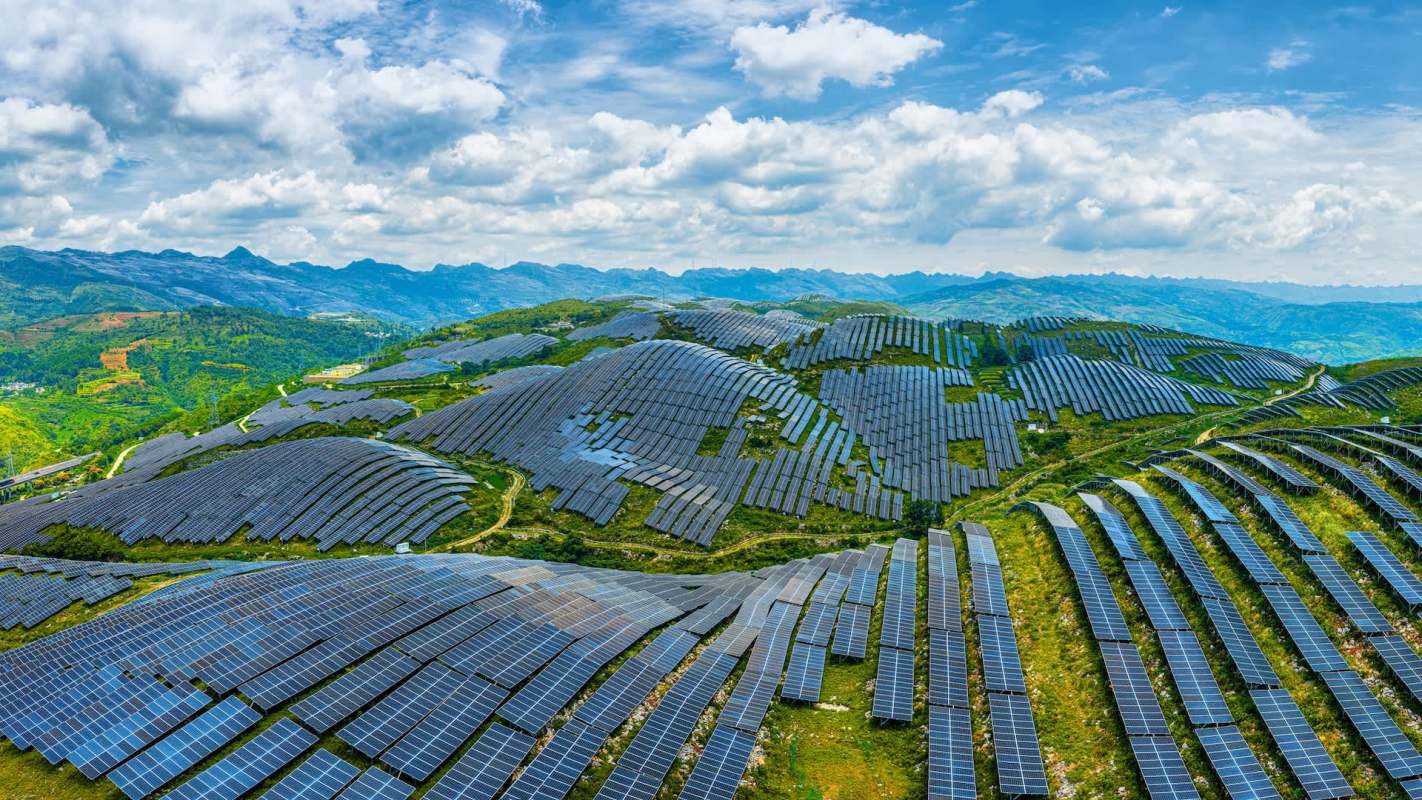
In China's power buildout, solar has now edged past coal on an installed-capacity basis, marking a major milestone for the country's clean-energy expansion.
The shift is a striking sign of how quickly renewable energy is scaling up.
Here's what to know
Using figures from China's National Energy Administration (NEA), Oilprice.com reported that installed solar capacity reached 1,286 gigawatts by the end of July, pushing it ahead of coal in China.
As of the end of June, China's solar capacity was 1,274 gigawatts, still narrowly below coal-fired capacity at 1,275 gigawatts. By July 31, solar represented 31.5% of the country's installed power generation capacity.
That result had been foreshadowed in July, when Chinese officials said solar could surpass coal. The newest numbers show that point has now been reached.
The milestone reflects installed capacity rather than the amount of electricity actually produced. Coal therefore still has a major role in supplying power across China.
TCD Picks » Quince Spotlight
💡These best-sellers from Quince deliver affordable, sustainable luxury for all




More background
July data showed coal provided under 50% of the country's electricity output in the first half of 2026 for the first time on record.
During that period, coal's share averaged 49.7% of total electricity generation, while renewable electricity generation rose about 9% from a year earlier. Those figures also showed renewables at 41.2% of China's total electricity generation, with wind and solar together supplying nearly one-quarter of all power output.
Because China plays such a massive role in the global economy, shifts in its energy mix can influence everything from planet-warming pollution to supply chains for solar panels, batteries, and electric vehicles.
What's being done?
Years of heavy investment in renewable energy are now materially changing China's power mix. On an installed-capacity basis, those efforts have now ended coal's long-standing lead.
The renewable boom has lost some momentum because of policy changes, while grid bottlenecks and higher coal-fired generation have driven up curtailment rates for solar and wind. China is adding more clean-energy capacity than ever, but it still needs stronger transmission, storage, and grid management to make full use of that power.
The challenge is a familiar one around the world. Building solar farms is only part of the equation; modernizing the grid so electricity can move where it is needed is just as critical.
Renewables are no longer a niche technology. They are increasingly becoming the backbone of major power systems, even in places where coal once seemed untouchable.
Where can I learn more?
China's solar-over-coal milestone is part of a much bigger shift in its power system. Several factors are altering the energy landscape, including declining coal use, rapid renewable growth, and clean power that still gets wasted when the grid can't keep up.
• Across China, coal power and emissions fell for the first time in a decade.
• In China, coal contracts stranded 170 TWh even as wind and solar surged.
Adding renewable capacity is one step, but making sure grids and markets can absorb all that power will shape what happens next. That's now a live question not just in China, but anywhere clean energy is starting to take a larger share of the system.

Get TCD's free newsletters for easy tips, smart advice, and a chance to earn $5,000 toward home upgrades. To see more stories like this one, change your Google preferences here.






