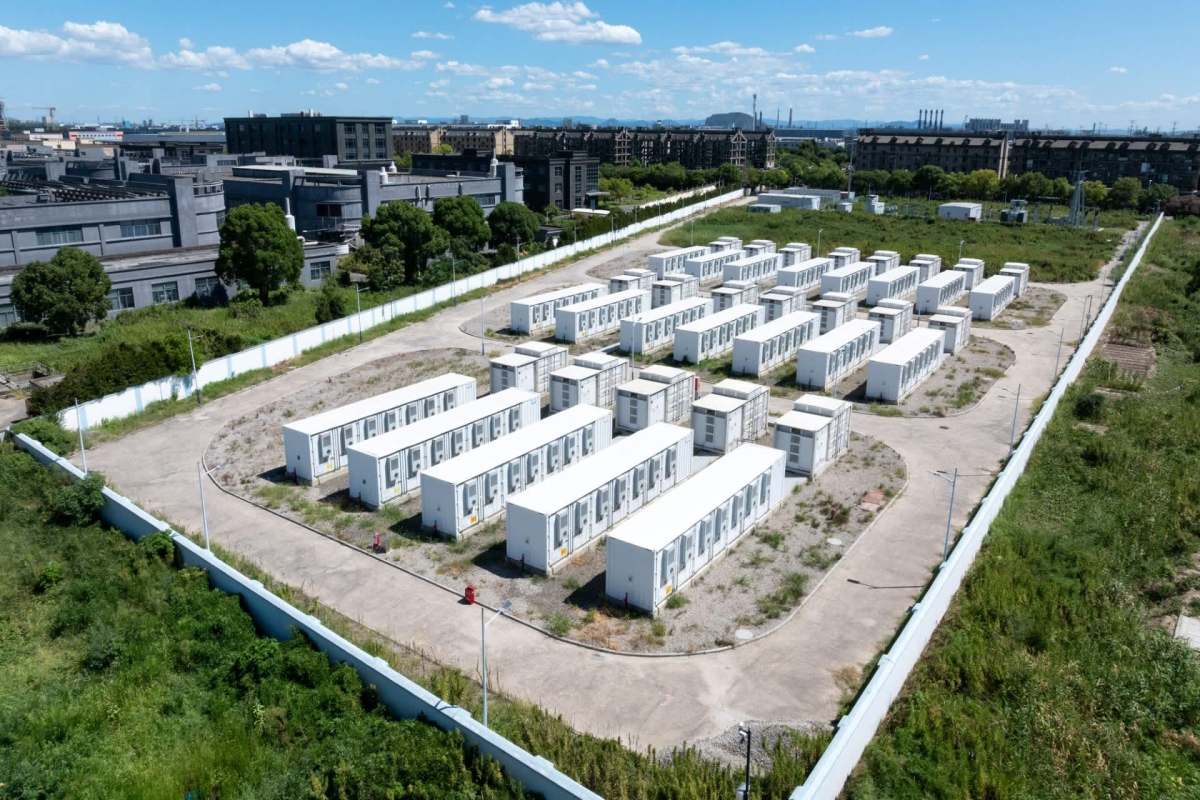
A new industry report suggests China's energy storage market nearly doubled again in 2025, extending a second consecutive year of extraordinary growth.
Procurement priorities are shifting, too, as buyers begin placing greater emphasis on safety and durability rather than chasing the absolute lowest price.
Here's what to know
The data was presented in Hangzhou on August 10 at the opening of the 16th China International Energy Storage Conference, where the 2026 China New Energy Storage Bidding and Price Analysis Report was introduced.
As Energy Storage News noted, 2025 tender volumes totaled 142.3 gigawatts and 477.3 gigawatt-hours, up 65.7% and 67.8% from 2024.
In dollar terms, that brought annual procurement to more than RMB 370 billion, or about $54.9 billion.
For January through May 2026, the report said newly awarded projects reached 65.7 gigawatts and 273.3 gigawatt-hours, more than 80% higher than during January through May 2025.
TCD Picks » Quince Spotlight
💡These best-sellers from Quince deliver affordable, sustainable luxury for all




The way projects are purchased is also changing: group procurement accounted for 29.6% of 2025 demand and rose to 39.4% in the first five months of 2026, as larger customers combined orders to reduce costs and standardize technical requirements.
More background
China's storage sector appears to be entering a new stage of development.
As storage plays a bigger role in handling the growing amounts of wind and solar power, tenders are placing greater weight on lifespan, degradation, thermal-runaway protection, and lifetime cost rather than just the cheapest upfront bid.
Xinjiang, Inner Mongolia, and Shandong were especially active in 2025, while Shanxi and Ningxia became key centers for new orders in 2026.
That divide is particularly clear in North and Northwest China, where buyers are leaning toward storage systems that can run for four hours or longer and help move renewable power to periods of stronger demand.
Lithium iron phosphate remained the dominant technology in 2025, representing 86.5% of total power and 86.9% of total capacity among projects that specified a technology pathway.
Interest is still building around hybrid systems and alternatives including sodium-ion, flow batteries, compressed air, and molten salt.
What's being done?
Government policy is also influencing the market's direction.
At the start of 2026, China introduced Document No. 114, the country's first nationwide capacity-pricing mechanism for standalone energy storage. Tying compensation to discharge duration and local coal-power capacity benchmarks gives front-of-the-meter storage developers a steadier revenue outlook.
That clearer payment structure could make financing easier for large, long-duration projects, particularly when returns are not tied only to volatile market prices.
Provincial compensation policies across nine regions had already helped attract more investment to the industry.
After sharp declines in 2025, average engineering, procurement, and construction prices, along with storage system prices, began to edge higher in early 2026 as supply tightened and input costs rose.
Through 2027 and beyond, China's next phase of energy storage growth may depend less on ever-cheaper systems and more on how safely and reliably they can support a cleaner, more resilient power grid.
Where can I learn more?
China's storage boom is part of a much bigger push to scale technologies that are safer, longer-lasting, and better suited to different grid demands.
• In China, Fulin Energy's first large-scale battery storage facility showcased rapid charging progress.
• China's game-changing engineering masterpiece is using flywheels to store and release grid power.
• In the United States, utility-scale battery storage capacity is surging after extraordinary growth.
• Nostromo Energy says the power of ice can deliver lower-cost storage for cooling demand.
Storage is branching out quickly as markets mature and developers get clearer ways to make money. That broader picture helps explain why China's next stretch of growth may depend as much on technology choices as sheer procurement volume.

Get TCD's free newsletters for easy tips, smart advice, and a chance to earn $5,000 toward home upgrades. To see more stories like this one, change your Google preferences here.