


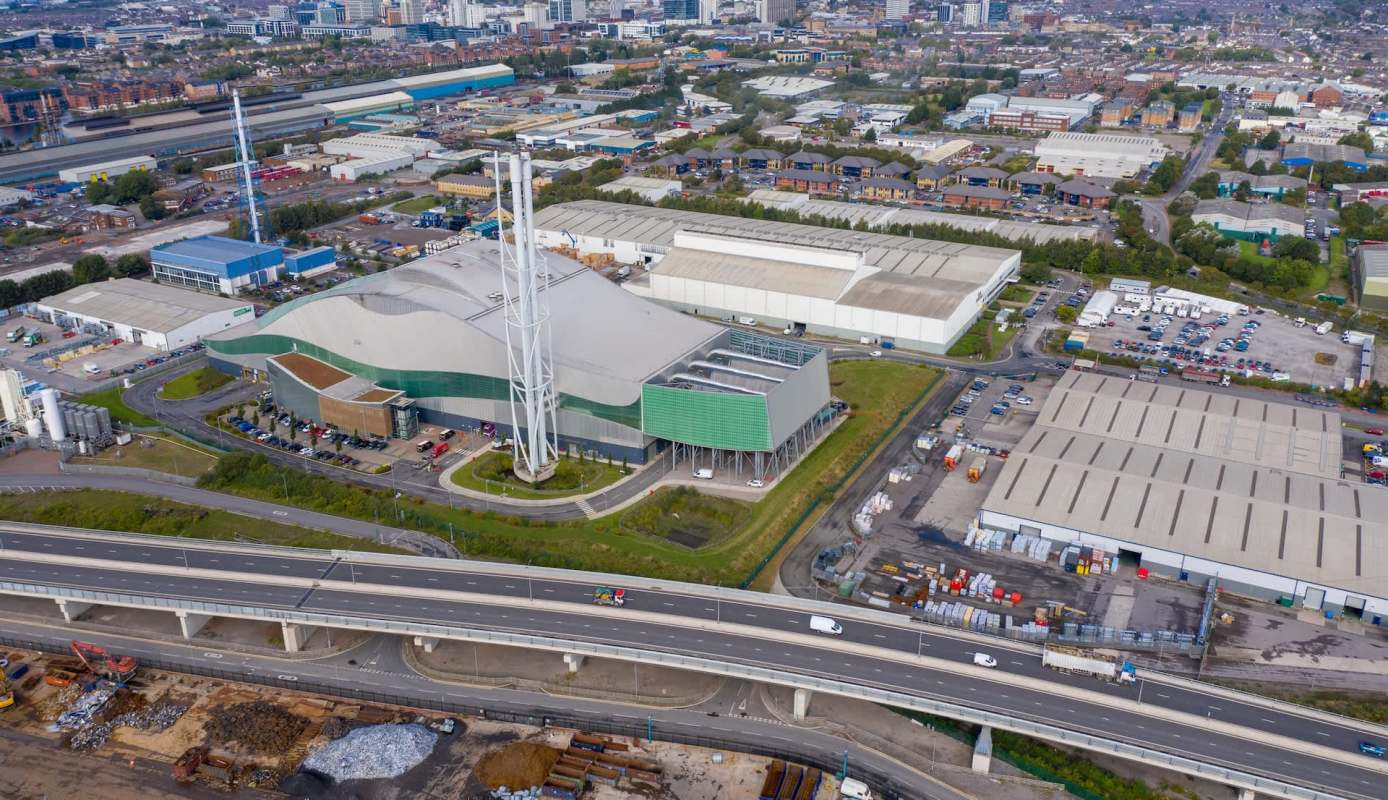
Across Europe and the U.S., chemical recycling ventures are increasingly being postponed, canceled, or closed, despite years of being marketed as an answer for plastics that are hard to reuse.
What happened?
According to a report from Chemistry World, rather than relying on conventional mechanical methods, chemical recycling is designed to turn discarded plastics into oils or other chemical feedstocks that can be made into new materials.
Supporters of this technology have said that it could provide an option for waste streams like plastic films that mechanical recycling has difficulty handling.
But the industry's recent direction has undercut that pitch, the outlet reported.
Maria Vera Duran, policy director at industry body Recycling Europe, said to Chemistry World that closures, postponements, and canceled projects "reflect the broader structural crisis facing the whole of Europe's plastics recycling industry (both mechanical and chemical)."
The companies affected include several prominent names in the recycling industry.
TCD Picks » Quince Spotlight
💡These best-sellers from Quince deliver affordable, sustainable luxury for all




The problem is broader than a few isolated failures. Before recent plant closures, Europe had a chemical recycling capacity of 319,000 US tons a year, according to analysis by the Fraunhofer Institute for Environmental, Safety, and Energy Technology cited by Chemistry World, and 65 additional projects were planned — but nine of those have already been canceled.
Despite years of hype around the sector, chemically recycled materials made up only 0.2% of European plastics production in 2024, Chemistry World reported.
Why does it matter?
Plastic packaging remains a near-constant part of everyday life, and when effective recycling options are lacking, much of that waste is still burned, buried, or shipped elsewhere.
Chemistry World reported that about 70% of plastic waste in the EU is incinerated or landfilled, while nearly one-fifth of the recycled plastic used in products depends on imported feedstock.
That makes it harder to build a circular economy closer to home. It also keeps manufacturers, cities, and households dependent on a system dominated by low-cost fossil-based plastics, even as demand increases for packaging with recycled content.
The central issue may be less about whether the process works than whether it can be funded at scale. Lee Hodder, managing director for carbon capture and circular solutions at Viridor, said, as reported by Chemistry World, "the underlying technology does actually work. It's getting to the point where yields are making sense as well."
Hodder told the outlet that investors still want firmer policy direction before committing the "hundreds of millions of dollars" needed to build plants and lock in long-term contracts.
What's being done?
Officials are attempting to provide more of that certainty, though many companies say the effort has not moved fast enough. The EU, for instance, has approved rules that let chemically recycled content count in drink bottles through a mass-balance system, Chemistry World reported, a change the industry had long sought.
Industry organizations argue that this is still not enough. Recycling Europe is pushing for harmonized "eco-modulation" rules that would make producer fees more strongly reward recyclable packaging and the use of EU-made recycled materials, according to Chemistry World.
Some developers, meanwhile, are still proceeding where the economics look better. Mura Technology plans to start up its first facility in Wilton, UK, later this year, using supercritical water to process hard-to-recycle plastics at a reported 98% conversion rate, Chemistry World reported.
Even so, companies say dependable waste collection, cheaper energy, and stable rules will shape whether additional projects get built. As Hodder put it, "the timing is the biggest uncertainty."

Get TCD's free newsletters for easy tips, smart advice, and a chance to earn $5,000 toward home upgrades. To see more stories like this one, change your Google preferences here.






