


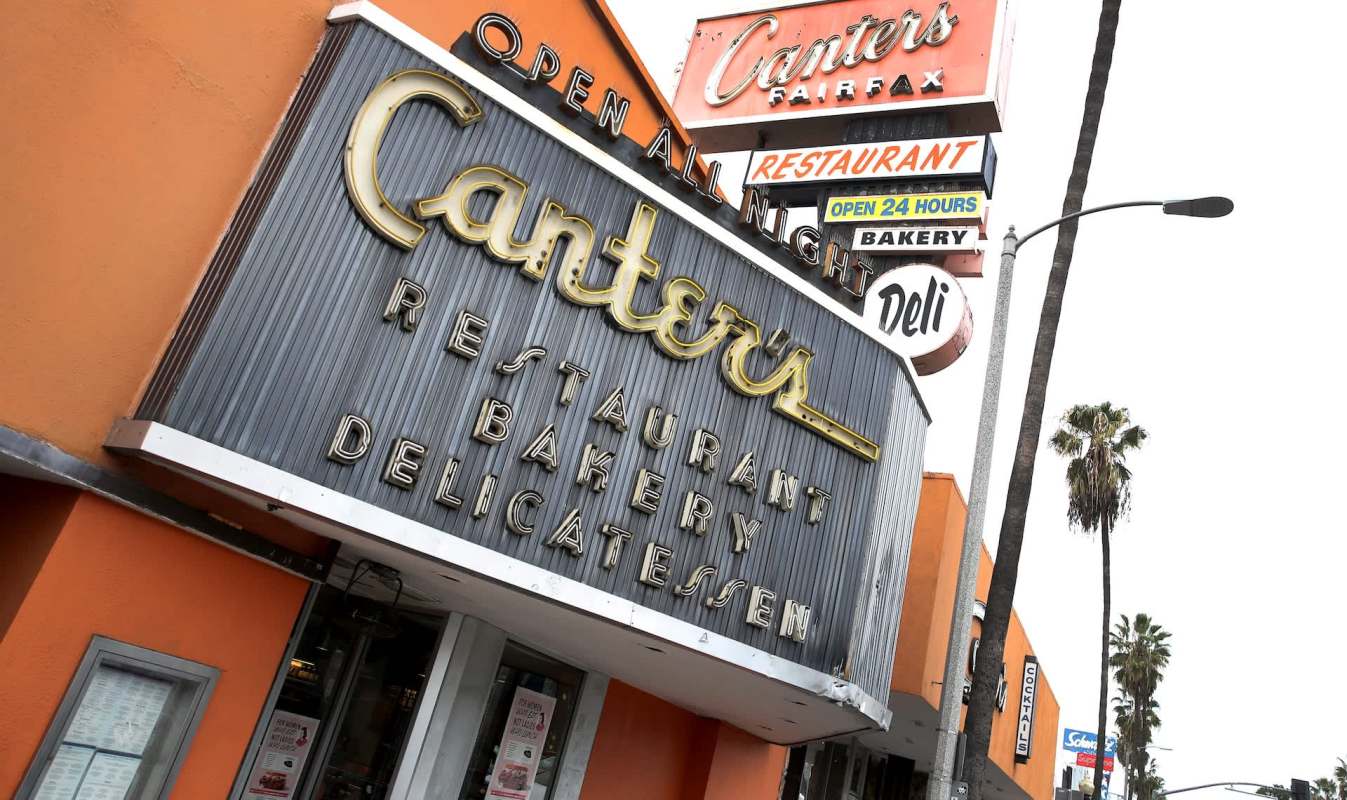
Canter's Deli, one of Los Angeles' oldest and best-known diners, may be cutting staff after its utility bill surged nearly $10,000 in just four months.
Here's what to know
Jacqueline Canter and Marc Canter, third-generation owners of the deli, told the New York Post that their LADWP water and electric bill jumped from about $24,000 to more than $34,000, putting jobs at risk.
"When you look at your expenses, the only expense that you can really control is your labor," Marc said. "If we don't have enough money to pay the payroll, then we have to cut back on labor. It's that simple."
LADWP disputed the claim that it caused the spike. Over a three-month span, Canter's sewer charges saw the biggest increase at 45%, while water charges rose 21.6% and power charges 6.6%. It also said the deli's electricity use remained flat, with peak-demand fees contributing only modestly.
Jot Condie, president and CEO of the California Restaurant Association, said, "While LA restaurants served by LADWP may have somewhat lower rates than investor-owned utilities, electric bills represent one of our fastest-growing fixed costs."
In 2025, California's average price for electricity was 27.63 cents per kilowatt-hour (kWh) — 103% higher than the national average of 13.63 cents.
More background
The Jewish deli is among the Fairfax District's oldest operating businesses, with longstanding ties to Hollywood and a reputation as one of Los Angeles' classic around-the-clock gathering places.
Marc Canter said colder months once brought bills of about $19,000, while summer totals were usually around $23,000 to $24,000. During Southern California's historic 2026 heat waves, he said that seasonal difference expanded from roughly $4,000 to $12,000.
SoCal exclusive: Save 40% on your electric bill by going solar with no upfront costs Crushed by your monthly electric bills? Palmetto can take care of you with an exclusive solar offer for Southern California residents. Palmetto's home energy savings plans deliver all the benefits of going solar with zero upfront investment. For a limited time, special rates in Southern California can unlock bill savings of up to 40% — and you can get a custom quote in seconds without sharing your email or phone number. |

To try to save money, one dining room now goes without air conditioning from midnight to 8 a.m. Even when the restaurant stays busy, the move affects both customers and employees during periods of extreme heat.
Residents have also complained about LADWP costs. One commenter wrote, "I live around the corner from Canter's and my DWP bill doubled this month! It's never been this high in over 12 years!"
The frustration followed news of a San Fernando Valley man who received a $3,300 LADWP bill, prompting the government to order an official investigation.
What can be done?
LADWP said the problem may stem from something on the property. The department said it contacted Canter's and offered to send a specialist to check for a possible leak or another cause of unusually high water use, pointing specifically to the deli's increase in water-related sewer charges.
Jacqueline Canter, however, is not persuaded. "Everybody's bill has gone up so that's no excuse about a water leak. I think that's passing the buck."
LA City Controller Kenneth Mejia told CBS LA, "We already did a huge data request as well to understand these bills."
For residents hoping to protect themselves from similar spikes, going solar is one of the best ways to save money on home energy. Palmetto is running an exclusive offer for Southern California residents that allows customers to save an average of 40% on their electric bills with $0 down, which can add up to thousands of dollars per year.
Where can I learn more?
Read more about how rising electricity costs are hitting businesses and households, and how some are adapting.
• Wendy's is making electrifying changes at more than 100 stores through a community solar partnership.
• In California, utilities warn that peak-hour summer demand can add hundreds to cooling bills.
• Power companies are rewriting rate structures for mega-data centers as electricity demand surges.
• Across parts of the U.S., cryptocurrency mining facilities are driving up electricity demand and prices.
• In Texas, massive new power consumers are straining the grid and exploiting market incentives.

Get TCD's free newsletters for easy tips, smart advice, and a chance to earn $5,000 toward home upgrades. To see more stories like this one, change your Google preferences here.






