


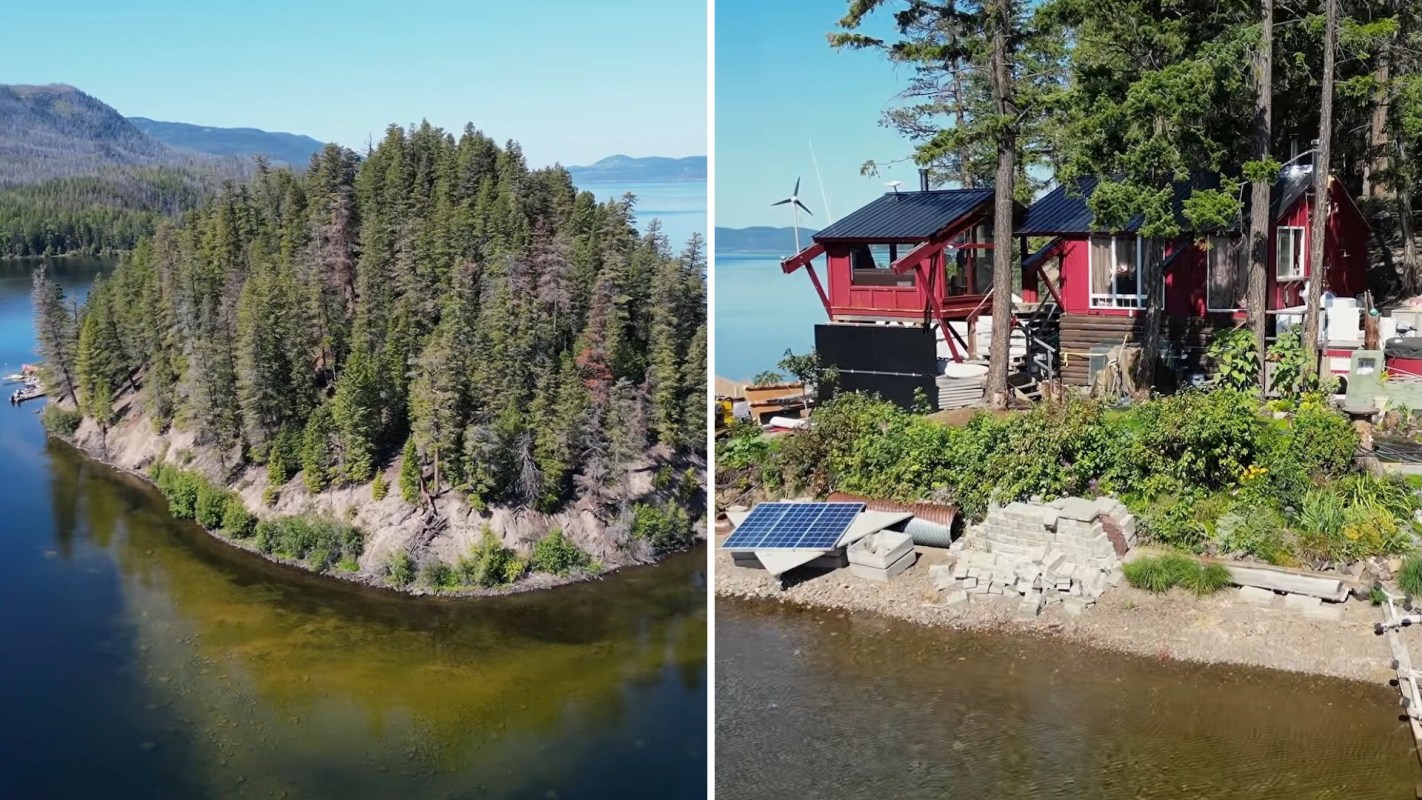
Tracy and John, a couple living full-time on an 8-acre island in Northern British Columbia, Canada, said in a tour shared by Exploring Alternatives that the low cost of living on the property they bought for 76,000 Canadian dollars (about $54,000 at current exchange rates) helped them retire at 54 despite not having employer pensions.
Here's what to know
For about 10 years, they said, they have been restoring a small cabin on the island. For over two years, they've lived there full time, building daily routines around solar electricity, filtered lake water, firewood gathered on the island, propane, and a composting toilet.
Tracy and John spent most of their careers working for a charity and do not have employer pensions. As the video's caption put it, "The low cost of living on the island has allowed them to retire early at 54." Until they turn 65 and can access Old Age Security and CPP, they are funding retirement with proceeds from selling their house and their retirement savings.
Because they live on the island year-round, they rely on an airboat to get on and off the property, especially during shoulder seasons when the ice isn't safe to cross.
More background
Their decision was driven by more than scenery or self-sufficiency. The caption says, "They saw many folks never reach retirement age and decided they needed to take the plunge and do what they wanted to do before it was too late."
Even so, the video also highlights the trade-offs of remote living: family is far away, money is tight, and full-time island life means maintaining a remote property through harsh weather and forest fires.
TCD Picks » Quince Spotlight
💡These best-sellers from Quince deliver affordable, sustainable luxury for all




Lower housing costs and lower recurring utility bills can significantly change the equation, especially for people trying to bridge the gap before public retirement benefits begin.
An island may reduce some expenses, but year-round access still requires specialized equipment, and remote living can create logistical challenges that many suburban homeowners never face.
What can be done?
To make the lifestyle more manageable, the couple has focused on the core systems they use every day, including ongoing cabin repairs, solar electricity, filtered lake water, island firewood for heat, and propane for cooking and hot water.
The caption said they are "actively setting up their lives so that they can age in place on the island for as long as possible, including making the paths safer and using small machinery like a skid steer to help them with heavy jobs."
Their airboat serves a similar purpose by reducing the risks of seasonal isolation.
Their low purchase price is only part of the setup; the island lifestyle also depends on systems that support daily life in all four seasons.
One YouTube commenter wrote: "Wow good for them retiring early to live a peaceful life. What an awesome property!"
Where can I learn more?
For more on the trade-offs behind early retirement and off-grid living, these articles follow couples and families as they cut costs through alternative housing, solar power, and retirement planning.
• A 58-year-old couple found one delay could protect survivor income before claiming benefits.
• In New England, a retiree says heat pumps and solar now erase $7,265 in bills.
• In North Carolina, an off-grid family says life costs about $400 a month.
• In Australia, a family of four went off-grid in a 20-foot container to go mortgage-free.
• In Portugal, a couple says simple life gave them 100 new jobs after eight years off-grid.

Get TCD's free newsletters for easy tips, smart advice, and a chance to earn $5,000 toward home upgrades. To see more stories like this one, change your Google preferences here.






