


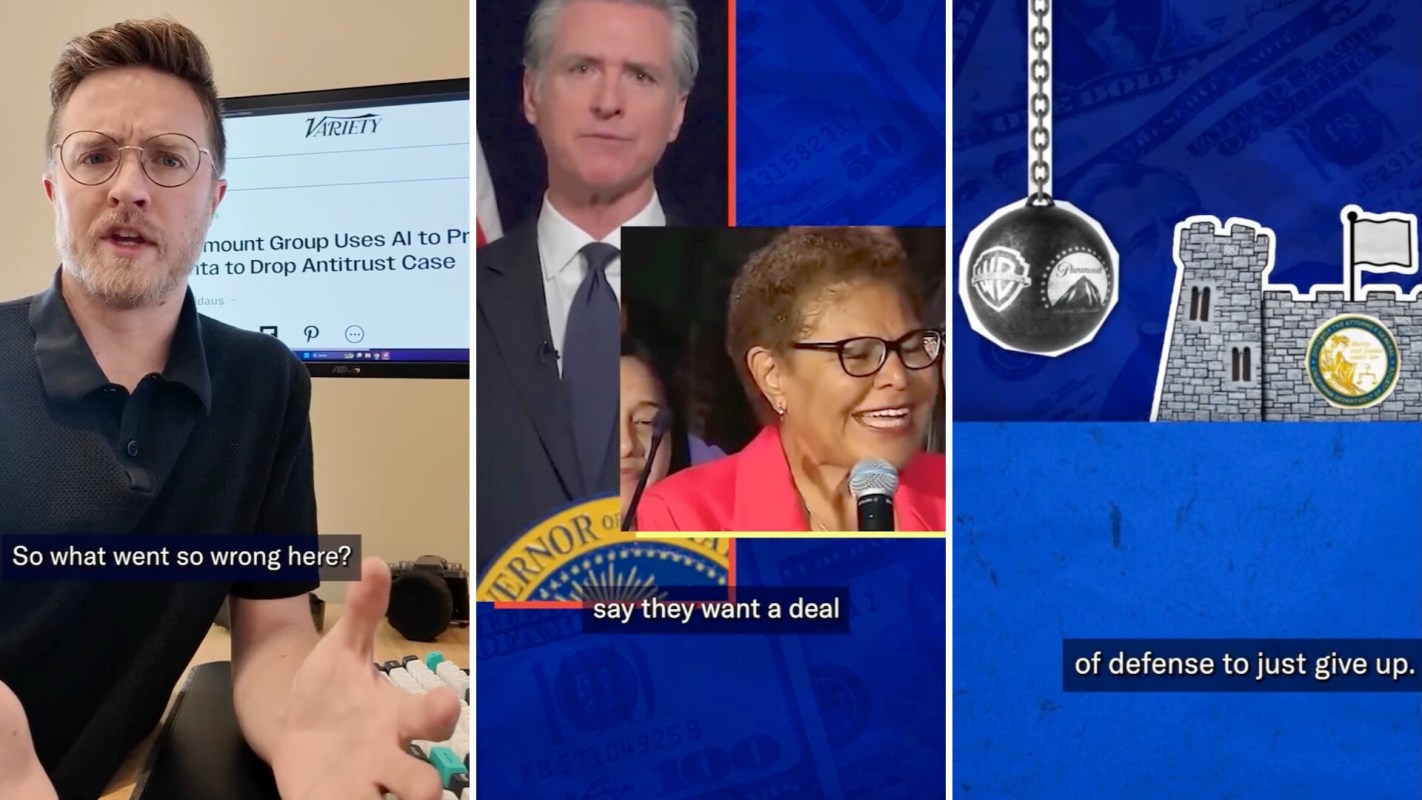
California's attorney general is reportedly receiving AI-generated mailers urging the office to stop opposing the Paramount merger — and the episode is drawing scrutiny far beyond a single corporate deal.
The controversy matters because it suggests artificial intelligence may be used not just to automate routine tasks but also to manufacture the appearance of public support in high-stakes political and business fights.
Here's what to know
On Instagram, More Perfect Union (@perfectunion) described what it sees as AI-driven advocacy surrounding the Paramount merger. The caption read: "The Attorney General of California is now getting AI slop mailers telling him to stop fighting the Paramount merger."
The post portrayed the mailers as manufactured support rather than organic public feedback. It singled out the ultra-wealthy Ellison family and suggested AI was being used to create the appearance of enthusiasm for the merger.
When reviewing major mergers, regulators often weigh public sentiment, consumer harm, and competition concerns. AI-generated political messaging could make it harder to distinguish authentic civic engagement from manufactured influence.
More background
A merger involving a major entertainment company can have ripple effects on newsroom independence, creative jobs, consumer choice, and the diversity of voices people see across the media landscape.
TCD Picks » Quince Spotlight
💡These best-sellers from Quince deliver affordable, sustainable luxury for all




It also comes at a moment when AI tools are making it cheaper and easier to produce persuasive text at scale. That opens the door to spam, misinformation, astroturfing, and political pressure campaigns that can be difficult to track.
AI systems rely on data centers that consume massive amounts of electricity and water, which can place more strain on local grids and, in some cases, contribute to higher household costs. At the same time, AI can also help improve forecasting, balance electricity demand, and optimize clean energy systems such as solar, wind, and battery storage.
If public debate can be padded with machine-made messages, it becomes harder to know whose voices are real — and whether major economic decisions are being shaped by genuine communities or by automated influence.
What's being done?
Clearly labeling AI-generated materials and documenting who paid for outreach campaigns would make it easier for regulators and the public to assess claims of popular support.
More Perfect Union framed the concern this way in the caption: "Oligarchs like the Ellisons don't have the support of the people when it comes to their endless corporate greed. So they're using AI to make it look like they do."

Get TCD's free newsletters for easy tips, smart advice, and a chance to earn $5,000 toward home upgrades. To see more stories like this one, change your Google preferences here.






