


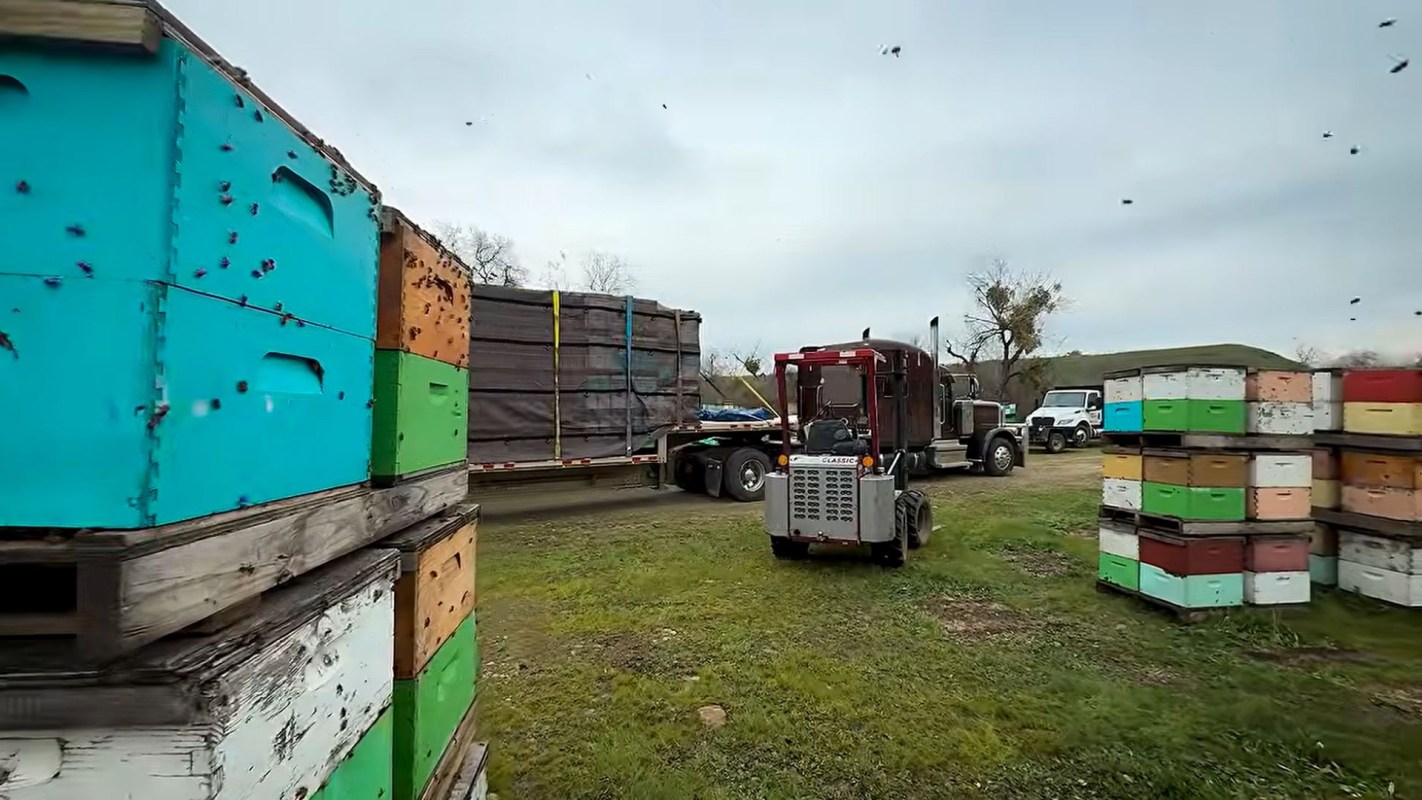
For commercial beekeepers, one of the biggest paychecks is also one of the most nerve-racking options available. Shipping bees to California for almond pollination can bring in a hypothetical $60,000 payment, but take-home pay is much lower, especially when you factor in the risks.
Here's what to know
In a YouTube video, the content creator behind BeeFit Beekeeping examines whether California's 2027 almond season will be financially worthwhile for commercial operators.
The video's example assumes 408 colonies earning $165 each through a broker, provided every colony meets the contract's strength requirements.
That example includes a 5,000-mile round trip at an illustrative rate of $5.50 per mile, including a fuel surcharge, which would leave $39,820 before feed, mite treatments, labor, and other expenses.
The creator also noted that payment could be reduced if a colony loses its queen or weakens.
On top of those expenses is uncertainty. Beekeepers are uncertain about both the timing of payment and the final amount.
TCD Picks » Quince Spotlight
💡These best-sellers from Quince deliver affordable, sustainable luxury for all




Citing the Aspen Daily News, the creator described Shannon Wallace of Wallace Apiaries, who received roughly 55 cents for every dollar owed, which heavily impacted his operation. To keep his operation running, Wallace partnered on transportation and sold a forklift to raise cash.
More background
California's almond crop relies on roughly 2.4 million honeybee colonies across about 1.4 million acres, according to figures presented in BeeFit Beekeeping's video.
Cold, rain, or wind can interrupt pollination during an individual flower's brief receptive period. Traditional almond varieties rely on bees to carry pollen between compatible trees.
Almond growers typically seek colonies large enough to support developing young bees inside the hive and send bees out to the blossoms.
Varroa mites can weaken a colony's winter population before it reaches an orchard. These parasites both transmit viruses and feed on bees.
With such a tight budget and so many variables, beekeepers need prompt payment, but it doesn't always come.
Feed purchases, the next shipment, and wages all require cash that beekeepers may lack while waiting on unpaid bills.
What can be done?
Without a broker, the beekeeper must still budget for equipment and fuel, any hired help, and travel and lodging.
One commenter described the benefits of an established good working relationship: "We have contracts signed for two loads of bees to almond pollination for the 27 season, with the same broker we worked with for the past 5 years. They pay well and on time, and have been really nice to work with."
BeeFit Beekeeping described weighing the payment against what the operation needs to keep running after almond season. "Because that almond check has to do more than just look good on a contract. It has to cover the work, the expenses, the risk, and still leave you with enough to keep going when those bees come home."
Where can I learn more?
Trucking costs can take a sizable bite out of beekeepers' pollination earnings. These stories cover diesel prices, truck repair bills, and potential effects on grocery costs.
• California diesel prices have hit a record $8.09, potentially pushing grocery bills higher.
• In California's Riverside County, farmers say $8 diesel is forcing cutbacks, potentially raising grocery bills.
• U.S. owner-operators face record truck repair bills as Congress weighs the right-to-repair fight.
• California drivers are cutting back as Kern County diesel hits $7.81, a record high.
• South Florida truck fleets face diesel near record prices, squeezing their operating budgets.

Get TCD's free newsletters for easy tips, smart advice, and a chance to earn $5,000 toward home upgrades. To see more stories like this one, change your Google preferences here.






