


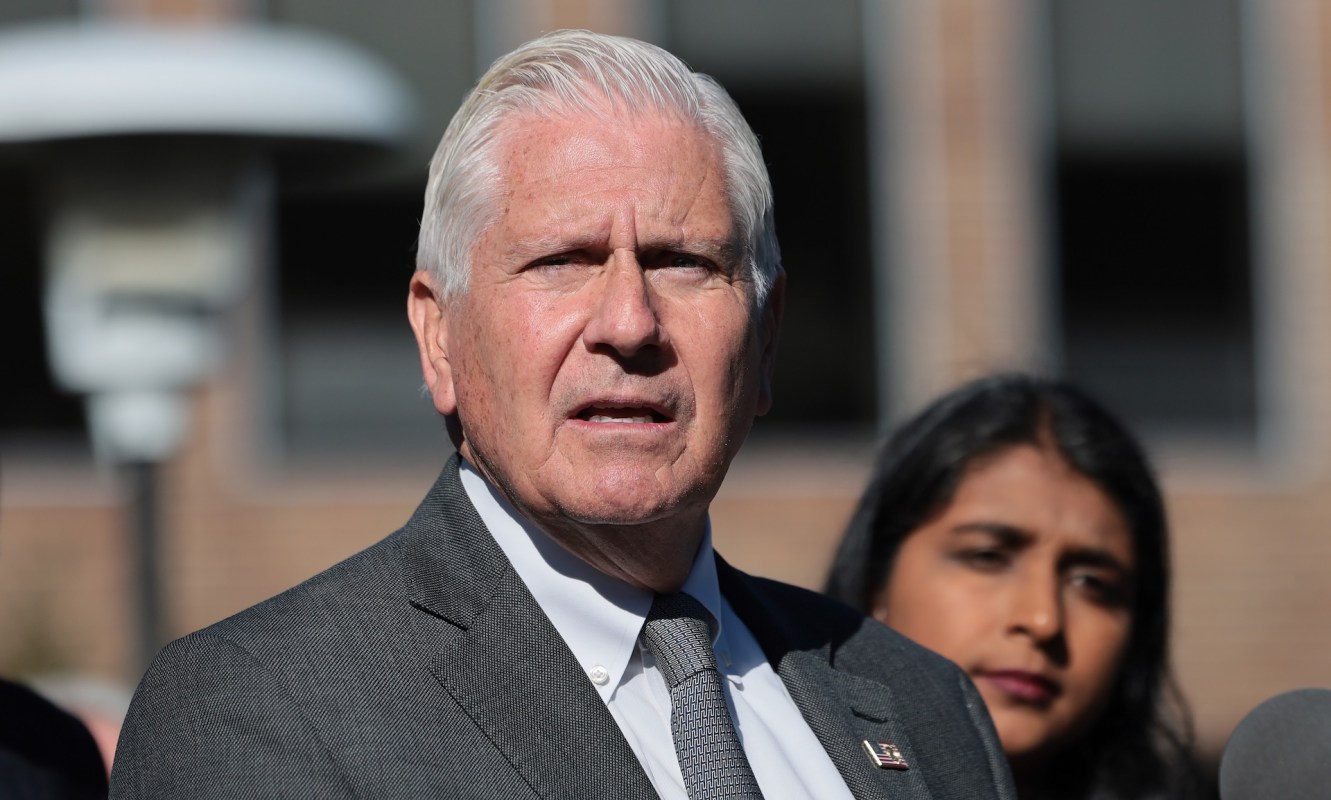
Nassau County Executive Bruce Blakeman claims he can cut New Yorkers' electric bills by 50% on his first day as governor.
For households already strained by rising utility costs, that is a striking promise — but experts say the math doesn't add up, according to New York Focus.
Here's what to know
Blakeman, the Republican Nassau County executive running against Gov. Kathy Hochul, has put lower electricity costs at the center of his bid without publicly laying out much of a plan to achieve such a large cut.
His campaign website offers no detailed policy platform, and skepticism about the proposal has surfaced even among some conservatives.
In a later explanation cited by the outlet, Blakeman's campaign said he would return $2.4 billion in unused energy funds to ratepayers, permanently eliminate the System Benefit Charge from bills, and scrap what he calls "radical carbon mandates," arguing they increase delivery rates.
The fees he is targeting help finance the state's cleaner-energy buildout, including wind, solar, nuclear, and other initiatives overseen by the New York State Energy Research and Development Authority.
TCD Picks » Quince Spotlight
💡These best-sellers from Quince deliver affordable, sustainable luxury for all




According to state Department of Public Service data, those charges account for only about 5% to 9.5% of a typical residential electric bill in 2024 — roughly $10 to $12 a month.
Julie Tighe, president of the New York League of Conservation Voters, dismissed the promise outright.
"It's just a lie," she stated.
More background
Some bills also include other climate-related costs.
New York Focus reported that New Yorkers collectively pay more than $500 million annually into the Regional Greenhouse Gas Initiative, a cap-and-trade program supporters credit with cutting power-plant pollution.
Even so, Manhattan Institute fellow Ken Girardin observed that withdrawing from the program would lower bills by only a few dollars in certain parts of the state.
NYSERDA says the program's efficiency spending will eventually return $6 in savings for every $1 invested.
Backers argue that quitting RGGI would therefore do little for affordability while slowing movement toward a cleaner, healthier energy system. Tighe called such an exit "penny wise and pound foolish."
Blakeman has separately attacked what he labels an "Energy Tax slush fund."
Citing NYSERDA's most recent financial statement, New York Focus reported that the agency had more than $2 billion available for core programs, compared with less than $500 million in 2021.
Aron Ashrafioun, a spokesperson for NYSERDA, said the larger balance reflects multiyear budgeting and the agency's practice of reimbursing projects after completion.
Researchers say, however, that the electric grid is the main driver of rising bills.
Charles Hua, who leads the nonpartisan utility reform group PowerLines, said maintaining and upgrading aging infrastructure — along with harsher weather — is a major reason customers are plagued by higher monthly charges.
What's being done?
A governor can affect energy prices at the margins, but not with an instant cut like the one Blakeman is promising.
One important lever in New York is the Public Service Commission: The governor names the seven commissioners who rule on utility requests to raise rates, giving the executive branch influence over how aggressively those filings are reviewed.
Hua noted that influence plays out within a very slow-moving system.
"We have a century-old utility regulatory system that's like a tanker ship. It's not going to just steer itself into a more consumer-friendly mode."
Hochul has already used the state budget to push for tighter utility oversight.
She launched Excelsior Power, a smart thermostat program meant to squeeze more capacity out of the existing grid, which experts told New York Focus could be one of the most important near-term ways to constrain bills.
Her campaign spokesperson, Ryan Radulovacki, also cited a billion-dollar energy rebate package and efforts to ensure large data centers cover the cost of the power they consume.
Those steps are unlikely to produce the immediate, sweeping cut Blakeman advertises, but experts say they target the forces driving up electric bills more directly than rolling back programs meant to support cleaner power and future customer savings.
Even critics of New York's current energy policy are questioning Blakeman's lack of detail.
"I think it would be better for everybody if elected officials explained the how, not just the what," Girardin said.
Where can I learn more?
For more on the forces shaping electric bills in New York, these stories look at utility oversight, grid investment, and energy policy. They cover New York City's new utility advocate, proposals to expand lower-cost solar, battery projects, and a neighboring state's failed bill-relief promises.
• New York City named its first public utility advocate as rate hikes loomed.
• New York lawmakers advanced plug-in solar access so more renters can trim bills.
• On Staten Island, New York's largest battery system began easing summer grid strain.
• New Jersey's promised relief vanished as AI-fueled electricity rates surged the fastest nationwide.

Get TCD's free newsletters for easy tips, smart advice, and a chance to earn $5,000 toward home upgrades. To see more stories like this one, change your Google preferences here.






