


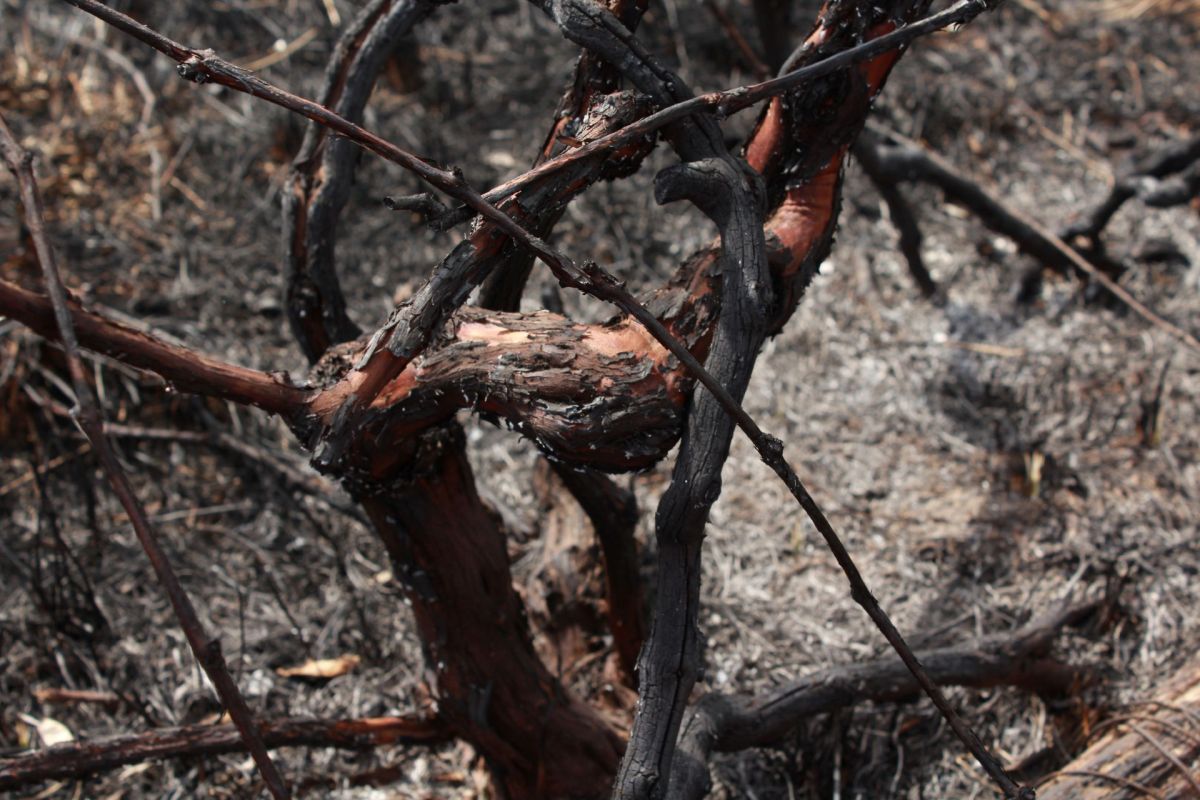
As a major wildfire continues to threaten the Summerland area, one British Columbia winery owner says the 2026 grape harvest may be a total loss.
Here's what to know
Matt Sartor, who owns Solvero Winery, said smoke exposure could erase the entire crop even though visible scorching appears limited to about 5% of his vines, according to the Calgary Herald.
After flames burned through nearby forest, some vine rows were left heat-withered while others stayed green, Sartor said. He also said his family home, a workers' home, and several winery buildings were left unharmed. What the fire ultimately cost the property remains unclear.
Because smoke damage can be decisive, Sartor said the harvest may prove either entirely usable or entirely ruined. "Crop loss will likely be binary — all or nothing," Sartor said, adding that any replanting may have to wait until 2028.
The Bald Range fire has already prompted evacuation orders for more than 20,000 people, and provincial officials say roughly 150 structures around Summerland were destroyed or damaged. The B.C. Wildfire Service said the blaze had reached 56,076 acres (22,693 hectares), with heat, strong winds, and rugged terrain making suppression efforts harder.
Other wineries in the area are dealing with similar damage. Christine Coletta, owner of Garnet Valley Ranch Winery and Haywire Winery, said flames ran through their vine rows and also burned a house on the property.
TCD Picks » Quince Spotlight
💡These best-sellers from Quince deliver affordable, sustainable luxury for all




"It came right down the center aisle and burnt down the vines … that's destroyed 6,000 cases (worth)," Coletta said.
More background
The fire comes on top of an already difficult period for British Columbia wine producers after a severe cold snap in the winter of 2024 devastated Okanagan vineyards, with losses that wiped out nearly all wine grapes and about one-fifth of the vines.
Sartor voiced his frustrations, saying, "And now this, it's been a lot — it's been a challenging handful of years."
The fallout has affected vineyards outside the burn zone as well. Jak Meyer of Meyer Family Vineyards in Okanagan Falls — about 25 miles (40 kilometers) south of the fire — said smoke may still have damaged his grapes and that tasting-room traffic had fallen by nearly 90%.
What's being done?
With agricultural operators allowed back into some areas, wineries have resumed checking vines and trying to safeguard remaining inventory. Sartor said keeping power on at his property has been essential because wine stored there requires stable temperatures.
Coletta said wineries are better prepared than in the past to limit smoke-related damage during production. She also said consumers in Alberta should not expect a sudden shortage on store shelves, because a major Summerland storage facility was untouched and many wineries still have healthy inventories.
For vineyards where vines were burned, the road back could be long. Meyer said re-establishing damaged vines can take about three years — a reality that raises hard questions about insurance and whether some businesses can endure the loss: "There'll be some wineries that won't survive it."

Get TCD's free newsletters for easy tips, smart advice, and a chance to earn $5,000 toward home upgrades. To see more stories like this one, change your Google preferences here.






