


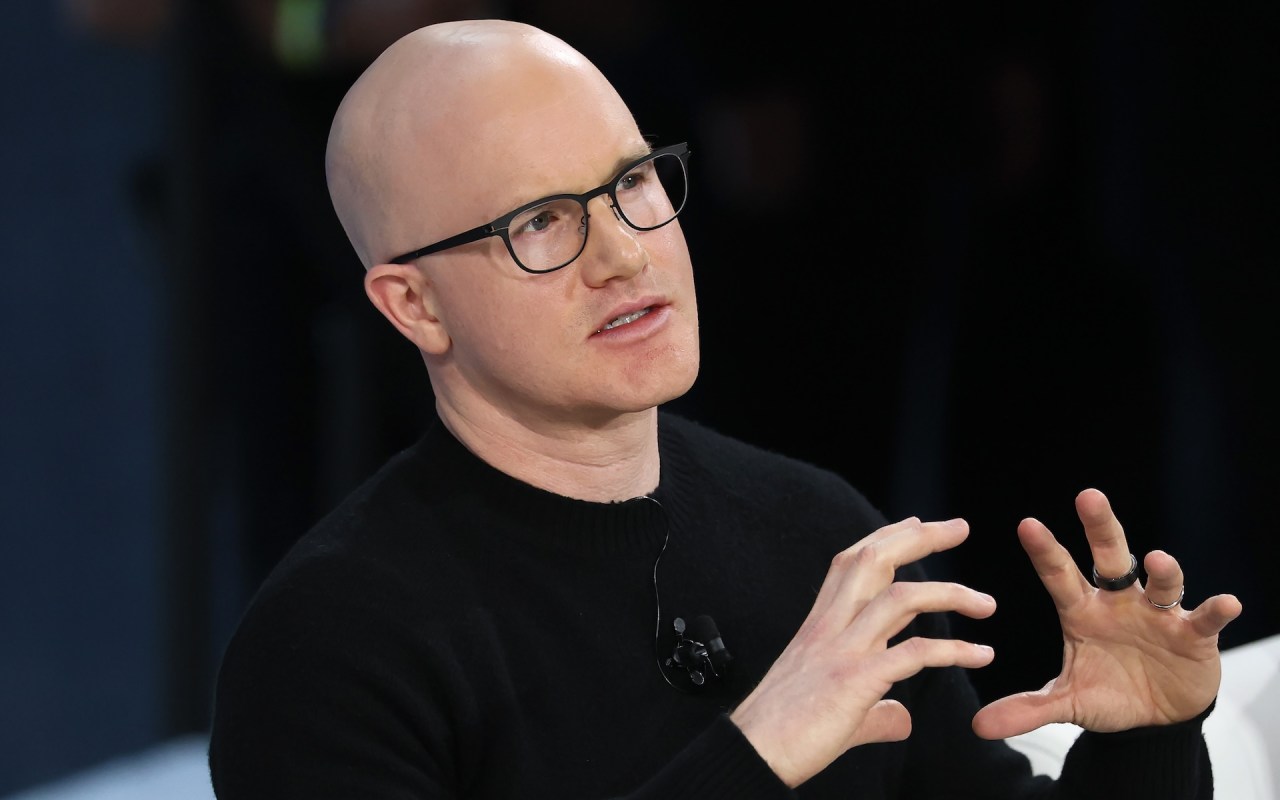
Some billionaires like to present themselves as builders of the future. One of crypto's richest leaders has taken a different approach.
Billionaire Coinbase CEO Brian Armstrong has said he sees philanthropy as harmful, raising a different question: Who, exactly, is all that wealth supposed to help?
Communities still depend on funding for public health, education, cultural spaces, and environmental protection — needs that don't disappear when the ultrawealthy decide giving back is optional.
Here's what to know
Brian Armstrong, billionaire CEO of crypto trading company Coinbase, said in an appearance on the Katie Miller Podcast that he sees much of philanthropy as counterproductive, according to Futurism.
Armstrong's remarks stood out not only for their bluntness, but also because they came from a business leader whose fortune has been estimated at about $8.7 billion.
"The common view is that philanthropy is a noble cause," Armstrong said, before pointing to Microsoft co-founder Bill Gates as an example of a billionaire using charitable giving to repair a public image. "And like, Bill Gates after the DoJ thing is like, 'I'm going to go rehabilitate my image, I'm going to do philanthropy.'
TCD Picks » Quince Spotlight
💡These best-sellers from Quince deliver affordable, sustainable luxury for all




"I guess I have sort of a contrarian view where a lot of charities and philanthropies are actually net negative on the world."
He also said charitable institutions can become driven by politics rather than service. "And they get captured," he said. "It's actually remarkably hard to find a foundation that has not gotten captured by ideology."
More background
In the U.S., philanthropy has often been part of how powerful business figures manage public perception after drawing criticism. Andrew Carnegie funded libraries, John D. Rockefeller supported research that helped eliminate hookworm, and J.P. Morgan gave art and book collections to museums and cultural institutions.
None of that means old-school philanthropy was pure or selfless. It often served reputation and power. Still, libraries, research centers, museums, and public interest programs can provide lasting value for everyday people.
At a time when many communities are dealing with strained public budgets, rising costs, and growing environmental pressures, dismissing charity outright can sound less like a critique of broken systems and more like a refusal to help fix them.
What can be done?
At the civic level, stronger public institutions matter too. When communities have reliable public funding for health, education, and environmental stewardship, they are less vulnerable to the personal opinions of a handful of wealthy individuals — including their choice to opt out completely.
As Armstrong put it, "So far, I've just been like 'I'm not going to do that.'"
Where can I learn more?
Armstrong's comments tap into a larger debate about what wealthy donors and charitable institutions really accomplish.
• At Amazon, Jeff Bezos's Earth Fund stirred fears that climate philanthropy can consolidate private power.
• In the donation economy, donation centers have a dark side when discarded clothing still drives waste.
• One specific example is Goodwill, where donated goods still end up trashed.

Get TCD's free newsletters for easy tips, smart advice, and a chance to earn $5,000 toward home upgrades. To see more stories like this one, change your Google preferences here.






