


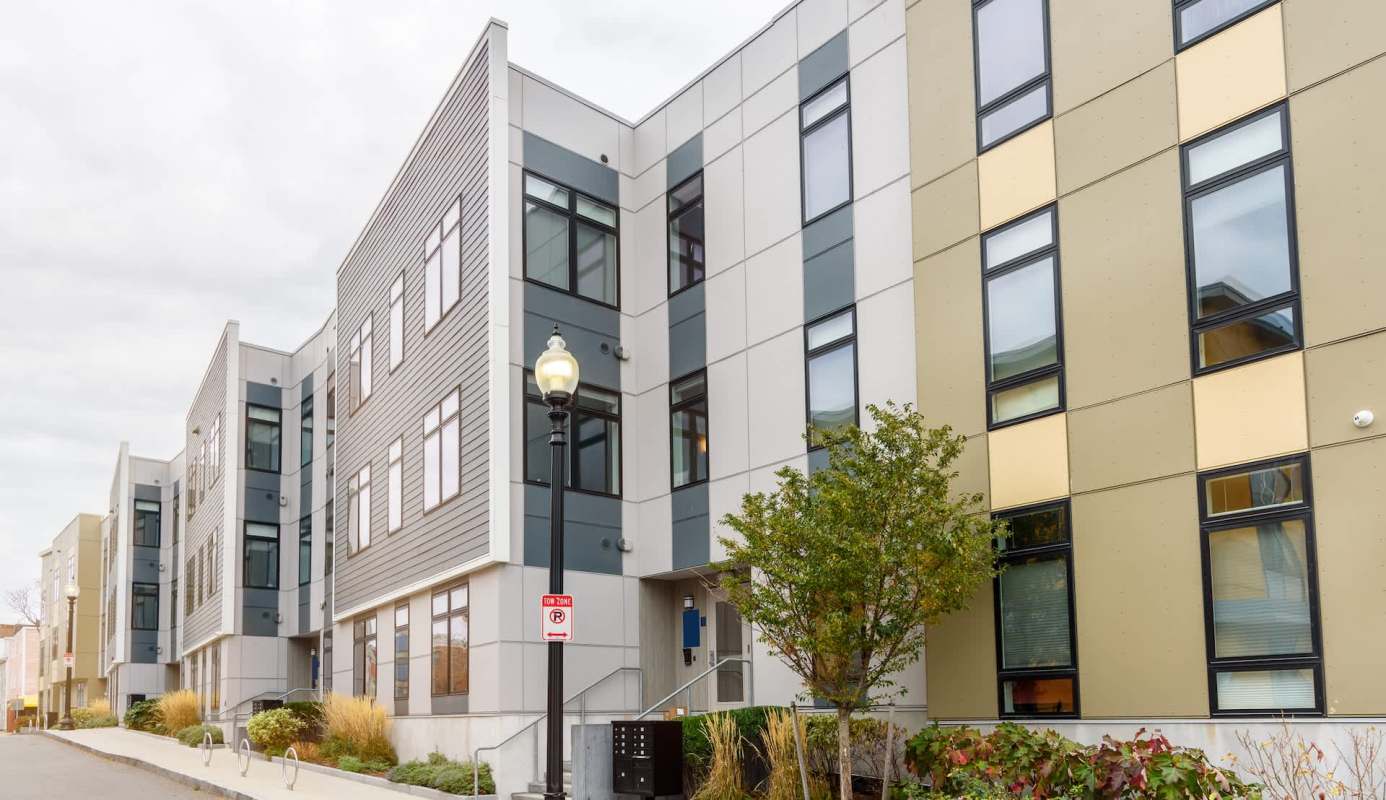
Boston Mayor Michelle Wu wants to support housing construction as building costs climb and is looking at lightening some of the city's inclusionary zoning requirements to do so.
Here's what to know
Wu's proposal would ease several of the Massachusetts capital's zoning requirements aimed at improving access to affordable housing. This would include temporarily increasing the minimum project size for participation to 10 units, up from seven, according to Multifamily Dive.
The higher threshold would exempt developments with seven to nine units from the requirements for as long as the change remains in place.
Condominium developers who pay the city in place of providing the required affordable homes would also see related fees cut under the proposal. Per Multifamily Dive, the charge would drop from three-quarters to one-half of the difference in value between market-rate and income-restricted units.
The Boston Zoning Commission and the City Council must still approve the changes, following the Boston Planning Department's decision to advance the proposal on Nov. 12.
More background
The inclusionary zoning requirements have helped residents afford to stay in the city, with Wu pointing to nearly 3,000 affordable homes created over five years.
TCD Picks » Quince Spotlight
💡These best-sellers from Quince deliver affordable, sustainable luxury for all




Meanwhile, Boston isn't the only city making moves to ease such requirements. San Francisco and New Orleans have rolled back similar restrictions and developer fees as housing development has slowed with economic pressures.
In addition to lowering condominium fees, Wu's proposal would also reportedly let developers divide payments into seven installments, up from two.
"By providing greater flexibility and reducing upfront costs, we can help make more housing and commercial development financially feasible while preserving the affordability requirements that are so important to Boston's future," Boston Chief of Planning Kairos Shen said in a statement, per Multifamily Dive.
What else?
Some voices in the housing development and policy space have shared support for the proposal, while others have questioned its impacts.
"Boston needs more affordable housing, and thus requires more inclusionary funding. We believe these changes will lead to more market-rate development which will help satisfy this need," Phil Cohen of Boston Communities, a developer of affordable and mixed-income housing, told local outlet GBH.
Evan Horowitz of Tufts University's Center for State Policy and Analysis told the outlet that Boston's system essentially requires developers to subsidize affordable housing in a dynamic that may not ultimately produce more affordable or market-rate housing.
"This is one of those cases where both sides may be able to live with this, but it doesn't actually change the status quo on the ground in a significant way for anybody," Horowitz said.

Get TCD's free newsletters for easy tips, smart advice, and a chance to earn $5,000 toward home upgrades. To see more stories like this one, change your Google preferences here.






