


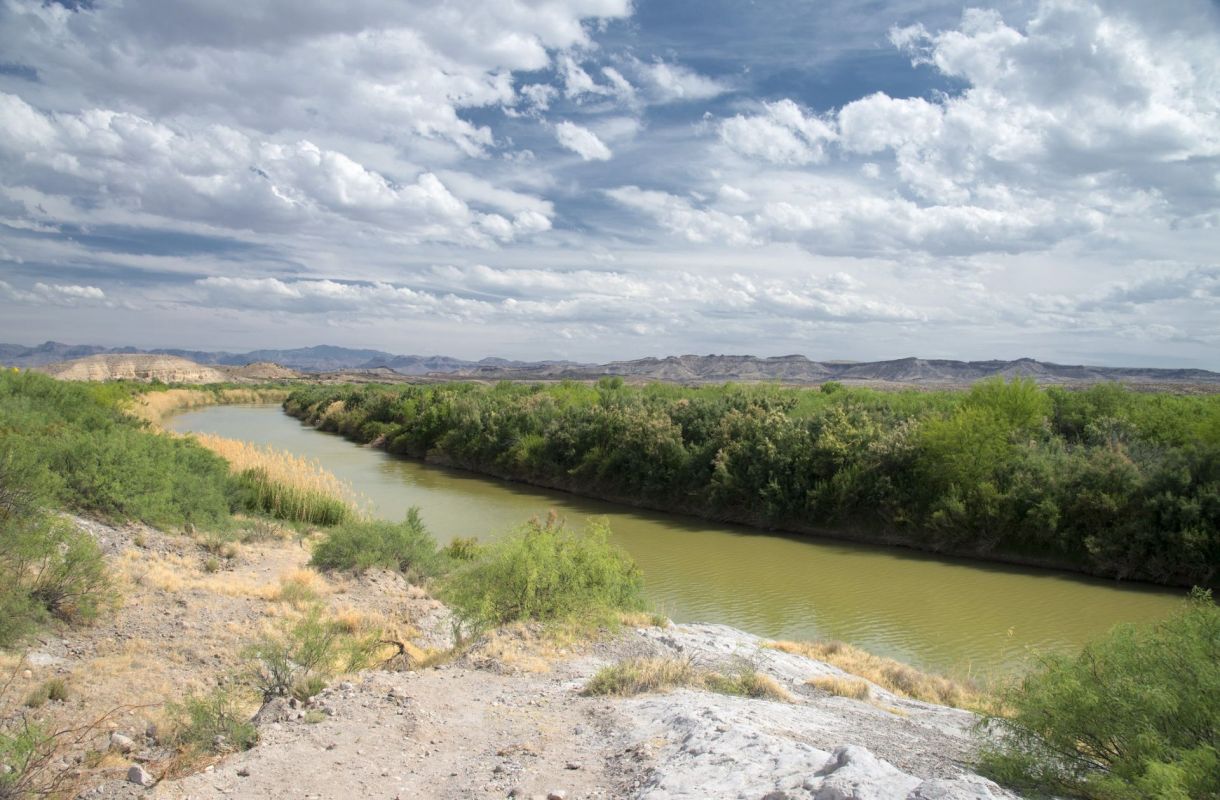
A new lawsuit in West Texas reframes the border wall debate as a fight over water access, land rights, and the future of communities that have relied on the Rio Grande for generations.
Here's what to know
In the Big Bend region, Conserve Big Bend and six landowners have sued the Trump administration to block planned border wall construction and related infrastructure work, according to KSAT.
The plaintiffs argue that the Department of Homeland Security is stretching its waiver authority by applying it in a region they say does not have especially high levels of unauthorized crossings.
A central part of their argument is the area's low arrest total. The lawsuit says Big Bend covers about 500 miles of the U.S.-Mexico border, around one-quarter of the entire southern border, yet accounted for only about 1% of arrests. They say that record conflicts with Homeland Security's claim of "high illegal entry."
Among those speaking at the press conference was Laura Allen, a former county judge, according to the Associated Press, whose family's ranch sits in the path of the proposed wall.
Allen, a two-time Trump voter, framed the plan as at odds with the administration's own message: "Thank you, President Trump. You've secured the border. But now let it go. It's time."
TCD Picks » Quince Spotlight
💡These best-sellers from Quince deliver affordable, sustainable luxury for all




More background
The lawsuit is unfolding as the administration advances a $46 billion border buildout, which the Associated Press said includes 30-foot steel bollard walls, vehicle barriers, roads, and surveillance technology spanning most of the U.S.-Mexico line.
That greater effort has already produced lawsuits in Texas and bipartisan criticism from sheriffs, elected officials, landowners, environmental groups, and tour guides.
The region includes ranchland, tourism-dependent businesses, religious sites, wildlife habitat, and Big Bend National Park, known for its rugged canyons and dark skies.
Opponents say bringing industrial-scale infrastructure into such a remote and ecologically significant area would undermine a future centered on stewardship, recreation, and local livelihoods.
What's being done?
The most immediate effort is the lawsuit. It questions whether DHS can legally set aside environmental, archaeological, and wildlife protections in a region that plaintiffs say does not qualify for urgent border fortification.
Backlash spread across Texas in August after bulldozers were seen clearing land in Big Bend National Park, and the Associated Press reported that CBP Commissioner Rodney Scott briefly halted work inside the park.
Still, residents and advocates are calling for more than a temporary halt. They want border policy that reflects conditions on the ground while protecting access to water, preserving cultural heritage, and avoiding damage to one of Texas' most distinctive landscapes.
"For us, the Big Bend is not an empty place on the map," said David Keller, an archaeologist and historian who specializes in the Big Bend and lives in the region. "It is our home."
Where can I learn more?
What is happening in Big Bend is part of a much wider fight over what border wall construction can do to land, habitat, and the species moving through both. The coverage below looks at similar clashes involving endangered plants, wildlife migration, and ecological risks well beyond any one ranch.
• In South Texas, a fight over prostrate milkweed forced officials to reckon with monarch habitat.
• Leaked federal documents called Texas' border barrier a deathtrap for wildlife during wildfire escapes.
• Across North America and beyond, scientists warn border walls disrupt migration corridors for stressed species.
Read alongside the Big Bend lawsuit, they show why opponents see new barriers as a long-term threat to the region's ecology and way of life.

Get TCD's free newsletters for easy tips, smart advice, and a chance to earn $5,000 toward home upgrades. To see more stories like this one, change your Google preferences here.






