


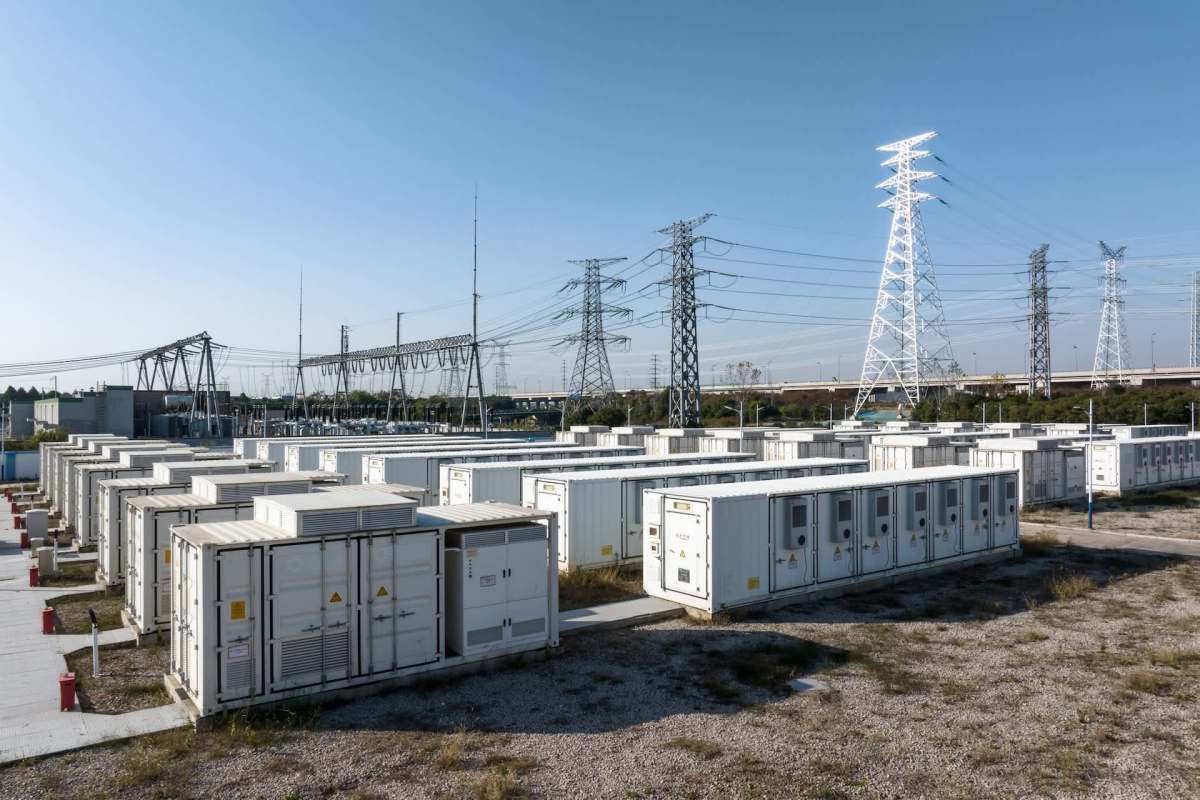
A battery that costs about $3 million could end up being nearly fully offset by stacked state and federal incentives in Illinois.
Larger batteries can store electricity for later use, keeping homes and businesses powered through hot summer nights, winter storms, and stretches when solar and wind output dips.
Here's what to know
Richardson Electronics said on October 14 that it is increasing commercial-scale battery production at its La Fox plant and plans to build a 5-megawatt storage battery there in summer 2027. The Chicago Tribune reported that company officials said no Illinois company has connected a larger battery to the grid.
Richardson has global ambitions for its battery business, but executives say Illinois could become one of its biggest markets because the state aggressively subsidizes storage. Scott DuBois, who directs the company's storage operations, said stacking state incentives on top of federal tax credits leaves little of a battery's cost left to pay.
Rising electricity demand, including from artificial intelligence, is adding to concerns about whether the grid will remain dependable. Matthew Tomc, Ameren's vice president for regulatory policy and energy supply, warned, "We are depending on out-of-state resources to essentially keep the lights on."
He added that consumers could face seasonal price spikes, especially in summer, if the company doesn't add more power sources and storage in time.
TCD Picks » Quince Spotlight
💡These best-sellers from Quince deliver affordable, sustainable luxury for all




More background
Commonwealth Edison customers in northern Illinois now pay about $141 a month on average, a 4% increase since 2021, according to Heatmap News and the Massachusetts Institute of Technology. Ameren's downstate customers pay more, averaging $224 a month, a 51% jump over five years.
Storage can help because it allows utilities and communities to store electricity generated during the day and use it later, including after sunset or during weather-driven disruptions. Gil Quiniones, ComEd's chief executive, said, "If the majority of our residential, commercial, and industrial customers put in batteries, that's going to be a big win for the state."
He added, "It could increase the capacity utilization for the grid we've already paid for, and have a chance to really put downward pressure on prices for everybody."
The technology affects climate goals, monthly bills, and resilience during outages.
Illinois is also starting far behind. Cleanview, a market research company in Henderson, Colorado, said Texas has 18 gigawatts of utility-scale battery storage, California has 16 gigawatts, and Illinois has just 102 megawatts.
What's being done?
Richardson describes its approach as specialized engineering work rather than mass production. Instead of chasing the biggest utility projects, the company plans to focus on customized microgrid systems, local energy networks that can power nearby users directly or trade electricity with the regional grid.
An early battery order came from an Alaska microgrid that serves seven remote communities. The company also said its railroad locomotive battery packs helped shape its utility-scale storage technology.
Richardson also struck a deal in May to handle engineering and marketing for the batteries Gotion builds at both the utility and neighborhood scale. Gotion runs a $2 billion factory in Manteno, Illinois. For its largest systems, the two companies start with roughly 4,500 battery cells, sealed together with cooling and control equipment inside a container about the size of a 20-foot shipping container.
State planning is moving in parallel. Consultants to the Illinois Power Agency and other state agencies said that by 2045, the ComEd service area would need 12 gigawatts of battery storage capable of running four hours, while the Ameren region would need 8 gigawatts.
The agencies are set to release a draft Integrated Resource Plan on November 16 that will address how Illinois can meet growing demand while staying on track with its clean-energy goals.
Illinois' challenge is getting much bigger, not smaller. Nathan Miller, a consultant working with regulators on the Integrated Resource Plan, said, "For Illinois to meet its broader decarbonization goals across sectors, we need to be in a growth mode here. The system needs to get bigger."
Where can I learn more?
As utilities and homeowners weigh battery storage, the economics and reliability picture is changing fast. The articles below cover home-battery incentives, large solar-plus-storage projects, grid-scale build-outs, and financing that cuts upfront costs.
• In Connecticut, home batteries gained a major edge as rooftop-solar incentives hit new caps.
• In Nevada, the Gemini project pairs vast solar generation with batteries outside Las Vegas.
• Across the United States, grid batteries are reshaping when wind and solar power reach customers.
• In Idaho, utilities are building the state's largest battery to steady the grid.
• With Palmetto financing, homeowners can now get backup batteries installed without upfront payments.

Get TCD's free newsletters for easy tips, smart advice, and a chance to earn $5,000 toward home upgrades. To see more stories like this one, change your Google preferences here.






