


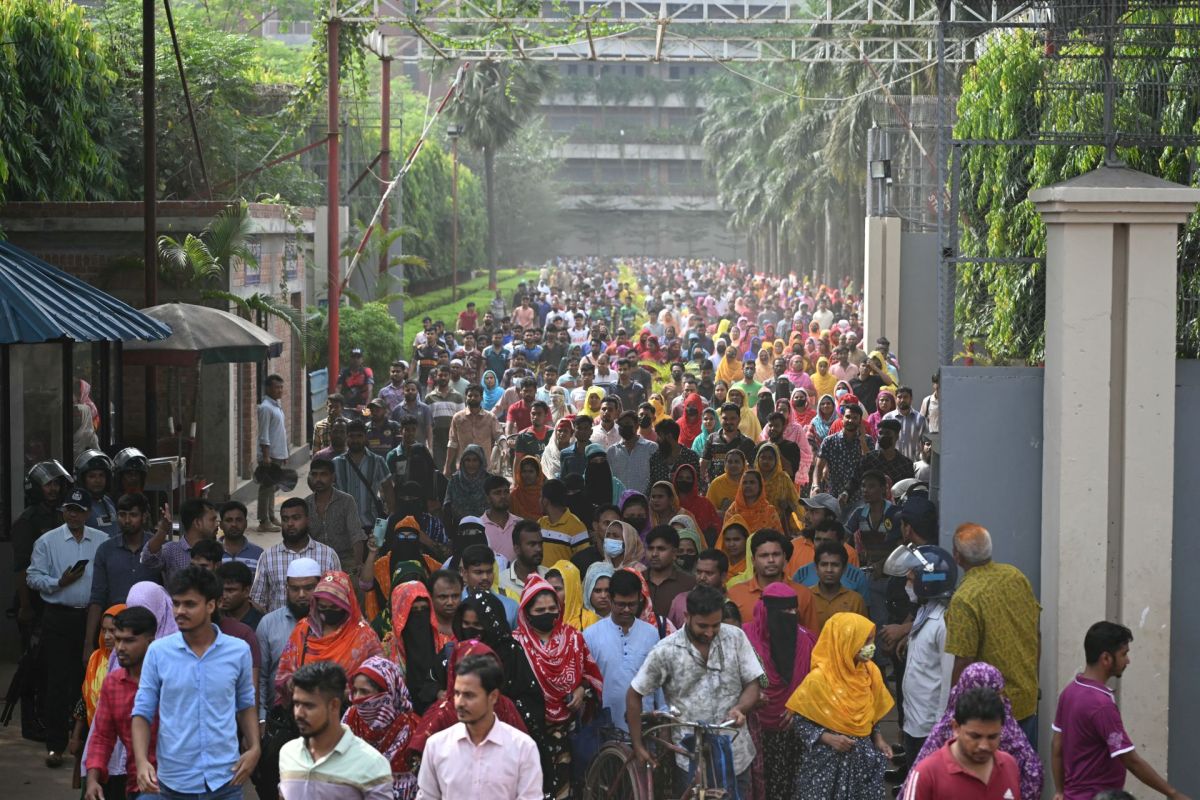
Thousands of garment workers in Bangladesh demanding better pay and working conditions were met with tear gas and stun grenades as protests shut down hundreds of factories.
Here's what to know
About 4 million people work in Bangladesh's garment industry, which supplies H&M, Zara, and Gap among other brands. It also generates over four-fifths of Bangladesh's export revenue, according to ABC News.
Thousands of workers protested across the capital, Dhaka. Dozens of people, including police officers, were injured during clashes.
Despite an agreement to raise the garment sector's minimum pay rate, workers were left uncertain about the outcome because it would not be announced until December. The government-established board to assess wages made the decision.
Longstanding concerns about working conditions lie behind the unrest, according to Professor Justine Nolan, who directs the Australian Human Rights Institute at the University of New South Wales. "There's been real issues about the quality of working conditions in Bangladesh, including wage rates," she said.
Similar protests in 2019 left a worker dead, ABC News reported.
TCD Picks » Quince Spotlight
💡These best-sellers from Quince deliver affordable, sustainable luxury for all




More background
Nolan explained that a factory receiving an order may subcontract the work to 10 others. Workers' pay and conditions bear the pressure to keep prices low, while brands struggle to trace production through these subcontracting arrangements.
"The crunch is basically at the bottom of the supply chain, and where they shave margins off is the workers' wages, lack of overtime, lack of a decent living wage," Nolan said.
The problem extends beyond Bangladesh.
Arron Goldman, national manager of Ethical Clothing Australia, said his organization recovered around $926,000 in the financial year discussed in the report from businesses involved in underpayment, contract problems, and unpaid superannuation.
He identified migrant workers producing clothing at home as particularly vulnerable.
What can be done?
Ethical Clothing Australia operates an accreditation program that verifies businesses' production chains, Goldman said.
Goldman said its checks address correct pay, superannuation, working hours, respect for workers' rights, and freedom of movement.
Nolan also encouraged consumers to ask brands where their products come from, where their factories are located, and whether they examine suppliers beyond the businesses they contract with directly.
"It's really important to recognize that if something is cheap on the shelf, someone's usually paying the price elsewhere and it's often most likely a vulnerable worker," she said.
Where can I learn more?
Beyond factory pay and conditions, fast fashion faces scrutiny over its prices, marketing, and push to sell more clothes.
• Shein warned that tariff and shipping turmoil would persist as European sales fell after price hikes.
• A slow-fashion creator challenged fast-fashion brands' green claims that make overconsumption seem environmentally friendly.
• A shopping writer criticized recycled polyester as greenwashing and a poor deal for buyers.
• Bristol became the first UK city to ban fast fashion ads from bus stops and billboards.
• Ireland spent €44,000 on influencers to encourage young shoppers to buy fewer clothes.

Get TCD's free newsletters for easy tips, smart advice, and a chance to earn $5,000 toward home upgrades. To see more stories like this one, change your Google preferences here.






