


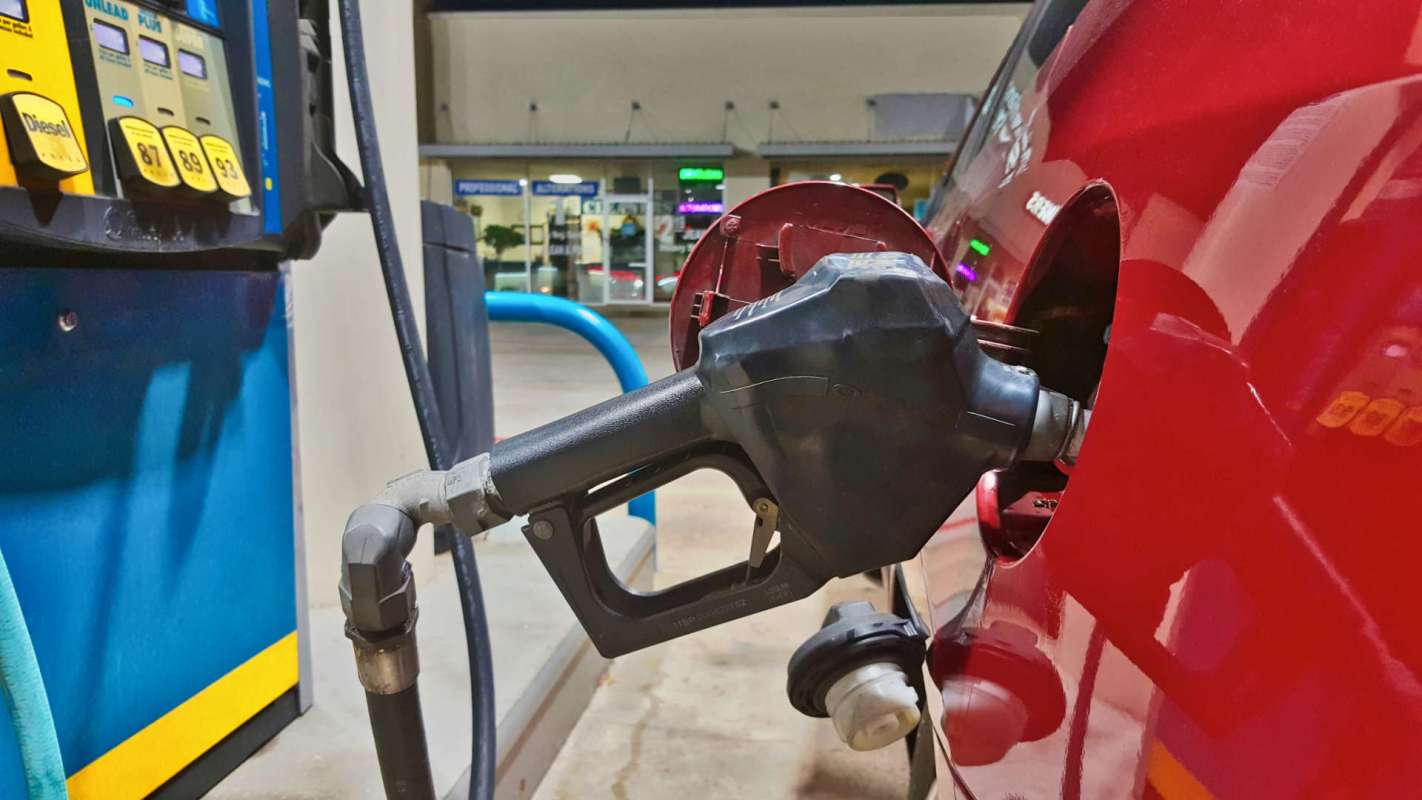
Americans' fuel bills have climbed sharply as the Iran war has rattled energy markets.
Brown University's real-time tracker estimates that, since the conflict began Feb. 28, U.S. households have paid $106 billion more (and counting) for gasoline and diesel than they otherwise would have. That translates to roughly $815 per household.
Here's what to know
According to a NewsNation report shared on the r/energy subreddit, Brown's Watson School uses its Iran War Energy Cost Tracker to measure the added amount consumers are paying above a modeled "no-war" baseline built from historical fuel-price trends.
AAA listed regular gas at $4.33 a gallon Tuesday. NewsNation said prices were $2.98 a gallon Feb. 28 and jumped past $4.50 by early May. For two weeks in June and July, they fell below $4.
As of Thursday, Brown estimated households had absorbed over $46 billion in added diesel costs since the war started, or roughly $350 apiece. Gasoline had accounted for another $56.2 billion in extra spending, or about $430 per household.
Diesel reached a record $6.27 a gallon Tuesday.
TCD Picks » Quince Spotlight
💡These best-sellers from Quince deliver affordable, sustainable luxury for all




More background
The burden goes beyond what motorists pay when they fill up. Because diesel underpins the transport of groceries, parcels, building supplies, and store inventory, price increases can spread through household expenses even for people who drive very little.
Brown emphasizes that point with its tracker, writing, "Fuel costs are just one part of a war's consequences, but they come directly out of Americans' pockets."
More broadly, the data shows how American families can be affected when war or threats to key shipping lanes disrupt oil markets.
"That's the wrong headline," one Redditor commented. "It should be 'Oil companies have taken $100 billion additionally from Americans.'"
Users also noted how $106 billion could transform the nation's energy mix.
"A $100 billion investment could have bought 62.5 gigawatts of utility-scale solar and 178 gigawatts-hours of utility-scale battery storage," the original poster wrote. "Enough power for 350 billion miles of EV driving for a year."
What's being done?
President Donald Trump has said energy prices will fall soon after the war ends. But NewsNation noted he has also acknowledged that oil probably will not get cheaper until at least after the midterm elections in November.
White House spokesperson Taylor Rogers said Trump was still committed to "unleashing American energy dominance."
Some Redditors took the high prices as a nudge to electrification.
"This was the push I needed a couple months ago to sell my 25 mi/gallon 19-year-old car for a used EV," one user wrote.
Where can I learn more?
Higher gas and diesel bills are a reminder that households can get squeezed when oil markets are disrupted. Governments, utilities, and homeowners are trying to soften that blow with solar, heat pumps, and other ways to rely less on volatile oil and gas.
• Across Southeast Asia, governments are racing toward solar as oil shocks rattle energy security.
• In Europe, heat pump boom delivers the heat of 200 LNG tankers, trimming import bills.
• In the U.S., utilities say data center demand is driving billions of dollars in higher power costs.

Get TCD's free newsletters for easy tips, smart advice, and a chance to earn $5,000 toward home upgrades. To see more stories like this one, change your Google preferences here.






