


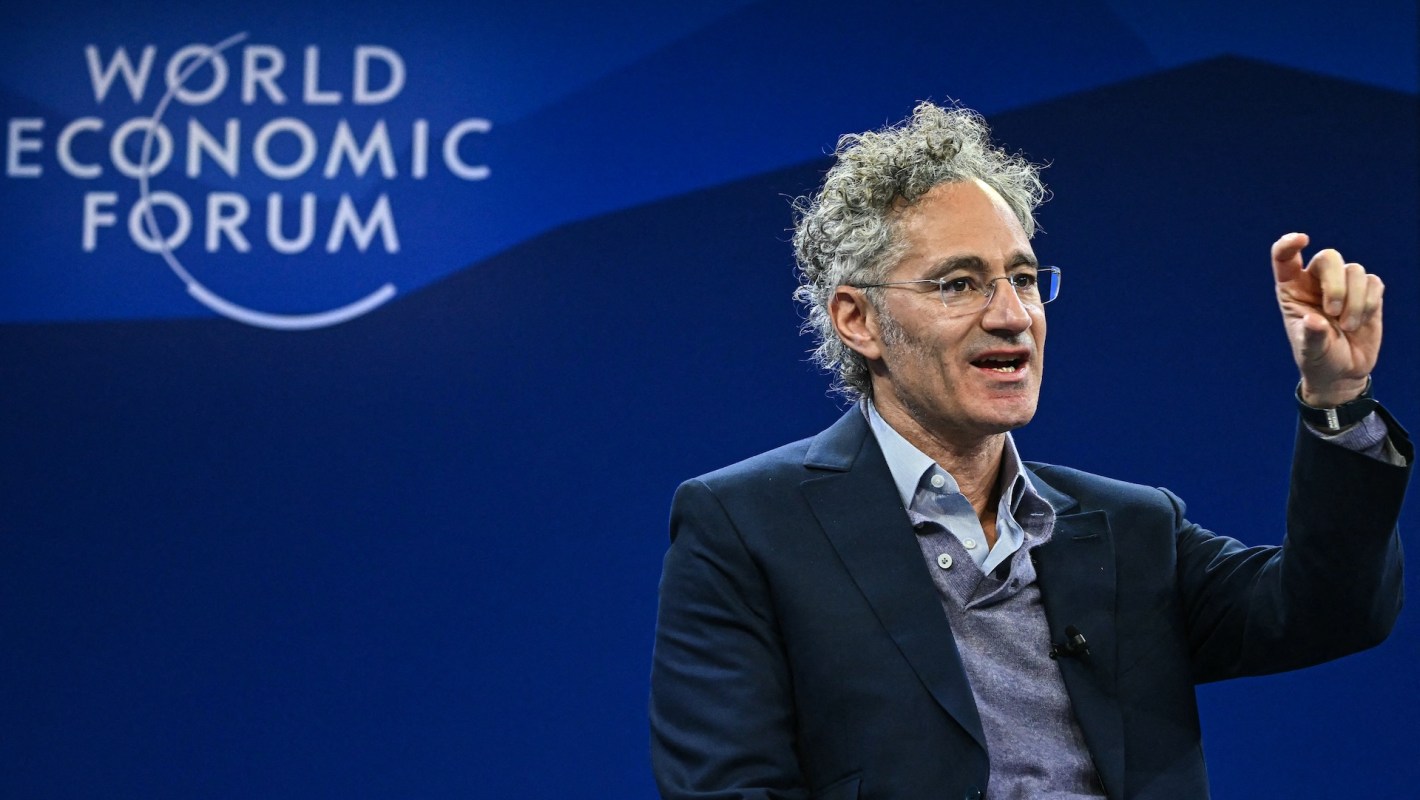
In a recent video clip, Palantir CEO Alex Karp warned business leaders against publicly celebrating workforce cuts driven by artificial intelligence, arguing that doing so could lead workers and voters to turn on them.
What happened?
During a recent appearance on tech-based talk show TBPN, Karp said Silicon Valley needs to be more "disciplined" in how it discusses AI and the future of work, Fortune reported.
The CEO of the $325 billion defense and software company warned that if company leaders boast about laying off two-thirds of their workforce due to AI improvements, it could turn voters toward candidates that push for AI safeguards, such as Sen. Bernie Sanders.
Fortune noted that roughly 117,000 tech workers have been laid off in 2026, close to the total number of tech layoffs in 2025. So far, Meta, Snap, and Block are among the companies linking AI to their restructuring efforts.
Karp's comments land at a moment when more workers are asking who actually gains from AI-driven productivity — and who gets left behind.
Why does it matter?
When companies frame AI primarily as a way to cut payroll, it can deepen fears about job security, wages, and inequality — concerns that can quickly spill into politics.
TCD Picks » Quince Spotlight
💡These best-sellers from Quince deliver affordable, sustainable luxury for all




Sanders has leaned into that message while pushing for stronger oversight of AI companies and data center growth.
Palantir, for its part, is also leaning into AI efficiency.
Despite the warnings from its CEO, Palantir is embracing the AI shift.
"We're planning to grow our revenue … while decreasing our number of people," Karp said last August on CNBC, as reported by Fortune. "This is a crazy, efficient revolution. The goal is to get 10x revenue and have 3,600 people. We have now 4,100."
What are people saying?
Sanders has been one of the loudest critics of widespread AI adoption.
Fortune highlighted that in May, Sanders wrote: "If Mark Zuckerberg is willing to lay off 10% of his own employees, what do you think his AI will do to the average American worker?"
Meanwhile, Sanders is pushing for aggressive government safeguards around the AI boom, including legislation to slow the rapid growth of data centers and an AI tax that would return company profits to Americans.
Karp, meanwhile, has suggested the backlash could intensify.
"These things are very, very explosive. The American people sense that there is something dangerous here," he said. "When people are playing with that fire, they assume it won't burn their hands. That's not the world we're in. That fire is going to consume us."

Get TCD's free newsletters for easy tips, smart advice, and a chance to earn $5,000 toward home upgrades. To see more stories like this one, change your Google preferences here.






